
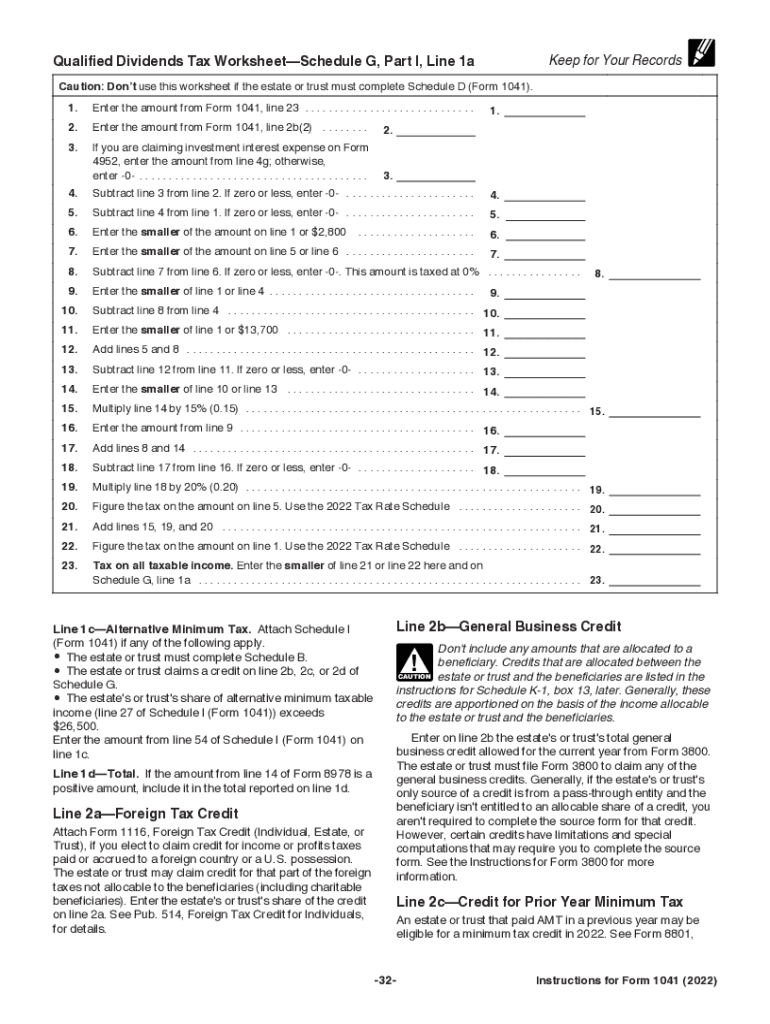







Definition and Purpose of Form 1041
Form 1041, also known as the U.S. Income Tax Return for Estates and Trusts, is used by fiduciaries to report income, deductions, gains, and losses of estates and trusts. This form serves to communicate these financial activities to the Internal Revenue Service (IRS) and calculate the federal income tax liability of the estate or trust.
- Income Reporting: All earned and unearned income by the estate or trust, including interest, dividends, and capital gains, must be reported.
- Deductions Allowed: Includes expenses like trustee fees, attorney fees, and other administrative fees.
- Filing Requirement: Typically required for estates and trusts that earn more than $600 annually or have a non-resident alien beneficiary.
Steps to Complete Form 1041
Completing Form 1041 involves several key steps to ensure accuracy and compliance:
- Gather Financial Statements: Collect all income, deduction, and credit documentation relevant to the estate or trust.
- Fill Out the Income Section: Enter all relevant income details, categorizing them appropriately (e.g., interest, dividends).
- List Deductions: Include all applicable deductions, such as legal and accounting fees.
- Complete the Tax Calculation: Use the provided tax rates to determine the estate or trust’s tax liability.
- Sign and Submit: Ensure the form is signed by the fiduciary before submission.
Important Tips
- Review Past Forms: Using previous years’ forms can provide guidance and ensure consistency in reporting.
- Verify Beneficiary Information: Confirm all information about beneficiaries is accurate to avoid complications.
Filing Deadlines and Important Dates
Meeting deadlines is critical in avoiding penalties:
- Filing Due Date: Typically, Form 1041 is due on April 15th for calendar year filers. If this date falls on a weekend or holiday, it is due the next business day.
- Extensions: A federal extension can be requested using Form 7004, granting additional time to file.
IRS Guidelines for Form 1041
The IRS provides specific guidelines to ensure Form 1041 is filled accurately:
- Electronic Filing: Encouraged by the IRS for more efficient processing and to minimize errors.
- Record Retention: Maintain records of all financial transactions for at least three years in case of audit.
Special Instructions
- Trusts with Foreign Beneficiaries: Follow additional IRS regulations regarding income distribution to beneficiaries outside the United States.
Required Documents for Filing
When preparing to file Form 1041, have these documents ready:
- K-1 Schedules: Necessary for distributions to beneficiaries.
- Income Statements: Detailed accounts for all forms of income.
- Expense Receipts: Documentation of all allowable deductions.
Common Pitfalls
- Mismatched Figures: Ensure that all totals match supporting documentation to prevent delays in processing.
- Incomplete Forms: Double-check each section for completeness before submission.
Penalties for Non-Compliance
Failing to file Form 1041 or incorrectly completing it can lead to penalties:
- Late Filing: Penalties accrue at 5% of the unpaid tax for each month or part of a month the return is late, up to a maximum of 25%.
- Accuracy-Related Penalty: Equals 20% of any underpayment due to negligence or disregard of rules.
Who Typically Uses Form 1041
This form is applicable to a variety of situations involving estates and trusts:
- Fiduciaries: Executors or administrators responsible for managing the deceased's estate.
- Trustees: Individuals who manage trusts set up for beneficiaries.
Key Elements of Form 1041
Understanding the primary elements of this form is essential for proper filing:
- Income Section: Details all income received.
- Deduction Section: Lists permissible deductions reducing taxable income.
- Tax Computation: Calculates the estate or trust’s tax obligation.
Real-World Scenario
A family trust, established to manage and distribute assets to heirs, must file Form 1041 annually to report its income, expenses, and distribute taxable shares appropriately among beneficiaries.
State-Specific Rules for Form 1041
State requirements can vary significantly and might affect the filing process:
- State Filing Requirements: Not all states require a separate state return, but some might have additional taxation or reporting obligations.
- State Deductions/Exemptions: Rules may differ on what constitutes a deductible expense or how exemptions are calculated.
Examples of Using Form 1041
Consider the following hypothetical situations where Form 1041 would be required:
- Decedent’s Estate: Reporting income from an estate generating rental income.
- Irrevocable Trust: Managing a trust holding investment properties and distributing gains to beneficiaries.
Understanding these elements and guidelines ensures proper compliance and effective management of estates and trusts.




