
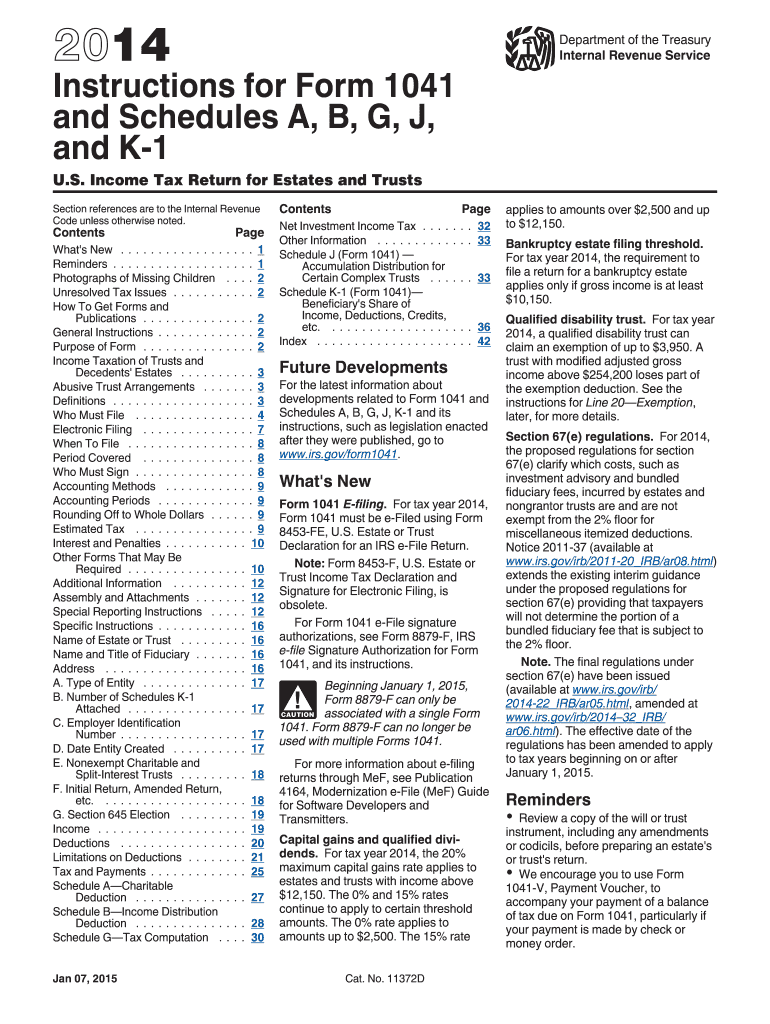







Definition and Purpose of IRS Form 1041
IRS Form 1041, commonly used for U.S. income tax returns, applies to estates and trusts. It serves a crucial role in ensuring that income generated by the assets held in these entities is reported for tax purposes. Understanding the form is essential since estates and trusts have unique tax treatment compared to individuals. It outlines income, deductions, and credits that are specific to these entities, providing a clear framework for compliance with federal tax obligations.
- Estates: When a person passes away, their estate may generate income through interest, dividends, or other sources. Form 1041 ensures this income is appropriately reported.
- Trusts: Trusts created for managing assets (such as family trusts) also require this form for income generated on the trust's behalf.
How to Use the IRS Form 1041 Instructions 2014
Navigating IRS Form 1041 requires a thorough understanding of its 2014 instructions, which guide users through the completion process with detailed steps. These instructions clarify each section of the form, helping entities accurately report financial details.
- Read the Instructions Fully: Begin by reviewing the entire instructions document to grasp the structure and requirements.
- Identify Sections Applicable to Your Entity: Estates and trusts may need to complete only certain parts of the form based on their financial activities.
Steps for Completion
- Determine Income Sources: Identify all income sources, including dividends, interest, and capital gains.
- Calculate Deductions: Understand allowable deductions specific to estates and trusts.
- Fill Out the Schedules: Some income types may require additional schedules attached to the form.
Key Elements of IRS Form 1041 Instructions 2014
Understanding the core components of the IRS Form 1041 instructions is crucial for accurate filing.
- Income Reporting: Detailed descriptions of income types and how to report them.
- Deductions and Credits: Guidance on what deductions and credits are available and how they can be applied.
- Tax Calculation: Instructions on calculating the tax owed based on the entity's income and deductible amounts.
Frequently Encountered Sections
- Schedule D: For reporting capital gains and losses.
- Schedule B: For ordinary income from dividends and interest.
Legal Use and Compliance
Using IRS Form 1041 according to the 2014 instructions ensures that estates and trusts comply with federal tax laws. Adherence to these guidelines is essential to avoid legal complications or penalties.
- Filing Thresholds: Determine if the estate or trust meets the income threshold necessitating a return.
- Accurate Reporting: Misreporting financial details can result in audits or fines.
Who Typically Uses IRS Form 1041
Various entities need to use IRS Form 1041 to meet federal tax obligations specific to estates and trusts.
- Decedent's Estates: Responsible for filing taxes on income generated by the deceased's estate.
- Simple and Complex Trusts: Trusts that distribute all or part of their income to beneficiaries annually.
Required Documents for IRS Form 1041
Gathering the necessary documents before completing Form 1041 is essential for ensuring all information is accurate and complete.
- Financial Statements: Including all bank statements, dividend reports, and records of sales.
- Previous Tax Returns: Past returns can provide a reference for consistent reporting.
Additional Documentation
- Beneficiary Information: Details of individuals receiving income from the estate or trust.
- Receipts for Deductions: Proof of payments for deductible expenses.
Penalties for Non-Compliance
Failure to file IRS Form 1041 or incorrect filing can result in several penalties.
- Late Filing Penalties: Fees accrue based on the delay in filing past the deadline.
- Interest on Unpaid Taxes: Unpaid amounts accumulate interest, increasing the financial burden on the estate or trust.
Filing Deadlines and Important Dates
Adhering to deadlines is a critical aspect when dealing with IRS Form 1041. The typical filing date for estates and trusts is April 15 of the year following the tax year in question.
- Extensions: If additional time is needed, requests must be submitted before the initial deadline.
- Important Dates: Mark all relevant deadlines in advance to avoid last-minute complications.
By following these sections, users can navigate the complexities of IRS Form 1041 instructions from 2014, ensuring accurate and compliant filing for estates and trusts.




