
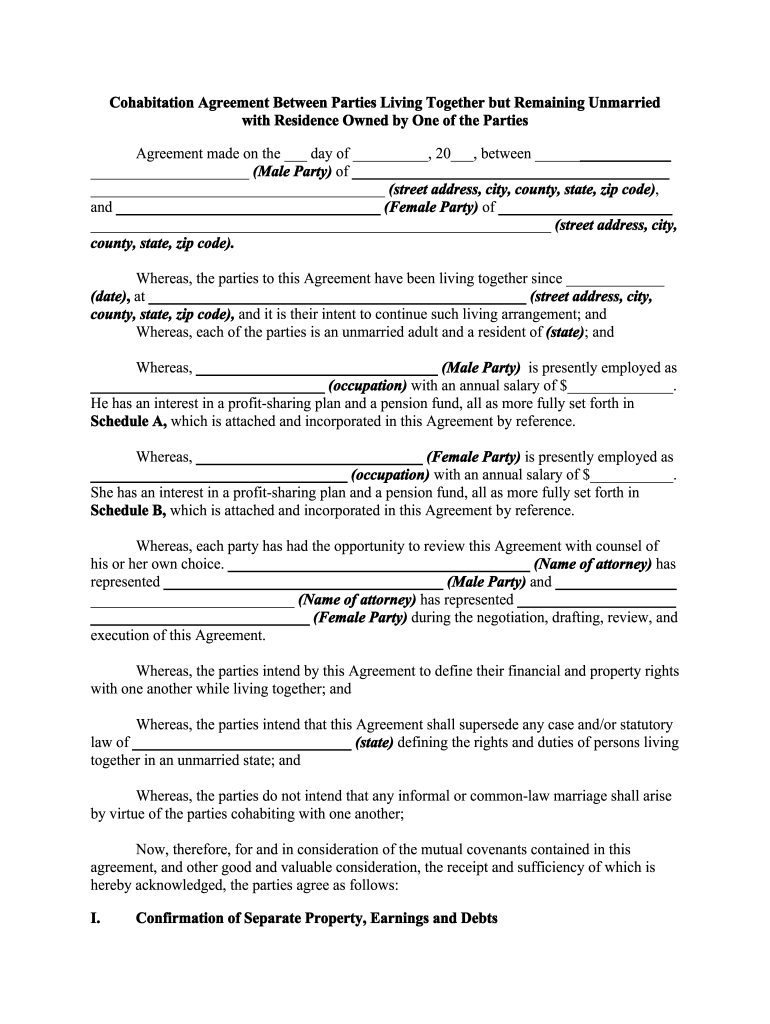







Understanding the Affidavit of Cohabitation
An affidavit of cohabitation is a legal document that serves as proof of a couple's shared living arrangement. Typically used by unmarried partners, this affidavit outlines the couple's relationship status, their cohabitation history, and, in certain cases, their intentions regarding financial and property rights. This document can play a crucial role in legal settings, such as when applying for benefits or services that require verification of cohabitation.
Essential Components of the Affidavit of Cohabitation
The affidavit must include several key elements to ensure it is valid and accepted by relevant authorities:
- Identification of Parties: Both individuals must be clearly identified. This includes full names, addresses, and dates of birth.
- Duration of Cohabitation: The affidavit should specify when the couple began living together and how long they have maintained this arrangement.
- Purpose Statement: A declaration that the purpose of the affidavit is to affirm their cohabitation status for legal or other formal purposes.
- Joint Responsibilities: Information about shared responsibilities such as bills, lease agreements, or shared property may also be included.
- Signature and Notarization: For the affidavit to be legally binding, it must be signed by both parties and notarized.
These elements help establish the legitimacy of the relationship and may aid in preventing future legal disputes.
Sample Affidavit of Cohabitation
In creating your own affidavit, it is beneficial to refer to an affidavit of cohabitation sample. A typical format might include:
- Title: "Affidavit of Cohabitation"
- Introduction: Identifying the parties involved and their addresses.
- Statement of facts: Outlining the duration of cohabitation and shared responsibilities.
- Signature space: Designated areas for both parties to sign.
This framework ensures that all necessary information is captured effectively.
Requirements for an Affidavit of Cohabitation
Different states might impose specific requirements concerning the affidavit of cohabitation. Common requirements include:
- Age: Both parties must be of legal age, typically eighteen or older.
- Willingness: Both individuals should willingly sign the affidavit in the presence of a notary.
- Disclosure of Relationship: There should be a clear and truthful declaration of the nature of the relationship and any intentions regarding legal affairs.
Understanding these requirements can prevent complications when the document is submitted.
Using the Affidavit of Cohabitation
The affidavit can serve various purposes in different scenarios, such as:
- Legal Benefits: Certain state benefits, insurance policies, and health care provisions may require proof of cohabitation.
- Cohabitation Agreements: When entering into financial agreements, having an affidavit may provide clarity about shared responsibilities and ownership.
- Financial Aid: Educational institutions might ask for proof of cohabitation for eligibility verification when determining financial aid.
By being well-informed about how to use the affidavit, partners can better navigate relational and legal landscapes.
Obtaining an Affidavit of Cohabitation
To obtain an affidavit, partners can follow these steps:
- Select a Template: Look for a reliable affidavit of cohabitation form or template that fits your needs.
- Gather Required Information: Collect all necessary details about both parties, including identification and history of cohabitation.
- Complete the Form: Fill in the affidavit accurately, ensuring all pertinent information is included.
- Notarization: Find a notary public to witness the signing of the document, ensuring its legal validity.
Many online platforms also offer templates that can simplify this process.
Common Mistakes to Avoid
When drafting an affidavit of cohabitation, be mindful of the following common pitfalls:
- Incomplete Information: Omitting critical details can render the affidavit invalid.
- Lack of Notarization: Not having the document notarized may lead to it being unrecognized by institutions.
- Misrepresentation: Providing false information could lead to legal issues down the line.
Avoiding these mistakes is crucial for ensuring the affidavit’s effectiveness.
Conclusion: Advantages of Using an Affidavit of Cohabitation
Utilizing an affidavit of cohabitation offers numerous advantages:
- Legal Recognition: Provides formal acknowledgment of your shared living situation.
- Protection of Rights: Helps in safeguarding each party's financial responsibilities and rights concerning shared property.
- Ease of Access to Benefits: Streamlines access to benefits or services that require proof of cohabitation.
Understanding the dynamics and requirements of this document equips partners with knowledge to protect their interests effectively.




