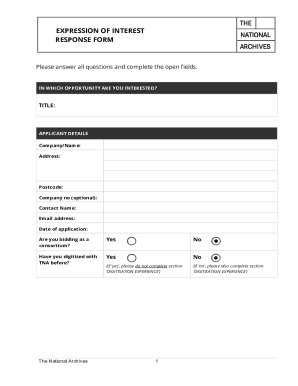
Type text, add images, blackout confidential details, add comments, highlights and more.
02. Sign it in a few clicks
Draw your signature, type it, upload its image, or use your mobile device as a signature pad.
03. Share your form with others
Send it via email, link, or fax. You can also download it, export it or print it out.
How to use or fill out interrogatories with our platform
Ease of Setup
DocHub User Ratings on G2
Ease of Use
DocHub User Ratings on G2
Click ‘Get Form’ to open the interrogatories document in the editor.
Begin by filling in your name and contact information at the top of the form. This includes your address, city, state, zip code, and phone number.
Proceed to each interrogatory section. For example, in Interrogatory No. 1, provide your full name, social security number, date of birth, residence address, and telephone number.
For requests that require documentation (like Interrogatory No. 2), use the upload feature to attach copies of your income tax returns and W-2 forms directly within the editor.
Continue answering each interrogatory thoroughly. Ensure you provide detailed responses for asset listings and any other inquiries as specified in the form.
Once completed, review all answers for accuracy before signing. Use our platform’s signature feature to sign electronically.
Start using our platform today to streamline your interrogatories process for free!
Limitations and Challenges In some cases, a party might object to certain interrogatories, arguing they are too broad, irrelevant, or burdensome. The court may have to intervene to resolve such disputes.
What happens when a lawyer sends you interrogatories?
An interrogatory is a set of written questions sent to the other side. You typically have a few weeks to respond to interrogatories in writing. A deposition, by contrast, takes place in person, where youre asked questions aloud and a court reporter documents your answers. Interrogatories vs. Depositions: Whats the Difference? justice4you.com blog depositions-vs-inte justice4you.com blog depositions-vs-inte
What is the difference between discovery and interrogatories?
Each interrogatory must be answered separately and fully in writing under oath or affirmation, unless it is objected to. If the answering party objects to any interrogatory, the party must state the reasons for the objection in lieu of an answer. The answers and objections must be signed by the person making them. 5.2 - Written Interrogatories - Department of Justice justice.gov eoir ocaho chapter-5 justice.gov eoir ocaho chapter-5
Is discovery the same as interrogatories?
Interrogatories are one form of discovery in a lawsuit. An interrogatory is a written question from one party to the lawsuit to another party to the lawsuit (usually, the opposing party). Interrogatories are a way to obtain information from the opposing party that may be useful in the lawsuit.
What is the purpose of interrogatories?
You use different types of discovery requests to get different kinds of information: To ask the other side to answer a set of questions, you can use Interrogatories. To ask the other side to admit that certain facts are true or certain items are authentic, you can use Request for Admission.
Related Searches
Interrogatories sampleInterrogatories in spanishInterrogatories in divorceInterrogatories vs depositionInterrogatories Civil ProcedureWhat happens after interrogatories are answeredHow to avoid answering interrogatoriesInterrogatories template
Security and compliance
At DocHub, your data security is our priority. We follow HIPAA, SOC2, GDPR, and other standards, so you can work on your documents with confidence.
In California, you have 30 days to respond to an interrogatory. If you do not respond within this time, the opposing side can file a motion to compel with the court. The court may require them to first consult with you about your failure to respond before officially filing a motion to compel.
What is the point of interrogatories?
Interrogatories are essentially written questions. The purpose of interrogatories is to formally uncover the facts of the case, gather witnesses and experts knowledge of the underlying facts, learn the opposing partys position and arguments given the fats at issue, and identify relevant documents and other evidence.
What qualifies as a discovery?
According to Rule 26(b)(1), Parties may obtain discovery regarding any non-privileged matter that is relevant to any partys claim or defense. The federal rules also provide several tools that can be used to get information from other parties, including interrogatories, depositions, and requests for admission.
Related links
Use Form Interrogatories to request information
Form Interrogatories are a list of questions on a court form. You select the questions you want the other side to answer by checking the questions on the form.
A form of discovery consisting of written questions to be answered in writing and under oath. The court required that all interrogatories by the defendant be
Cookie consent notice
This site uses cookies to enhance site navigation and personalize your experience.
By using this site you agree to our use of cookies as described in our Privacy Notice.
You can modify your selections by visiting our Cookie and Advertising Notice.