Forwarder cargo receipt format in word 2026

Get Form
forwarder cargo receipt Preview on Page 1

Here's how it works

01. Edit your forwarder cargo receipt online
Type text, add images, blackout confidential details, add comments, highlights and more.

02. Sign it in a few clicks
Draw your signature, type it, upload its image, or use your mobile device as a signature pad.

03. Share your form with others
Send cargo receipt via email, link, or fax. You can also download it, export it or print it out.

Definition and Meaning of Forwarder Cargo Receipt

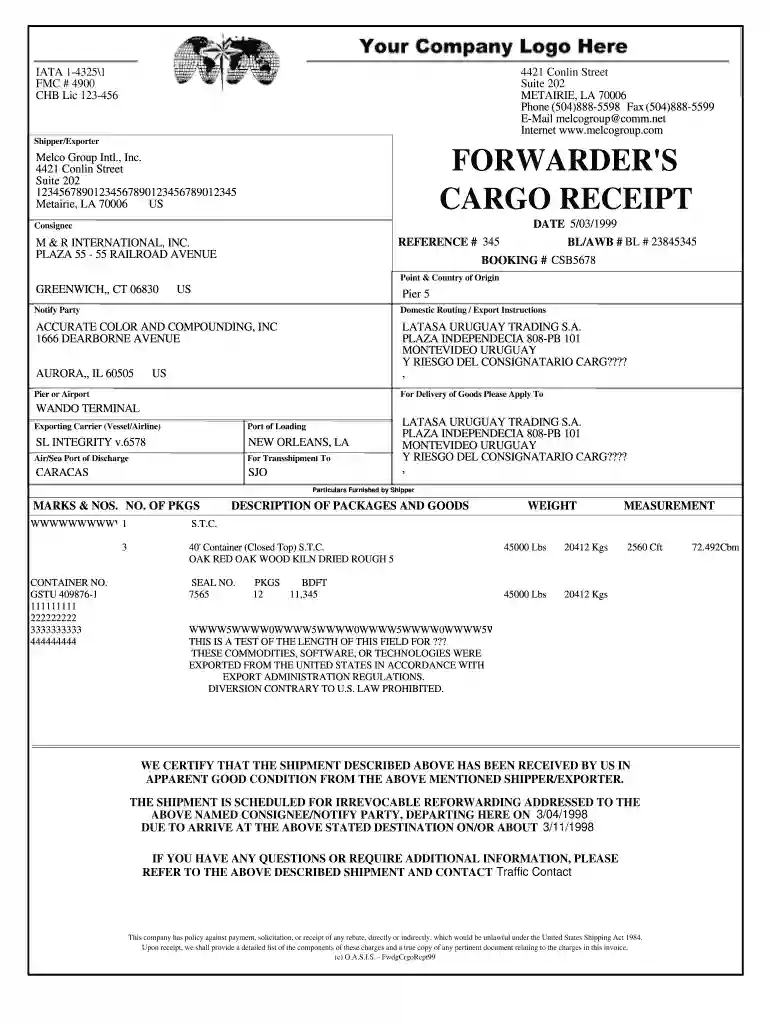
A forwarder cargo receipt (FCR) is an important shipping document issued by a freight forwarder acknowledging the receipt of cargo from the shipper. This document serves as proof that the forwarder has received the goods in good condition, as specified in the shipping agreements. It is critical for both the shipper and the consignee to track the shipment and establish accountability.

The FCR details crucial information about the shipment, including:

  • Consignee Information: Name and address of the person or organization receiving the shipment.
  • Booking Number: Unique identifier for the shipment that helps in tracking.
  • Vessel Name: The name of the ship used for transportation.
  • Weight and Dimensions: Specifics about the total weight and size of the cargo.
  • Packaging Details: Information about how the goods are packaged, including the number of packages and type of packaging.

In essence, the forwarder cargo receipt is not only a contractual document but also essential for customs clearance and compliance with various export regulations. Its standardization helps streamline processes in logistics, making it easier for companies to manage their shipping needs efficiently.

How to Use the Forwarder Cargo Receipt Format in Word

The forwarder cargo receipt format in Word allows users to efficiently create and customize FCRs to suit their specific logistical needs. Utilizing this format provides a structured approach to generating a legally binding document that can be used across various shipping scenarios.

Steps to Use the Format

  1. Download the Template: Obtain the forwarder cargo receipt format in Word, which ensures compliance with standard shipping practices.
  2. Input Shipping Details: Fill in the necessary information such as shipper and consignee details, booking number, vessel name, weight, and packaging details.
  3. Customization: Tailor the document to meet any specific requirements unique to your shipment or company, such as adding logos or modifying sections.
  4. Review and Edit: Ensure all information is accurate and clearly displayed. Include any additional terms or instructions as necessary.
  5. Sign and Issue: After reviewing, print and sign the document. It can then be issued to the consignee for their records.

This structured format aids in ensuring all relevant information is captured accurately, facilitating communication between all parties involved in the shipping process.

Key Elements of the Forwarder Cargo Receipt Format in Word

When utilizing the forwarder cargo receipt format in Word, specific key elements must be included to ensure the document serves its purpose effectively. Each element provides critical details that contribute to the efficacy of the shipping transaction.

Essential Components

  • Document Title: Clearly labeled as "Forwarder Cargo Receipt" for instant recognition.
  • Shipper and Consignee Information: Complete addresses and contact details to avoid confusion during the delivery process.
  • Cargo Description: Detailed description of the items being shipped, including quantity, type, and any distinguishing features.
  • Terms and Conditions: Specify any relevant shipping terms that apply, particularly any liabilities or responsibilities of all parties involved.
  • Date and Signature Fields: Spaces for dates and signatures to validate the receipt and acknowledge agreement.

Incorporating these elements ensures that all aspects of the shipment are captured, thereby enhancing clarity and legal enforceability of the document.

Steps to Complete the Forwarder Cargo Receipt Format in Word

Completing a forwarder cargo receipt format entails several systematic steps that ensure the document is accurate and fully functional. This process is vital for securing both the shipper's and consignee's interests during transportation.

Step-by-Step Completion

  1. Preparation: Gather all necessary documents and information related to the cargo shipment before starting.
  2. Open the Template: Launch the pre-formatted Word document for the forwarder cargo receipt.
  3. Fill in Basic Information: Input essential details such as shipper, consignee, and other parties involved.
  4. Detail the Cargo: Clearly describe the cargo involved, including type, quantity, and weight, ensuring compliance with regulations.
  5. Review Legal Requirements: Confirm that the receipt meets all legal and logistical requirements specific to the shipping route and laws.
  6. Finalize and Save: Save the document in an appropriate format. Ensure it is accessible for future reference or submission.

Following these steps not only improves the accuracy of the FCR but also aids in avoiding potential disputes and misunderstandings during the shipping process.

Legal Use of the Forwarder Cargo Receipt Format in Word

Understanding the legal implications of the forwarder cargo receipt format is essential for all parties involved in a shipment. This document has significant importance in establishing responsibilities and rights under shipping law.

Compliance and Legal Validity

  • Legal Binding Nature: The FCR is a legally enforceable document that acts as evidence in case of disputes.
  • Customs Documentation: It often serves as a necessary document for customs clearance, proving that cargo has been received in good condition.
  • Dispute Resolution: In the event of loss or damage during transit, the FCR can be pivotal in determining liability between the shipper, consignee, and forwarder.
  • Jurisdictional Issues: The terms contained within the FCR can define which jurisdiction’s laws apply in case of legal proceedings regarding the shipment.

Understanding these legal aspects ensures that all parties are aware of their rights and responsibilities, fostering a more trustworthy shipping environment.

Examples of Using the Forwarder Cargo Receipt Format in Word

Practical examples of the forwarder cargo receipt format can illuminate its varied uses across different shipping scenarios, demonstrating its adaptability and significance.

Scenarios for Application

  • International Shipments: Businesses using the format to ship goods overseas can leverage the document to comply with international shipping regulations, facilitating smoother customs processes.
  • Domestic Logistics: Companies involved in national shipments may employ the FCR to document the transport of goods between states, ensuring accountability and traceability.
  • E-commerce Fulfillment: Online retailers utilize this format to create receipts for orders, providing customers with confirmation of shipment alongside tracking capabilities.
  • Manufacturer to Distributor Transfers: Manufacturers might issue an FCR when transferring goods to distributors, delineating conditions of transfer to prevent miscommunication.

These examples illustrate the functionality of the forwarder cargo receipt format in a variety of contexts, showcasing its essential role in effective shipping logistics.

be ready to get more

Complete this form in 5 minutes or less

Get form

Security and compliance

At DocHub, your data security is our priority. We follow HIPAA, SOC2, GDPR, and other standards, so you can work on your documents with confidence.

Learn more
ccpa2
pci-dss
gdpr-compliance
hipaa
soc-compliance
be ready to get more

Complete this form in 5 minutes or less

Get form