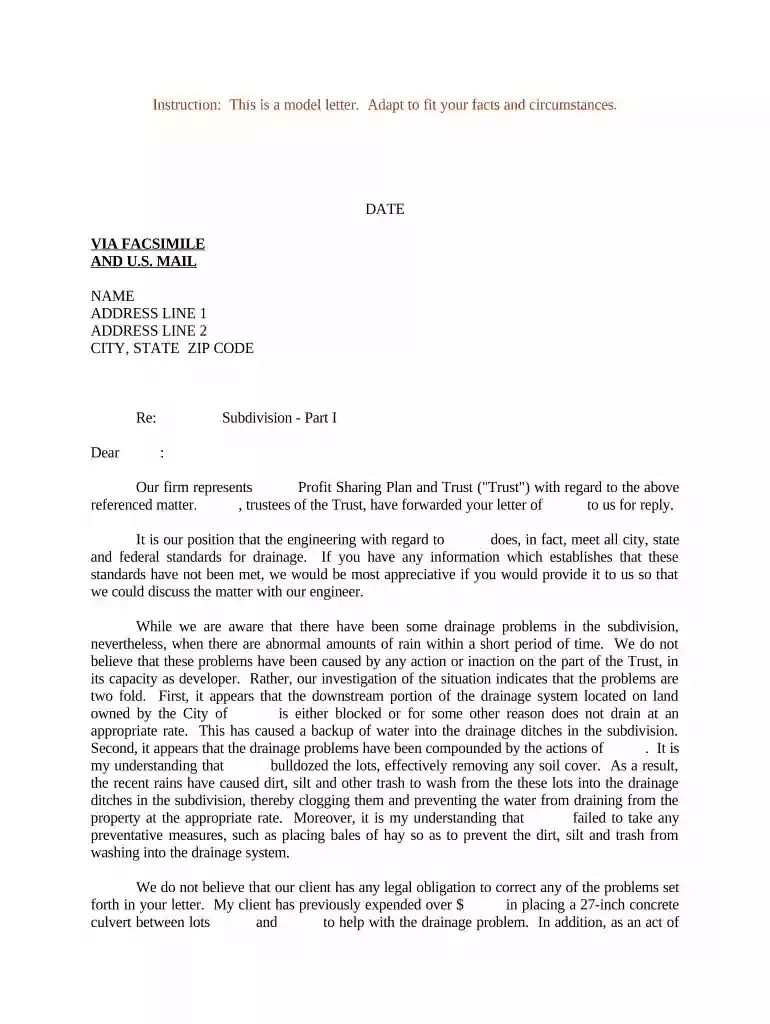
Definition and Purpose of Sample Letter Construction
A sample letter construction serves as a guideline for crafting formal correspondence related to construction projects. It outlines the essential components that should be included in various types of letters, such as project proposals, requests for construction work, or notifications to relevant parties. Utilizing a sample letter ensures professionalism, clarity, and completeness in your communications.
Key Components of a Sample Letter Construction
- Heading: Include your name, address, and contact information at the top of the document.
- Date: The date when the letter is being sent should follow the heading.
- Recipient Information: The recipient's name, title, company, and address should be clearly indicated.
- Subject Line: A concise subject line gives the recipient a quick understanding of the letter’s purpose.
- Body: This section contains the main message, articulated clearly and directly. Break it into paragraphs for readability.
- Closing: A professional closing statement followed by your signature and printed name concludes the letter.
How to Use the Sample Letter Construction
Using a sample letter construction effectively involves several steps to tailor it for your specific needs. This ensures the letter addresses the intended audience appropriately.
Step-by-Step Guidelines
- Identify the Purpose: Determine what you need the letter for, whether it's to request construction services, notify about project changes, or communicate with stakeholders.
- Choose the Right Template: Select a sample letter format that aligns with your purpose, such as a request letter for construction work or a letter of intent for a construction project.
- Customize the Message: Replace generic content with specifics relevant to your situation, ensuring that it accurately reflects your voice and the context.
- Review Legal Compliance: Make sure that the content meets any legal requirements, especially if there are state-specific regulations involved.
- Proofread: Check for grammar, punctuation, and spelling errors to maintain professionalism.
How to Obtain the Sample Letter Construction
Finding a suitable sample letter construction can be achieved through various methods. This process involves sourcing templates that meet your specific requirements.
Sources for Sample Letters
- Online Resources: Many websites offer free templates and samples tailored to construction letters. Websites like DocHub provide editable formats.
- Industry Associations: Organizations related to construction often provide templates for their members.
- Legal Advisors: Consulting with legal professionals can also yield tailored letter examples.
- Colleagues and Peers: Networking with other professionals in the construction industry may lead to shared resources.
Key Elements to Include in a Sample Letter Construction
When drafting a construction-related letter, certain elements must not be overlooked. These ensure the letter's effectiveness and professionalism.
Essential Elements
- Introduction: Briefly state who you are and your relationship to the recipient.
- Project Details: Clearly outline the specifics of the construction project, including timelines, goals, and any relevant contract terms.
- Request or Proposal: Specify what you are asking for or proposing. This could range from requesting funding to notifying about construction delays.
- Conclusion: Summarize your message and express your expectations from the recipient.
Legal Uses of Sample Letter Construction
Sample letter constructions are often utilized in the legal context of construction projects. They help establish a formal record of communication, which can be crucial in disputes or legal proceedings.
Importance in the Legal Framework
- Documentation: Formal letters provide a written record that can be referenced later in case of disputes.
- Clarity on Terms: Clearly stating the terms or requests in writing helps to minimize misunderstandings.
- Legal Compliance: Certain letters may be required by law for notifications or compliance with contractual obligations.
Examples of Using the Sample Letter Construction
Practical examples illustrate how a sample letter construction can be applied in real scenarios within the construction industry.
Common Scenarios
- Request Letter for Construction Work: A contractor may send a letter to a client requesting permission to commence work on a site.
- Letter of Intent for a Construction Project: This is typically used by a company to express its intention to engage in a construction contract with terms defined.
- Notification of Changes: If there are unexpected changes to project plans, a letter can formally notify all involved parties to ensure everyone is updated.
Additional Considerations for Crafting Construction Letters
Creating effective construction letters requires attention to detail and an understanding of various factors that may influence content.
Important Considerations
- Audience Awareness: Tailor your tone and language to suit the recipient, be it a client, contractor, or regulatory body.
- Timeliness: Send letters promptly to ensure that all parties can respond or act within appropriate timeframes.
- Follow-up: Consider following up if no response is received within a reasonable period, which can demonstrate your commitment to effective communication.