
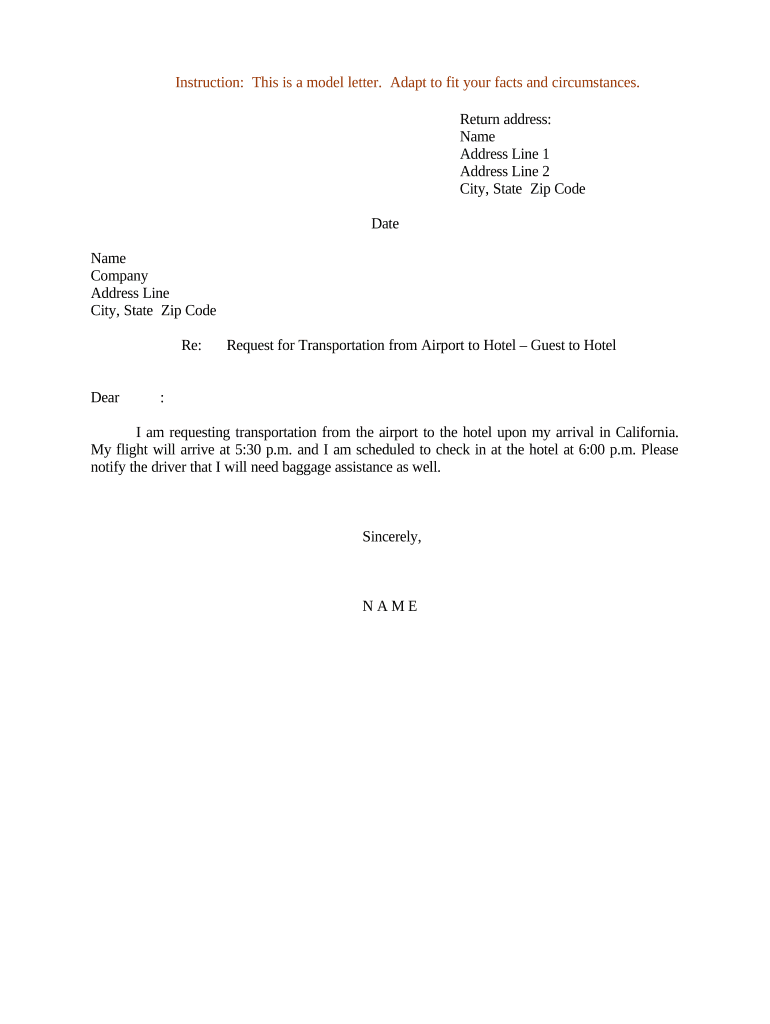







Definition and Meaning of Letter for Transportation
A letter for transportation serves as a formal request for the provision of transportation services or vehicle usage. It outlines the details necessary for arranging transportation, which may include the purpose of the request, travel dates, the vehicle type needed, and any specific instructions. This document is essential in various contexts, such as corporate travel arrangements, airport pickups, and logistical support for events requiring transport services.
In many cases, the letter functions as a means for employees or individuals to formally request a vehicle from their employer or another organization. It ensures that there’s a documented basis for the request, which can aid in tracking logistics and confirming availability.
Key Components of a Transportation Request Letter
- Sender Information: Name, role, and contact details should always be included at the beginning.
- Recipient Information: Clearly specify the individual or department to whom the request is directed.
- Purpose of the Request: Outline why transportation is needed, such as for a business trip or to attend an event.
- Date and Time Requirements: Provide specific details regarding when the transportation is required.
- Vehicle Type: If applicable, mention the type of vehicle needed for the requested service.
- Additional Instructions: Any specific requirements or preferences regarding the vehicle or transportation process.
How to Use the Letter for Transportation
Effectively using a letter for transportation involves several key steps to ensure clarity and proper processing. Here’s a detailed guide:
Step-by-Step Instructions
- Determine the Purpose: Establish why you need to request transportation. This may involve reviewing company policies or determining the logistics for an upcoming event.
- Draft the Letter: Include all necessary elements such as sender and recipient information, the purpose of the request, dates, and vehicle requirements.
- Review Company Policies: Before submitting the letter, check any existing company guidelines regarding transportation requests, including approval processes and required documentation.
- Submit the Letter: Send the completed request to the appropriate individual or department via email or in person, depending on the standard practice within your organization.
- Follow Up: If there’s no response within a reasonable timeframe, consider a polite follow-up to confirm receipt and inquire about the status of your request.
Important Considerations
- Clarity and Precision: Be specific in your request to avoid any potential misunderstandings.
- Timing: Submit transport requests well in advance to ensure that arrangements can be made without urgency.
- Documentation: Keep a copy of your request for your records. This can serve as proof if you need to reference it later.
Steps to Complete the Letter for Transportation
Completing a letter for transportation entails a well-structured approach to ensure all necessary information is conveyed properly. Here’s how to construct the letter step-by-step:
Formatting the Letter
- Start with a Header: Include your name, title, and contact information at the top.
- Date the Letter: Clearly indicate the date of writing the letter.
- Recipient Details: Address the letter to the relevant department or individual responsible for transportation services.
Main Body Structure
- Introduction: Begin with a polite greeting and clearly state the purpose of the letter.
- Details of Request: Elaborate on the transportation needs, including:
- The reason for the request.
- Specific dates and times needed for transportation.
- Vehicle type or capacity required.
- Any Special Needs: Mention any special accommodations or arrangements that need to be considered.
- Closing Statement: Express gratitude for considering the request and provide a way to contact you for any further information or clarification.
Final Steps
- Proofread: Ensure there are no errors in grammar or information.
- Send the Letter: Utilize the preferred communication method of your organization, ensuring it reaches the right person promptly.
Important Terms Related to Letter for Transportation
Understanding the terminology associated with a letter for transportation can enhance the clarity of your request. Here are some key terms often used:
- Transportation Services: Services that provide vehicle availability for travel needs, including car rentals, shuttles, and corporate transport.
- Vehicle Request: A formal inquiry or command for transportation services.
- Logistics: The coordination of complex operations involving people, facilities, and supplies.
- Travel Itinerary: A detailed plan of scheduled travel arrangements, including transport and accommodation details.
- Transportation Allowance: Reimbursement policy offered by companies for travel-related expenses.
Examples of Using the Letter for Transportation
To illustrate practical applications of the letter for transportation, consider the following examples which highlight different contexts:
Corporate Transport Request
A company employee may submit a letter to request transportation for an upcoming business conference. In this instance, the employee outlines the details, including the requirement for a specific vehicle size based on the number of attendees.
Airport Pickup Request
An individual traveling for a family event might write a letter requesting that a company provide a vehicle for their airport pickup. This would include specific flight details, estimated arrival time, and any instructions for locating the driver at the airport.
Special Event Transportation
For an organization planning a large event, someone may use a letter to arrange multiple transport options for guest pickups and drop-offs. Detailing the importance of timely transport to maintain the event schedule is crucial in this request.
By understanding these contexts, those in need can tailor their letters effectively, ensuring that all parties involved have a clear view of the requirements and expectations.




