Trial preparation 2026

Get Form
trial preparation checklist for paralegals Preview on Page 1

Here's how it works

01. Edit your trial preparation checklist for paralegals online
Type text, add images, blackout confidential details, add comments, highlights and more.

02. Sign it in a few clicks
Draw your signature, type it, upload its image, or use your mobile device as a signature pad.

03. Share your form with others
Send trial checklist for paralegal via email, link, or fax. You can also download it, export it or print it out.

How to use or fill out trial preparation with our platform

Form edit decoration
9.5
Ease of Setup
DocHub User Ratings on G2
9.0
Ease of Use
DocHub User Ratings on G2
  1. Click ‘Get Form’ to open the trial preparation document in the editor.
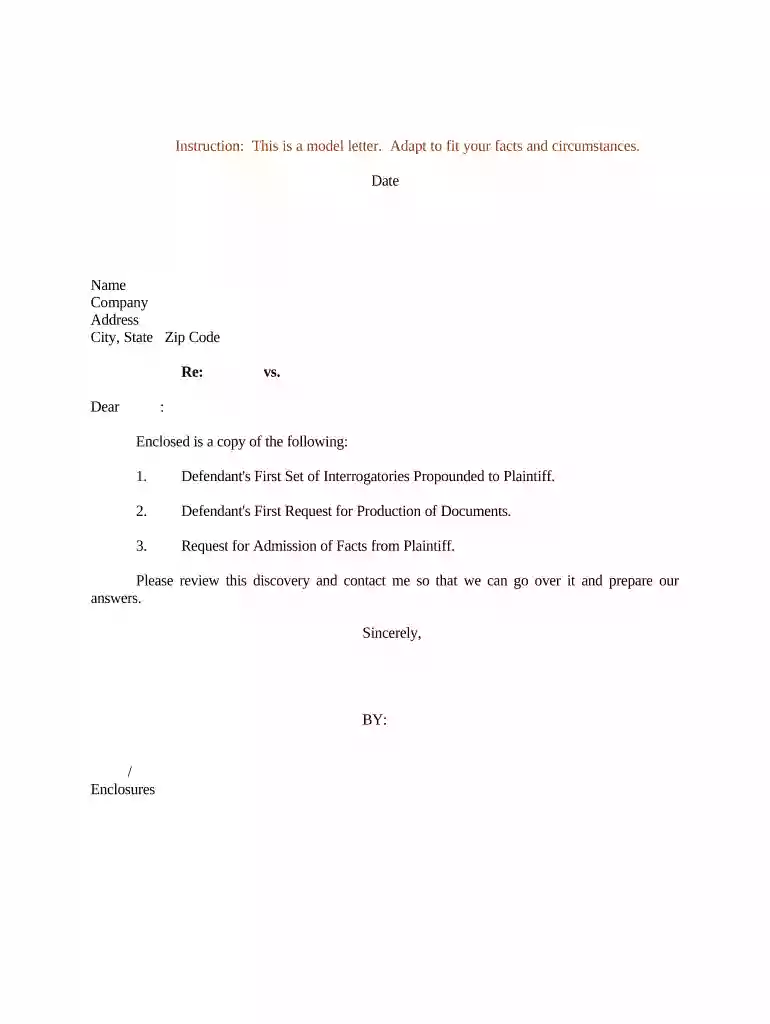
  2. Begin by entering the date at the top of the form. This is crucial for record-keeping and timelines.
  3. Fill in your name, company, address, city, state, and zip code in the designated fields. Ensure accuracy to avoid any miscommunication.
  4. In the 'Re:' section, specify the subject of your correspondence clearly to provide context.
  5. Address the recipient appropriately in the 'Dear' section. Use their name or title as necessary.
  6. List each enclosed document clearly under 'Enclosed is a copy of the following:' to ensure all parties are aware of what is included.
  7. Conclude with a polite request for review and contact for further discussion regarding answers to discovery.

Start using our platform today to streamline your trial preparation process for free!

be ready to get more

Complete this form in 5 minutes or less

Get form

Got questions?

We have answers to the most popular questions from our customers. If you can't find an answer to your question, please contact us.
Contact us
How you prepare for trial is similar to how you prepare for any big life task: Take it one step at a time. Start early, stay organized, and study your materials. Communicate with your team, the client, and opposing counsel. Trials especially your first few can be daunting. But I promise you, slowing down and starti.
A Look at the Trial Process Presentation of Evidence and Testimony of Witnesses. The plaintiffs or prosecutions case is presented first. Closing Arguments. Presentation of Jury Instructions (Charging the Jury) Deliberation. Announcement of the Verdict.
CRIMINAL TRIAL PROCESS STEPS Selecting a jury. Opening statements. Witness testimonies and cross-examination. Closing arguments. Jury instruction. Deliberation and verdict.
What to do leading up to a trial Secure your witnesses. Familiarise yourself with the judge. Gather and table the evidence. Consider technology. Build your story or narrative. Trial road map. Witness depositions and statements. Opening and closing statements.
The first hearing at Crown Court is called the Plea and Trial Preparation Hearing or PTPH. At this hearing, the court clerk will read out the list of offences the defendant has been charged with (the indictment) and asks the defendant to plead guilty or not guilty. This process is called arraignment.

Security and compliance

At DocHub, your data security is our priority. We follow HIPAA, SOC2, GDPR, and other standards, so you can work on your documents with confidence.

Learn more
ccpa2
pci-dss
gdpr-compliance
hipaa
soc-compliance
be ready to get more

Complete this form in 5 minutes or less

Get form

People also ask

Criminal trial overview Pick a jury and evidence issues. Jury selection. Opening statements. Both sides start by giving an overview of what they plan to show at the trial. Prosecution presents its case. The prosecution presents its witnesses and evidence. Defense presents it case. Closing arguments. Jury makes a decision.
7 Tips for an Efficient and Effective Trial Preparation Planning every aspect of the case. Ensure proper communication between all members connected to the case. Know the judge presiding over the case. Preparing witnesses for trial questionings. Prepare to always present a calm demeanor. Prepare a believable story.
Dont lie about anything, not even white [small] lies. If you are discovered to be lying, the judge may find it hard to believe you when you are telling the truth. Dont argue with the questioner. Dont ask questions back: What would you do if

Related links