






Understanding the CMA CGM Bill of Lading PDF
The CMA CGM Bill of Lading (BOL) is a critical document in international shipping and logistics. It serves as a receipt for the goods being transported and as a contract between the shipper and the carrier. This document outlines the responsibilities and liabilities of both parties and contains essential details about the shipment.
Definition & Meaning of the CMA CGM Bill of Lading
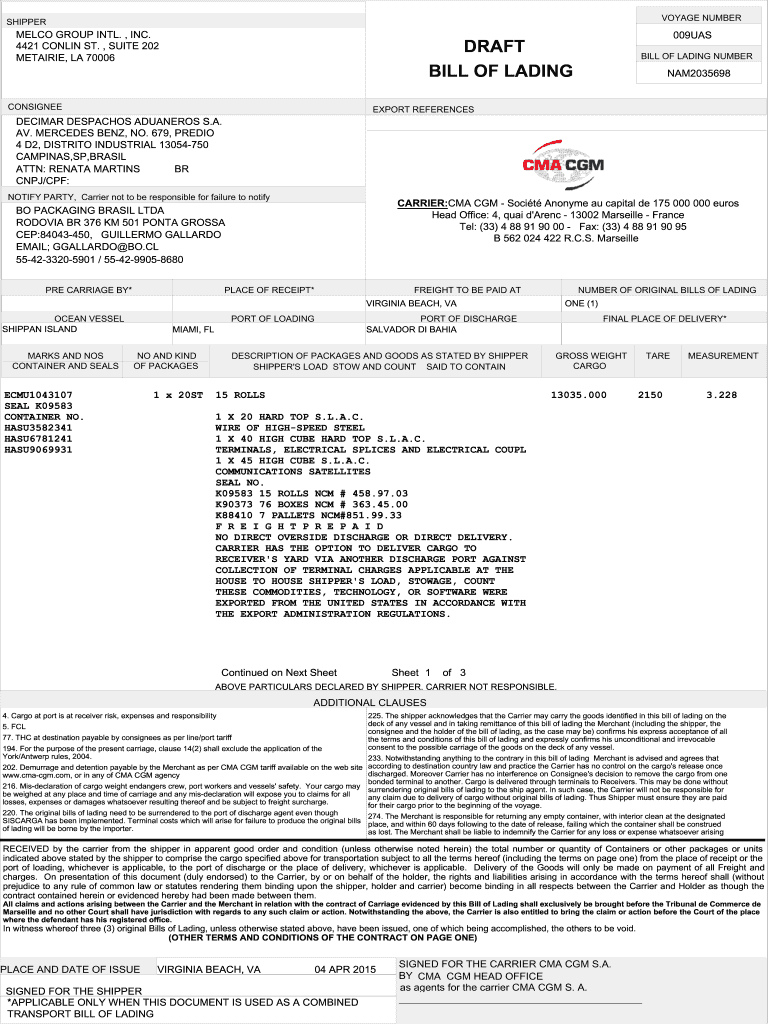
A Bill of Lading issued by CMA CGM is a legal contract that confirms the receipt of cargo for shipment. It outlines the terms of the agreement between the shipper, carrier, and consignee. The BOL includes vital information such as:
- Shipper Details: Information about the company or individual sending the goods.
- Consignee Information: Details on the recipient of the goods.
- Cargo Description: Types and quantities of items being shipped.
- Container Numbers: Specific identifiers for tracking.
- Terms and Conditions: Related to payment, delivery, and liabilities.
This document plays a significant role in facilitating customs clearance and serves as proof of the shipment during transit.
How to Use the CMA CGM Bill of Lading PDF
To effectively utilize the CMA CGM Bill of Lading PDF, follow these steps:
- Download the PDF: Acquire the CMA CGM Bill of Lading PDF from a trusted source, ensuring that it is the correct version for your shipment.
- Filling In Details: Enter relevant shipment information, including shipper and consignee details, cargo descriptions, and any special instructions.
- Reviewing Terms: Ensure that all terms and conditions are understood, including payment responsibilities and delivery conditions.
- Signature: The document typically requires the signatures of both the shipper and the carrier to be deemed valid.
- Distribution: Provide copies of the Bill of Lading to all stakeholders involved, including the consignee and any customs officials.
How to Obtain the CMA CGM Bill of Lading PDF
Acquiring a CMA CGM Bill of Lading PDF is straightforward. There are several methods to obtain this document:
- Online Portal: Access the CMA CGM online platform. Users can log in to their account to generate a Bill of Lading directly from the system.
- Customer Service: Contact CMA CGM customer service for assistance in obtaining the necessary forms or documents.
- Shipping Agents: Work with shipping agents who can provide a Bill of Lading as part of their services.
Once obtained, ensure the document is filled out correctly before use.
Steps to Complete the CMA CGM Bill of Lading PDF
Completing the CMA CGM Bill of Lading PDF involves several essential steps:
- Document Title: Start by entering the title of the document as "Bill of Lading."
- Shipper Information: Fill in the name, address, and contact information of the shipper.
- Consignee Information: Provide similar details for the consignee, ensuring accuracy for smooth delivery.
- Cargo Details: Outline the contents of the shipment, including number of packages, type of goods, and their values.
- Container Numbers: Document the container or vehicle numbers for tracking purposes.
- Signatures: Ensure the document is signed by the involved parties, particularly the shipper and carrier.
These steps ensure that the Bill of Lading adheres to legal standards and is recognized by customs officials during transit.
Important Terms Related to the CMA CGM Bill of Lading PDF
Understanding key terminology associated with the CMA CGM Bill of Lading can enhance comprehension and communication. Important terms include:
- Carrier: The entity responsible for transporting the goods.
- Shipper: The individual or organization sending the shipment.
- Consignee: The recipient designated to receive the shipment.
- Freight Charges: Fees associated with the transportation of goods.
- Liability: The extent to which the carrier is responsible for loss or damage to the goods.
Familiarity with these terms streamlines communication and ensures clarity throughout the shipping process.
Legal Use of the CMA CGM Bill of Lading PDF
The CMA CGM Bill of Lading PDF has significant legal implications. It serves as:
- Proof of Contract: Establishes the terms of the shipping agreement between the shipper and carrier.
- Receivable Document: Acts as a receipt for the shipper once the cargo is loaded.
- Title of Ownership: Can be transferred to the consignee or third parties, signifying ownership of the goods.
Understanding its legal standing can protect the interests of all parties involved and facilitate smooth cargo passage across international borders.
Examples of Using the CMA CGM Bill of Lading PDF
Real-world scenarios illustrate the application of the CMA CGM Bill of Lading:
- Importing Electronics: An electronics manufacturer exports goods to an overseas client. The manufacturer fills out the CMA CGM Bill of Lading, detailing specifications and shipping terms, which aids customs in processing.
- Perishable Goods Shipment: A company shipping perishable goods uses the Bill of Lading to specify handling instructions, ensuring proper care during transit.
These examples showcase how the Bill of Lading serves as a comprehensive document that aids in various logistical operations.