
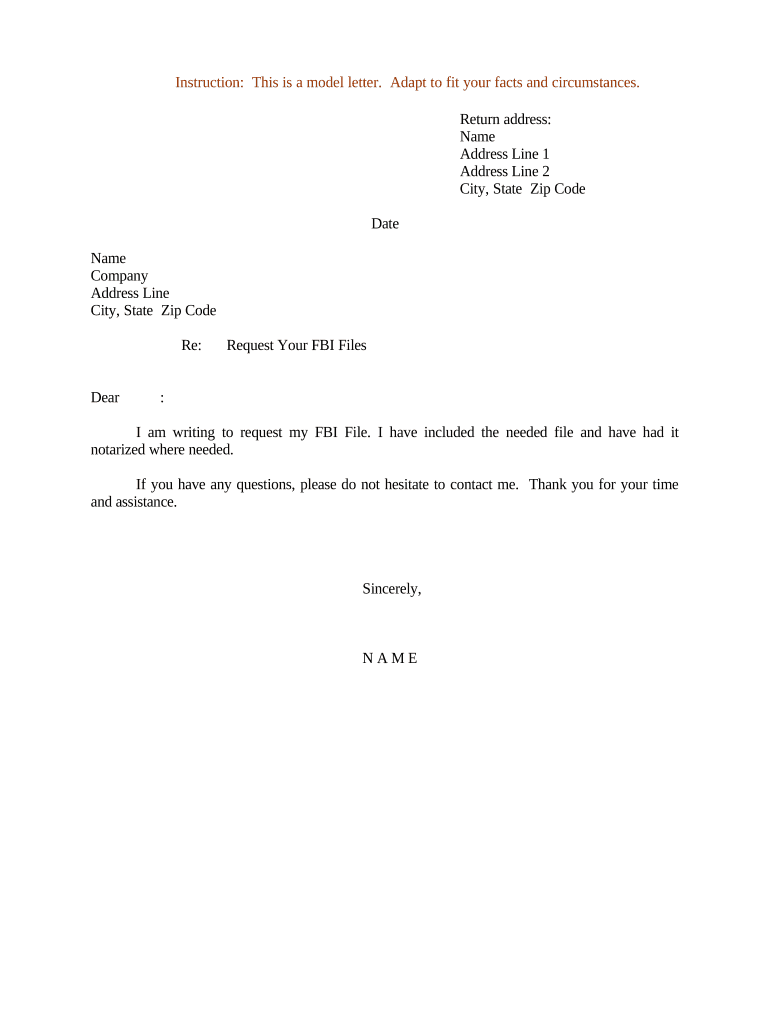






Definition and Meaning of the FBI Case File Template
The FBI case file template serves as a standardized document format for compiling important information pertaining to criminal cases, investigations, and other matters handled by the Federal Bureau of Investigation. This template provides a structured approach facilitating consistency and comprehensiveness in documenting case details. The primary objective of using an FBI file template is to ensure that all relevant data—such as a case summary, evidence collected, witness statements, and investigative results—are systematically organized, making it easier for agents and legal professionals to access and reference essential information during the course of an investigation.
Key elements typically found in an FBI case file template include:
- Case Identifier: A unique case number assigned to each investigation for tracking purposes.
- Subject Information: Personal details of individuals involved in the case, including names, addresses, and contact information.
- Incident Description: A concise summary of the events leading to the investigation, including dates, times, and locations.
- Evidence Documentation: Space allocated for listing all evidence collected, documenting how it was obtained, and maintaining a chain of custody.
- Witness Statements: Sections for capturing interviews and statements from witnesses which are pivotal to corroborating facts.
Understanding the structure and function of the FBI case file template is essential for law enforcement and legal professionals engaged in criminal investigations, ensuring that all relevant evidence is presented systematically.
How to Use the FBI Case File Template
Using an FBI case file template involves a systematic approach to fill out and manage each section effectively. Here are the critical steps for utilizing this template effectively:
- Gain Access: Obtain a copy of the FBI case file template from a reputable source, such as the official FBI website, legal document repositories, or organizational platforms like DocHub.
- Gather Information: Collect all necessary details before starting to fill in the template. This includes case numbers, subject information, descriptions of incidents, and evidence details.
- Input Data Methodically: Begin with the case identifier, following it with comprehensive details about the individuals involved in the case. Ensure to fill in each section as specified, avoiding any gaps that could lead to discrepancies.
- Add Supporting Documentation: Integrate any supplementary materials, such as witness statements or evidence inventories, into the appropriate sections within the template, ensuring everything is clearly labeled and organized.
- Review and Revise: Assembly of the completed template should include a thorough review to confirm the accuracy of the details. Revise as necessary to maintain clarity and precision in language, ensuring it adheres to legal standards.
By following these steps, individuals can ensure their case files are meticulously compiled, fostering improved communication and record-keeping throughout the investigative process.
How to Obtain the FBI Case File Template
To obtain the FBI case file template, individuals may consider several approaches based on their needs and circumstances:
- Official FBI Website: Visit the official FBI site, where legal documents, templates, and additional resources are often made available for public access.
- Legal Document Services: Use online resources such as legal document platforms that provide customizable templates. These services may offer specific versions compatible with various case types.
- Collaboration with Colleagues: For law enforcement agents or legal professionals, seeking assistance from colleagues may yield access to established templates already in use within their organizations.
- Document Management Systems: Explore document management platforms that specialize in legal documentation. Such systems often have built-in templates for various case types, including FBI case files.
Acquiring the template from trusted and reputable sources ensures its validity and reliability, integral for the sensitive nature of FBI-related cases.
Steps to Complete the FBI Case File Template
Completing the FBI case file template requires a few straightforward, yet meticulous steps to guarantee that necessary information is accurately captured. Follow these procedures for a comprehensive and reliable submission:
- Initiate Document Review: Begin by thoroughly reviewing the entire template to understand its layout and required sections.
- Fill in Case Identifier: Insert the unique case number at the top of the document to allow easy reference and identification throughout the investigation.
- Detail Subject Information: Provide detailed information of all parties involved—this includes full names, dates of birth, addresses, and contact information as applicable.
- Compose Incident Summary: Write a clear yet succinct account of the incident that prompted the case initiation. Include dates, times, and locations relevant to the investigation.
- List and Describe Evidence: Create an itemized list of all evidence collected, indicating its origin and relevance to the case. Provide details on how this evidence correlates with other case elements.
- Incorporate Witness Testimonies: Document interviews with witnesses, making sure to include dates of statements and their relationship to the case.
- Finalize Documentation: Review all completed sections for accuracy and completeness. Make necessary adjustments to ensure clarity and compliance with legal expectations before submission.
Properly adhering to these steps fosters both organizational efficiency and legal compliance, essential for the integrity of any investigative process.
Key Elements of the FBI Case File Template
The key elements of the FBI case file template form the backbone of every investigation, ensuring a cohesive and thorough representation of all pertinent details. Essential components include:
- Case Identifier: Establishes a reference that directly links the file to recorded investigations within law enforcement databases.
- Subjects and Victims: Clearly delineates individuals who are involved, whether they are suspects, victims, or witnesses; every detail must be comprehensive and precise.
- Incident Report: An exhaustive recounting of the event or events leading to the case, providing context that is critical for understanding the overall circumstances.
- Evidence Log: A detailed log that chronicles all evidence collected, which not only serves as documentation but also as a preservation of fact for legal review.
- Witness Information: Sections dedicated to capturing crucial information from witnesses, making it easier to refer back to statements during trials or further investigations.
By including these critical elements in the FBI case file, investigators can ensure that all relevant information is systematically captured, which is vital in legal proceedings and case management.