
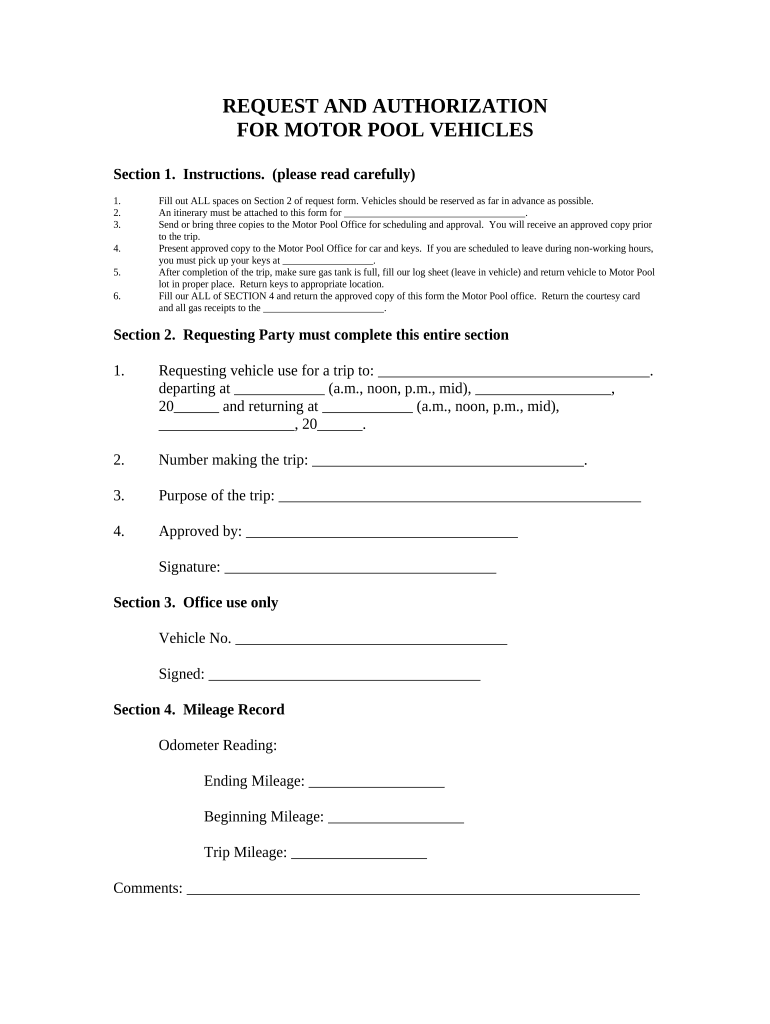







Overview of Vehicle Authorization Sample
The vehicle authorization sample is a formal document that grants permission for an individual to operate a vehicle owned by another person or entity. This authorization is critical in various contexts, such as rental agreements, business-managed vehicle fleets, or in scenarios where multiple family members need to use a single vehicle. The importance of having a proper authorization letter is paramount, as it protects both the vehicle owner and the individual driving the car, ensuring clarity regarding permissions and responsibilities.
How to Use the Vehicle Authorization Sample
To utilize a vehicle authorization sample effectively, follow these steps:
-
Identify the Purpose:
- Assess why the vehicle authorization is needed, whether for personal use, business purposes, or in a legal context.
-
Fill Out the Template:
- Insert the relevant information, including:
- Names of the vehicle owner and authorized driver
- Vehicle details (make, model, year, VIN)
- Specific time frame for the authorization
- Insert the relevant information, including:
-
Review and Sign:
- Ensure both parties (owner and driver) review the document for accuracy.
- Both parties should sign and date the letter to validate the authorization.
-
Keep Records:
- Maintain copies of the signed authorization for future reference and potential legal implications.
By following these steps, users can ensure that they correctly manage the usage of vehicles under their ownership.
Key Elements of the Vehicle Authorization Sample
Understanding the key elements of the vehicle authorization sample is crucial for creating a comprehensive document. Essential components include:
-
Parties Involved:
- Clearly state the names and contact information of both the vehicle owner and the authorized driver.
-
Vehicle Information:
- Include detailed information such as the vehicle's make, model, year, and vehicle identification number (VIN).
-
Date of Authorization:
- Specify the start and end dates during which the authorized driver has permission to use the vehicle.
-
Purpose of Use:
- Outline the intended use of the vehicle, whether for personal errands, business operations, or other specific purposes.
-
Signature Authorization:
- Ensure both parties sign and date the document. Digital signatures can also be valid if appropriate electronic signature laws are followed.
Incorporating these elements helps establish clarity and legal standing concerning the use of the vehicle.
Steps to Complete the Vehicle Authorization Sample
Completing the vehicle authorization sample involves specific procedural steps to ensure it is correctly filled out. Here is a step-by-step guide to completing the form effectively:
-
Gather Necessary Information:
- Collect all required details, including the owner and driver’s names, vehicle specifications, and intended usage.
-
Select the Appropriate Template:
- Choose a suitable vehicle authorization template that meets your needs. Various legal websites provide customizable examples.
-
Complete the Form:
- Fill in the template accurately:
- Include a title for the document such as “Vehicle Authorization Letter”
- Input the owner's and driver's personal details
- Enter the vehicle’s specifics
- Clearly outline the time duration for usage
- Fill in the template accurately:
-
Add Purpose and Conditions:
- Specify the reason for vehicle use and any conditions or limitations associated with the authorization.
-
Review and Finalize:
- Double-check all entries for accuracy.
- Ensure all necessary fields are filled before printing or saving the document.
-
Sign and Distribute:
- Both the vehicle owner and the authorized driver should sign the document. Distribute copies to all relevant parties, keeping one for personal records.
Following these steps ensures that the vehicle authorization is valid and meets legal standards.
Legal Use of the Vehicle Authorization Sample
The legal use of a vehicle authorization sample underpins its importance in various scenarios. By creating a legally binding document, both parties can mitigate risks associated with liability and usage disputes. Key legal considerations include:
-
Adherence to State Laws:
- Different states may have specific legal requirements related to vehicle usage and authorization. It's important to ensure compliance with local regulations.
-
Clarity and Intent:
- The document serves to clearly express the intent of the vehicle owner in permitting someone else to use their vehicle, providing legal protection against any misuse claims.
-
Insurance Considerations:
- Some insurance policies require a vehicle authorization letter when another individual operates the insured vehicle. Understanding the policy’s requirements is vital for protection.
-
Liability Awareness:
- The vehicle owner remains financially responsible for damages incurred by the authorized driver unless explicitly stated otherwise in the document.
Navigating these legal aspects is essential for ensuring the comprehensive use of the vehicle authorization sample.
Examples of Using the Vehicle Authorization Sample
Utilizing vehicle authorization samples can vary greatly based on individual needs and scenarios. Here are some common examples:
-
Family Usage:
- A parent may authorize their child to drive a family car while away at college, ensuring the child has permission to operate the vehicle.
-
Rental or Carshare Services:
- Car rental companies often require an authorization letter when a customer needs to designate another individual to drive the rented vehicle during the rental period.
-
Business Fleet Management:
- Companies with a fleet of vehicles may use an authorization letter to allow employees to operate company vehicles, detailing specific conditions and limitations regarding use.
-
Personal Arrangements:
- When a friend borrows a vehicle for an extended trip, an authorization letter serves as a formal acknowledgment of permission for use.
These examples illustrate the versatility of the vehicle authorization sample and its applicability in various contexts, ensuring legality and clarity in vehicle operation.




