
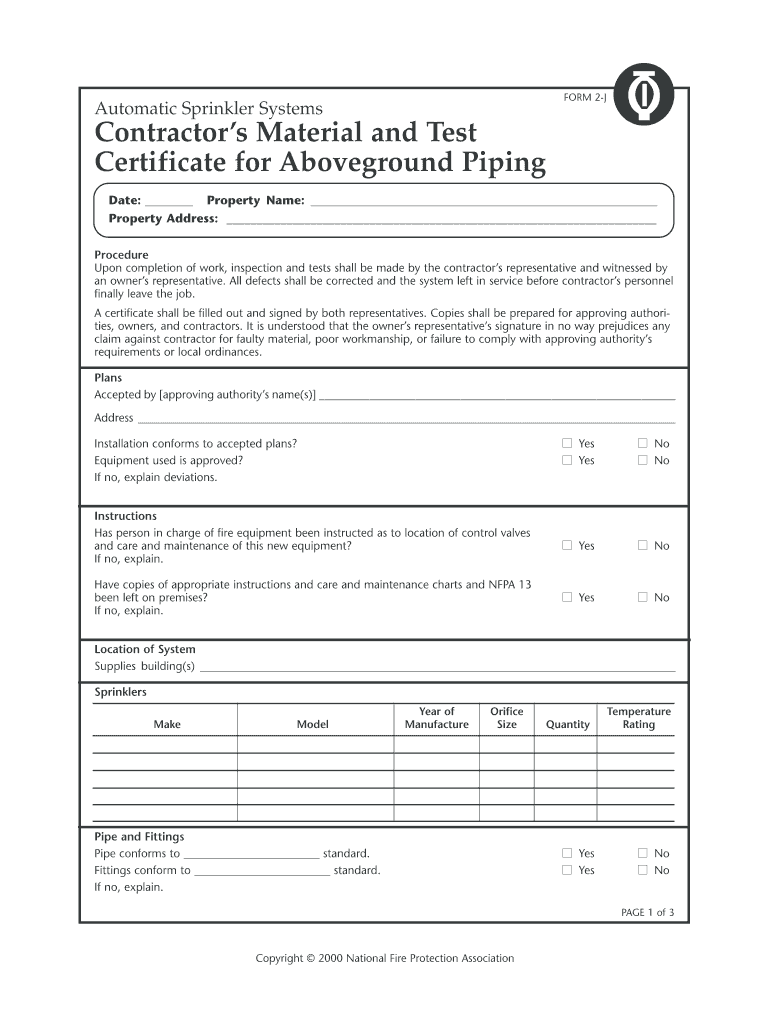







Definition and Meaning of the NFPA 13 Above Ground Test Certificate Form
The NFPA 13 above ground test certificate form is an essential document used in the fire protection industry, specifically for automatic sprinkler systems installed above ground. This form serves as evidence that the sprinkler system has undergone comprehensive testing in accordance with the guidelines set forth by the National Fire Protection Association (NFPA) 13 standards. It documents compliance with safety measures, detailing the inspection, operational testing, and any necessary adjustments before the system is placed into service.
Purpose of the Form
- Certification of Compliance: The form ensures that the entire system meets NFPA 13's rigorous safety standards.
- Documentation: It acts as a formal record for stakeholders, including contractors, owners, and local authorities, providing a clear history of inspections and tests conducted.
- Legal Requirement: This form may be required for inspections by local fire marshals or insurance companies to verify operational compliance with fire safety regulations.
Key Elements of the NFPA 13 Above Ground Test Certificate Form
The NFPA 13 above ground test certificate form contains crucial information related to the sprinkler system. Essential elements of the form include:
- Identifying Information: This section includes the name and contact details of the installing contractor and the property owner.
- System Information: Describes the type of sprinkler system installed, including specifications of the equipment used and the overall system's layout.
- Testing Information: Details on the types of tests conducted, such as hydrostatic tests, functional tests, and any inspections performed to validate system operability.
- Signatures: Required from both the contractor's representative and the owner's representative, confirming that the installation meets the required standards.
Importance of Unique Identifiers
- Each certificate typically includes a unique identifying number or code. This ensures accurate tracking and record-keeping for future inspections and regulatory compliance.
Steps to Complete the NFPA 13 Above Ground Test Certificate Form
Completing the NFPA 13 above ground test certificate form requires careful attention to detail. Here’s a step-by-step guide:
- Gather Necessary Information: Collect all relevant data, including the installation site address, system specifications, and contractor details.
- Conduct System Tests: Perform all necessary tests mandated by NFPA 13 standards, such as hydrostatic tests, ensuring the system's integrity and functionality.
- Document Findings: Record the results of the tests on the form. Ensure that descriptions of procedures followed and outcomes observed are accurate and detailed.
- Complete Signature Section: Once all testing is done, both the contractor and owner representatives must review the document for accuracy and sign it.
- Submit the Certificate: Provide the completed certificate to the relevant authorities or keep it for personal or corporate records, ensuring compliance with local regulations.
Best Practices
- Double Check Entries: Ensure that all fields are filled out completely and accurately before submission.
- Maintain Copies: Retain copies of completed certificates for internal records and future inspections.
Legal Use of the NFPA 13 Above Ground Test Certificate Form
The legal use of the NFPA 13 above ground test certificate form is crucial in ensuring compliance with fire safety laws and regulations. Key aspects to consider include:
- Regulatory Compliance: Many jurisdictions require this certificate as part of their fire safety compliance processes. Failing to provide it can result in penalties or increased liability in case of incidents.
- Proof of Due Diligence: The form serves as documented proof that the sprinkler system installation adhered to NFPA standards, protecting the property owner and contractor in legal matters.
- Insurance Requirements: Some insurance providers may mandate a valid NFPA 13 certificate as part of their policy conditions, especially for properties reliant on fire protection systems.
Important Terms Related to the NFPA 13 Above Ground Test Certificate Form
Understanding key terms related to the NFPA 13 above ground test certificate is vital for proper usage:
- Hydrostatic Test: A crucial test performed to ensure that the sprinkler system can withstand water pressure without leaks.
- Acceptance Testing: The process of verifying that the installed system meets specified performance criteria.
- Automatic Sprinkler System: A system that uses interconnected piping and water sources to extinguish or control fires automatically.
- Compliance Standards: Regulations defined by NFPA 13 that dictate how sprinkler systems must be installed and maintained.
By familiarizing oneself with these terms, stakeholders can better navigate the requirements surrounding the NFPA 13 above ground test certificate form.




