






Definition and Purpose of Form 1095-B
Form 1095-B is an IRS document that provides confirmation of an individual's minimum essential health coverage during the tax year. Specifically for 2017, this form was vital for taxpayers under the Affordable Care Act to verify that they met the healthcare coverage standards required to avoid penalties. It's issued by insurers, government programs like Medicare, or employers with less than 50 full-time employees. Understanding this form is crucial as it impacts tax filing and compliance with health insurance mandates.
Key Elements Within Form 1095-B
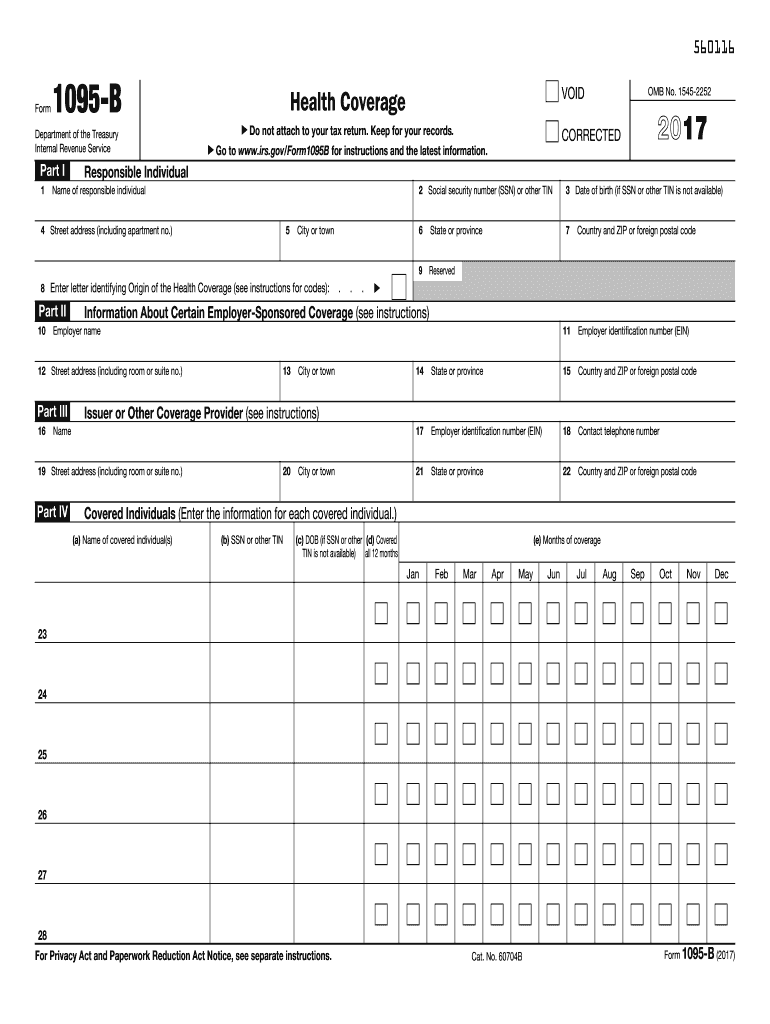
Form 1095-B is structured into several parts, each containing essential information:
- Part I: Personal Information, which includes the covered individual's name, address, and taxpayer identification number.
- Part II: Sponsor Information, listing details of the entity providing the coverage, such as their name and employer identification number.
- Part III: Coverage Provider Information, typically completed by the insurance company or government agency.
- Part IV: Covered Individuals section, where each person covered under the policy, their social security numbers, and the months they were covered are documented.
How to Use Form 1095-B for Your Taxes
When filing taxes, form 1095-B serves as proof that you, and your dependents if applicable, had qualifying health coverage during the year. This verification is important because it ensures compliance with the Affordable Care Act requirements, which exempt you from potential tax penalties. However, it's important to note that you do not need to attach this form to your tax return. Instead, use it as a reference to answer related questions on your tax forms.
Obtaining Form 1095-B
Generally, form 1095-B is mailed to you by the coverage provider early in the tax season, typically in January or February. If you haven't received it, you can contact your healthcare provider or insurance company directly to request a copy. Be sure to verify your mailing address with the provider to avoid delays in receiving this critical piece of documentation.
Steps to Properly Complete Form 1095-B
While recipients of form 1095-B do not fill it out, understanding its sections can help ensure the information is correct:
- Verify Personal Information: Check the accuracy of the individual's details in Part I.
- Review Coverage Information: In Parts II through IV, confirm the coverage dates align with your records.
- Report Discrepancies: If there are errors, contact the issuer for corrections, ensuring the form accurately reflects your health coverage.
Reasons to Use Form 1095-B
Form 1095-B serves both individuals and entities as proof of health coverage, necessary for demonstrating compliance with federal health mandates. For taxpayers, having this documentation ready minimizes the stress associated with inquiries from the IRS regarding coverage status. Additionally, it clarifies what coverage various dependents had, aiding in precise tax filings.
Consequences of Non-Compliance
Failing to have or report eligible coverage may result in penalties under the individual mandate of the Affordable Care Act. While the tax penalty for not having health insurance was reduced to zero starting in 2019, during 2017, penalties could apply if coverage wasn't maintained throughout the year.
Who Typically Uses Form 1095-B
This form is predominantly used by individuals and families who receive health coverage through:
- Government programs such as Medicaid or Medicare
- Small employers with fewer than 50 employees
- Private insurance purchased independently
Understanding this demographic helps pinpoint who must be particularly attentive to receiving and verifying their form 1095-B annually.
Important Legal Considerations
Form 1095-B is critical for ensuring compliance with IRS regulations under the Affordable Care Act. Taxpayers must verify their form to confirm they fulfil the coverage requirements, while employers and insurance entities must accurately report coverage to avoid legal penalties. It's important to understand these legal responsibilities to avoid complications during tax season.
Filing Deadlines and Important Dates
While form 1095-B is primarily for records, knowing when it should arrive is essential. Generally, the form should be postmarked by January 31 following the year of coverage. Tax returns, which require coverage information verification, are typically due by April 15. These deadlines ensure accurate and timely reporting of health coverage information.