




01. Edit your b 2015 pdf online
Type text, add images, blackout confidential details, add comments, highlights and more.

Type text, add images, blackout confidential details, add comments, highlights and more.

Draw your signature, type it, upload its image, or use your mobile device as a signature pad.

Send it via email, link, or fax. You can also download it, export it or print it out.
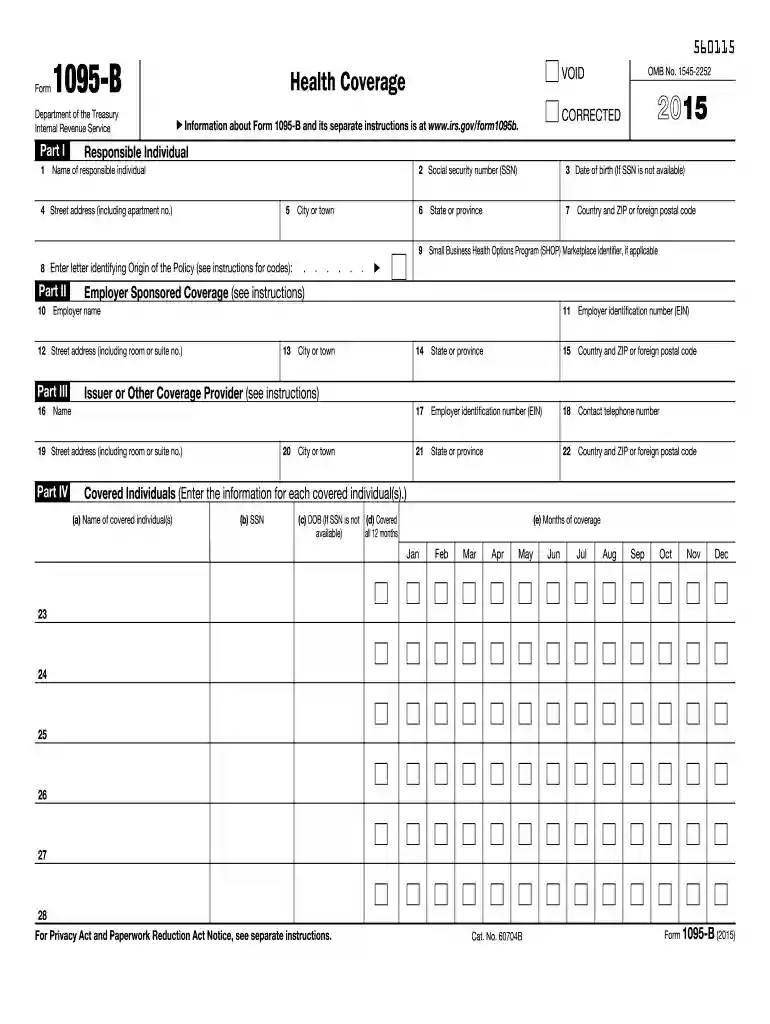
Form 1095-B is a tax document issued by the IRS, detailing an individual's health coverage during 2015. It is critical for verifying whether an individual had minimum essential coverage, as defined under the Affordable Care Act (ACA). This form provides specifics about the policy coverage, including the names of covered individuals and the details of the coverage provider. Understanding the contents of this form is essential for ensuring accurate reporting on your tax returns. Without this documentation, individuals may face difficulties in proving compliance with ACA requirements, which mandated health insurance coverage for most Americans.
The 1095-B form is used to report the health coverage information of the responsible individual and covered persons to the IRS. Filing this form is part of ensuring compliance with the ACA's individual mandate. It is essential to:
Form 1095-B is typically mailed to individuals by their health insurance provider or employer. If you have not received your form by the end of February following the tax year, you should:
Filing Form 1095-B for 2015 is critical for proving that you had the required health insurance coverage as dictated by the ACA. This documentation not only assists in staying compliant with federal requirements but also aids in figuring out any penalties for lapse in coverage. It's instrumental for taxpayers who need to establish that they have met all relevant health coverage obligations and avoid potential fines due to non-compliance.
The 1095-B form is predominantly used by individuals who obtained health insurance through small employers, insurers, or government programs such as Medicaid. Unlike Form 1095-C, which is provided to employees of large businesses, Form 1095-B is more applicable to individuals with non-employer-sponsored health coverage.


Understanding IRS guidelines for handling the 1095-B form is vital:
Adhering to these deadlines helps ensure compliance and avoid penalties related to late submissions or inaccuracies in reporting mandated health coverage.
We've got more versions of the b 2015 pdf form. Select the right b 2015 pdf version from the list and start editing it straight away!
| Versions | Form popularity | Fillable & printable |
|---|---|---|
| 2025 | 4.6 Satisfied (47 Votes) | |
| 2024 | 4.8 Satisfied (24 Votes) | |
| 2023 | 4.1 Satisfied (35 Votes) | |
| 2022 | 4.2 Satisfied (33 Votes) | |
| 2021 | 4.8 Satisfied (189 Votes) | |
| 2020 | 4.4 Satisfied (276 Votes) | |
| 2019 | 4.3 Satisfied (35 Votes) | |
| 2018 | 4 Satisfied (53 Votes) | |
| 2017 | 4.4 Satisfied (157 Votes) | |
| 2016 | 4.2 Satisfied (52 Votes) | |
| 2015 | 4.2 Satisfied (73 Votes) | |
| 2014 | 4.2 Satisfied (71 Votes) |
At DocHub, your data security is our priority. We follow HIPAA, SOC2, GDPR, and other standards, so you can work on your documents with confidence.
This Form 1095-B provides information needed to report on your income tax return that you, your spouse (if you file a joint return), and individuals you claim
Form 1095-B: This form will be sent to all individuals enrolled in Seton Hall University coverage in 2015 by the health insurance carrier.


