Dot inspection form 2026

Get Form
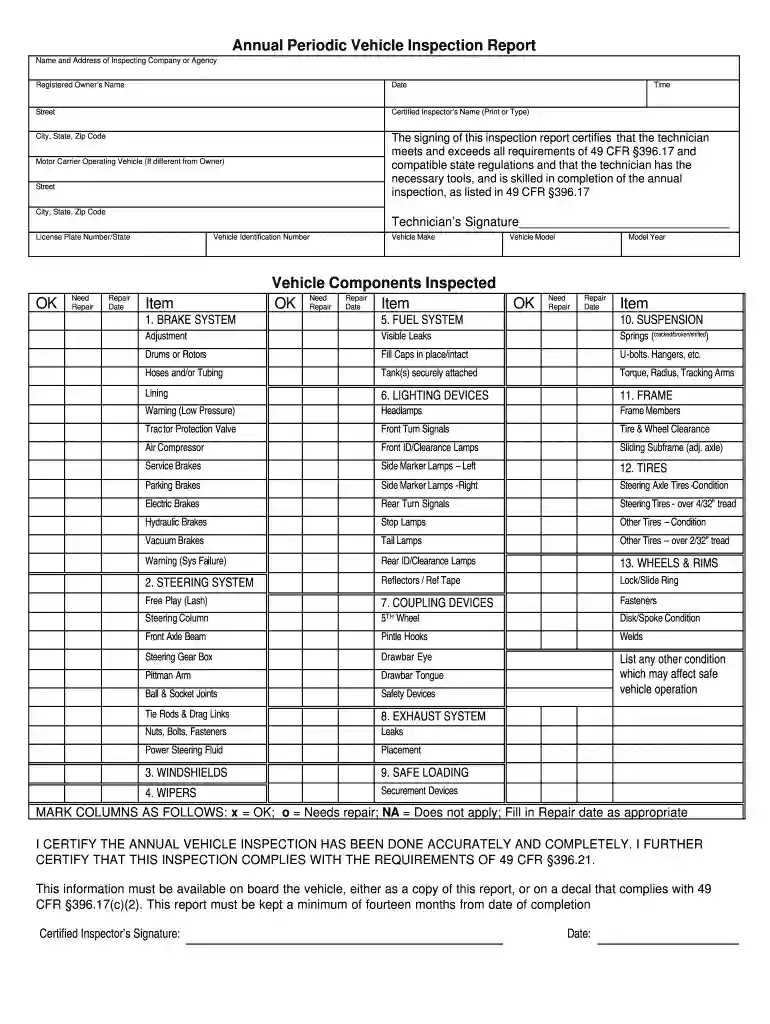
annual dot inspection form pdf Preview on Page 1

Here's how it works

01. Edit your annual dot inspection form pdf online
Type text, add images, blackout confidential details, add comments, highlights and more.

02. Sign it in a few clicks
Draw your signature, type it, upload its image, or use your mobile device as a signature pad.

03. Share your form with others
Send vehicle checklist inspection via email, link, or fax. You can also download it, export it or print it out.

Overview of the DOT Inspection Form

The DOT inspection form is a critical document used to verify that commercial vehicles meet federal and state safety regulations. This form is essential for ensuring the safety of vehicles used in interstate commerce, serving as a record of compliance with the Federal Motor Carrier Safety Administration (FMCSA) standards.

Purpose of the Form

The primary purpose of the DOT inspection form is to certify that a thorough inspection has been completed on a vehicle. Its completion signifies that the vehicle has been checked for mechanical issues and compliance with safety regulations. This documentation is vital for fleet management and maintaining regulatory standards in the transportation industry.

  • Ensures safety and compliance for commercial vehicles
  • Provides a formal record of inspections conducted
  • Helps maintain the integrity of transportation companies by ensuring their vehicles meet safety regulations

Key Components of the Form

The DOT inspection form encompasses several critical sections that capture comprehensive details about the vehicle and the inspection process.

  1. Inspector Information

    • Name and credentials of the inspector
    • Date of the inspection
  2. Vehicle Information

    • Vehicle identification number (VIN)
    • Make, model, and year of the vehicle
    • Owner's information
  3. Inspection Results

    • Overview of key vehicle components inspected, such as brakes, lights, tires, and safety equipment
    • Pass or fail designation for critical inspections
  4. Signature Requirements

    • Signature of the inspector
    • Acknowledgement from the vehicle owner regarding inspection findings

Completing the DOT Inspection Form

To accurately complete the DOT inspection form, inspectors must follow a systematic approach to ensure all necessary components of the vehicle are evaluated.

  • Preparation: Review the previous inspection reports and gather necessary tools.
  • Inspection process: Conduct a detailed vehicle examination, paying attention to mechanical integrity and safety features.
  • Documentation: Fill out the form meticulously, noting any deficiencies and the required corrective actions.

This structured approach guarantees a thorough evaluation and robust documentation of the vehicle's condition.

Importance of Regular Inspections

Regular inspections, as documented by the DOT inspection form, are crucial for several reasons.

  • Compliance with Regulations: Regular monitoring ensures adherence to safety laws, avoiding violations and potential penalties.
  • Enhancement of Safety: By routinely checking vehicles, companies can mitigate the risk of accidents caused by mechanical failures.
  • Data for Improvement: The form provides historical data that helps companies track vehicle performance trends over time, assisting in proactive maintenance.

Variants of the DOT Inspection Form

There are multiple versions of the DOT inspection form tailored for different purposes.

  • Annual DOT Inspection Form PDF: Typically required for comprehensive annual inspections.
  • DOT Vehicle Inspection Form PDF: Used for standard inspections that may not be annual but are mandated for safety compliance.
  • Free Printable DOT Inspection Forms: Useful for companies seeking accessible formats for training and compliance.

These variants cater to the diverse needs of various entities in the transportation sector, ensuring they can maintain safety and compliance in routine operations.

Legal Implications of DOT Inspection Forms

Failure to complete DOT inspection forms accurately and on time can lead to severe legal repercussions.

  • Penalties: Non-compliance can result in financial penalties, including fines for both drivers and vehicle owners.
  • Liability: In the event of an accident involving improperly inspected vehicles, companies may face litigation, potentially resulting in significant financial liabilities.
  • Revocation of Operating Authorities: Continuing violations can lead to the suspension or revocation of a carrier's operating authority, jeopardizing business operations.

Understanding these legal implications emphasizes the necessity of diligent inspection practices and accurate documentation.

Tips for Effective DOT Inspections

To ensure a thorough and compliant inspection process, the following tips can be beneficial:

  • Regular Training: Provide regular training for inspectors to stay updated on the latest safety regulations and inspection techniques.
  • Utilize Checklists: Implement checklists based on the DOT inspection form to standardize inspections and ensure no critical areas are overlooked.
  • Document Findings Immediately: Record inspection results as soon as possible to maintain accuracy and prevent forgetfulness about minor details.

These strategies help maintain a routine of diligence and thoroughness in inspections, fostering safety in commercial transportation.

be ready to get more

Complete this form in 5 minutes or less

Get form

Got questions?

We have answers to the most popular questions from our customers. If you can't find an answer to your question, please contact us.
Contact us
Documents include but may not be limited to: State drivers license or commercial drivers license (CDL) Medical Examiners Certificate or waiver and Skill Performance Evaluation Certificate (if applicable) Record of duty status (paper logs allowed if exempt from an electronic logging device (ELD)) Jan 31, 2020
A DOT inspection fails due to critical safety issues like faulty brakes, bald or damaged tires, non-functioning lights, steering/suspension problems, or major fluid leaks (oil, fuel), alongside administrative failures such as missing driver documents, incomplete logbooks, or improperly secured cargo, as even small defects like a burnt-out marker light or missing reflector can cause a failure. Vehicle Equipment Failures Brakes: Worn pads/shoes, dry-rotted hoses, corroded lines, malfunctioning parking brakes, or warning lights. Tires Wheels: Insufficient tread depth (less than 4/32 on steering, 2/32 on others), visible cords, uneven pressure, cracked rims, or missing lug nuts. Lights: Burnt-out bulbs, damaged lenses, missing reflectors, or incorrect headlamp aim. Steering Suspension: Damaged components, excessive play, or worn parts. Fluid Leaks: Any DocHub oil, fuel, coolant, or power steering fluid leaks. Exhaust: Leaks, excessive noise, or visible damage. Body: Damaged body work, sharp protrusions, or issues with the windshield (chips/cracks). Emergency Equipment: Missing or improper first aid kits, flares, or fire extinguishers. Driver Paperwork Failures Documentation: Expired medical card, missing CDL, or incomplete records. Hours of Service (HOS): Logbook errors or falsified records. Pre-Trip: Failure to conduct or document a pre-trip inspection. Cargo Failures Securement: Improperly tied-down or shifting cargo. Weight: Overloaded vehicle or trailer. Operational Failures Mobile Phones: Using a handheld device while driving. Seatbelts: Not wearing a seatbelt. AI can make mistakes, so double-check responsesCommon Violations - CSAMoving violations, such as: Speeding. Following too closely. Improper lane changes. Reckless driving. Improper turns. Department of Transportation (.gov)Why Truckers FAIL DOT Inspections in 60 Seconds (And How to Pass)Nov 10, 2025 around do your straps show frame are your mud flaps missing are the truck. and trailer VIN readable. and do you have oYouTube thatDOTcop
Can You Perform Your Own Annual DOT Inspection? The short answer is yes, but with some important caveats: You must be qualified to perform the inspection. The inspection must meet all DOT standards.
An inspection that includes examination of drivers license; Medical Examiners Certificate and Skill Performance Evaluation (SPE) Certificate (if applicable); alcohol and drugs; drivers record of duty status, as required; hours of service; seat belt; vehicle inspection report(s) (if applicable); brake systems; cargo
The cost of an annual DOT inspection varies depending on the shop and the vehicle. Expect to pay anywhere from $50 to $125 for a truck inspection and $40 to $75 for a trailer inspection.

Security and compliance

At DocHub, your data security is our priority. We follow HIPAA, SOC2, GDPR, and other standards, so you can work on your documents with confidence.

Learn more
ccpa2
pci-dss
gdpr-compliance
hipaa
soc-compliance

People also ask

The aim of DOT inspections is to ensure CMVs follow guidelines set by the Federal Motor Carrier Safety Administration (FMCSA), minimizing risks and enhancing road safety. A certified inspector will check everything from the vehicles condition to the drivers qualifications and time logs.
Prepare your paperwork. DOT inspectors will ask to see your CDL license and medical exam card, so make sure neither is expired. Also, keep your logs (paper and electronic) up to date, and make sure you dont exceed hours-of-service laws.
If you want to do your own annual DOT inspection you need to meet the qualifications and pass a training program. To pass the training you must be knowledgeable about all of the rules and regulations, you are also required to keep your inspection report for a set amount of time.Dec 18, 2024

dot inspection forms