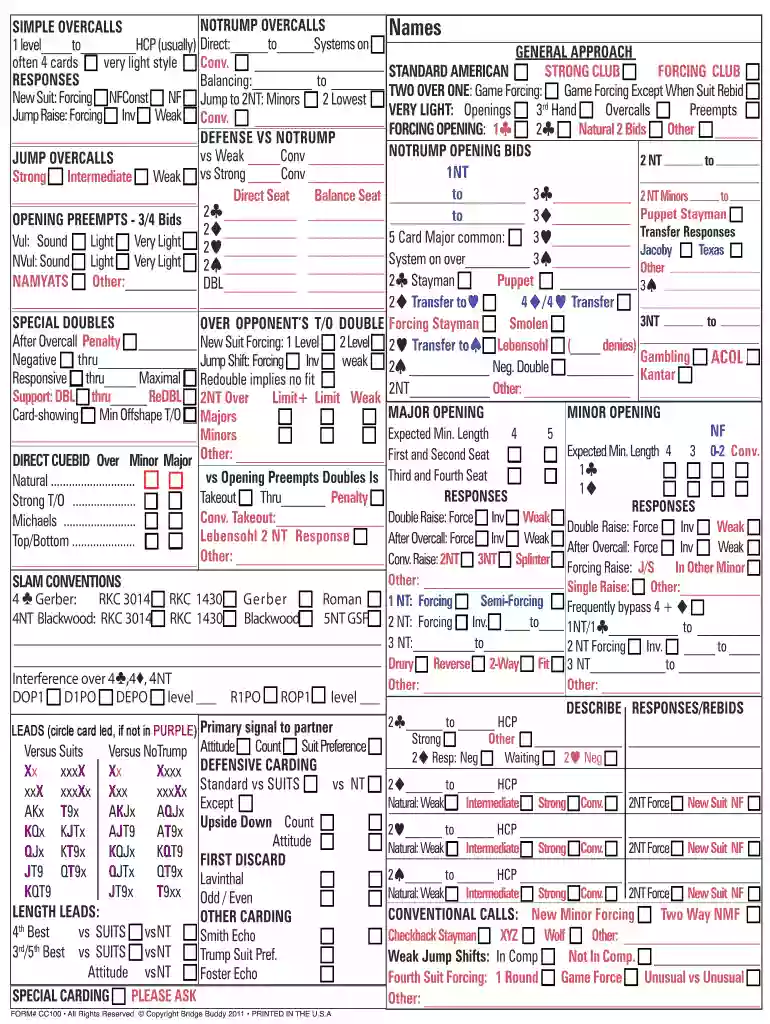
Definition and Meaning of the Bridge Convention Card Template
The bridge convention card template is a standardized document used by players of the card game bridge to record their partnership's bidding conventions and agreements. It systematically displays the rules and strategies that players intend to use during the game, ensuring clarity and understanding between partners. Typically, the card contains sections that outline essential information such as the bidding system employed (e.g., Standard American, Acol), any special conventions (e.g., Stayman, Blackwood), and essential guidelines for bidding and play.
Key Components of a Bridge Convention Card Template
- Bidding System: This section specifies the overall system adopted by the partnership. This can range from simple systems aimed at novice players to complex systems for experienced players.
- Conventions: Various conventions, such as weak two-bids or unusual no-trumps, are noted to provide context for bids.
- Sign-Off Bids: Information on how the partnership handles sign-off bids can help clarify what type of hand each partner holds based on their responses.
- Defensive Strategies: Guidelines for signaling and defense between partners enhance coordination during the play.
How to Use the Bridge Convention Card Template
Utilizing a bridge convention card template is crucial for effective communication between partners during a game. To leverage the template effectively, players should follow these general steps:
- Fill Out Personal Information: At the top of the card, enter your name and your partner’s name, along with the contact information if necessary.
- Select the Bidding System: Choose and describe the bidding system your partnership will use. Ensure it aligns with the level of understanding both partners have.
- List the Conventions: Include all relevant conventions, ensuring both players agree on their meanings and applications.
- Clarify Partnership Agreements: Document anything specific to your partnership that might not be commonly understood, which helps newcomers or substitutes understand your bidding style.
- Update Regularly: As your partnership evolves and you learn new techniques or modify your strategies, keep the card updated to reflect the current conventions and practices.
Steps to Complete the Bridge Convention Card Template
To complete a bridge convention card template accurately, follow these detailed steps:
- Download or Print the Template: Obtain a printable bridge convention card template from a reliable source or create one using a digital editor.
- Identify Your Bidding System: Decide which bidding system you will use. Common options include Standard American and Two Over One. Clearly note this on the card.
- Define Your Conventions: Make a list of all conventions your partnership agrees to use. Provide explanations or abbreviations if necessary for clarity.
- Outline Your Game Strategy: Discuss and document your partnership's specific strategies for bidding responses, signaling, and defensive play.
- Conduct a Review Session: After filling out the card, review it with your partner to ensure that both parties understand and agree with the contents.
- Print or Save the Card: Once finalized, print a copy or save a digital version for easy reference during play.
Important Terms Related to the Bridge Convention Card Template
Understanding the specific terminology related to the bridge convention card template ensures effective gameplay and communication. Some important terms include:
- Bidding: Refers to the communication between players via declarations of the strength and distribution of their hands.
- Conventions: Pre-established agreements on specific bids that imply certain strength or distribution characteristics.
- Responses: Bids made in reply to a partner's bid, conveying specific information about the responder's hand.
- Limit Bid: A bid that indicates a partnership's willingness to stop at a certain level rather than pursue a higher score.
- Game Forcing: Bids or sequences that require the partnership to continue bidding until a final contract is reached, regardless of the hand’s strength.
Examples of Using the Bridge Convention Card Template
Employing the bridge convention card template illustrates various ways players can enhance their strategic approach. Here are some practical examples:
- Weak Two Opening: A partnership utilizing a weak two bid conventions would indicate that a bid of two of a suit shows a weak hand with six cards in that suit, typically with 5 to 10 points.
- Stayman Convention: This convention is used after a 1NT opening bid, allowing the responder to inquire about the opener's four-card major suits by bidding two clubs.
- Blackwood Convention: Employed to ask for Aces (or Kings) during a slam auction, this helps players ascertain whether they have the necessary high-card points to bid at a higher level.
Legal Use of the Bridge Convention Card Template
The bridge convention card template itself is not subject to legal scrutiny, as it pertains to a social game rather than formal regulations. However, players should be aware that:
- Transparency: In competitive environments, players are often required to disclose their convention cards accurately to maintain fairness.
- Compliance with Tournament Rules: Ensure that the conventions noted adhere to the governing rules of the organization or club where the game is held, such as the American Contract Bridge League (ACBL).
Versions or Alternatives to the Bridge Convention Card Template
There are various versions of the bridge convention card template suited for different types of players and levels of complexity. These include:
- Standard Convention Cards: ACBL provides templates that are accepted in sanctioned events and detail a wide range of conventions.
- Printable Cards: Available in various formats, these can be filled out by hand and customized according to a partnership's needs.
- Digital Version: Some software solutions and online platforms offer fillable versions that can be easily updated and shared electronically, which is beneficial for real-time games or remote play sessions.