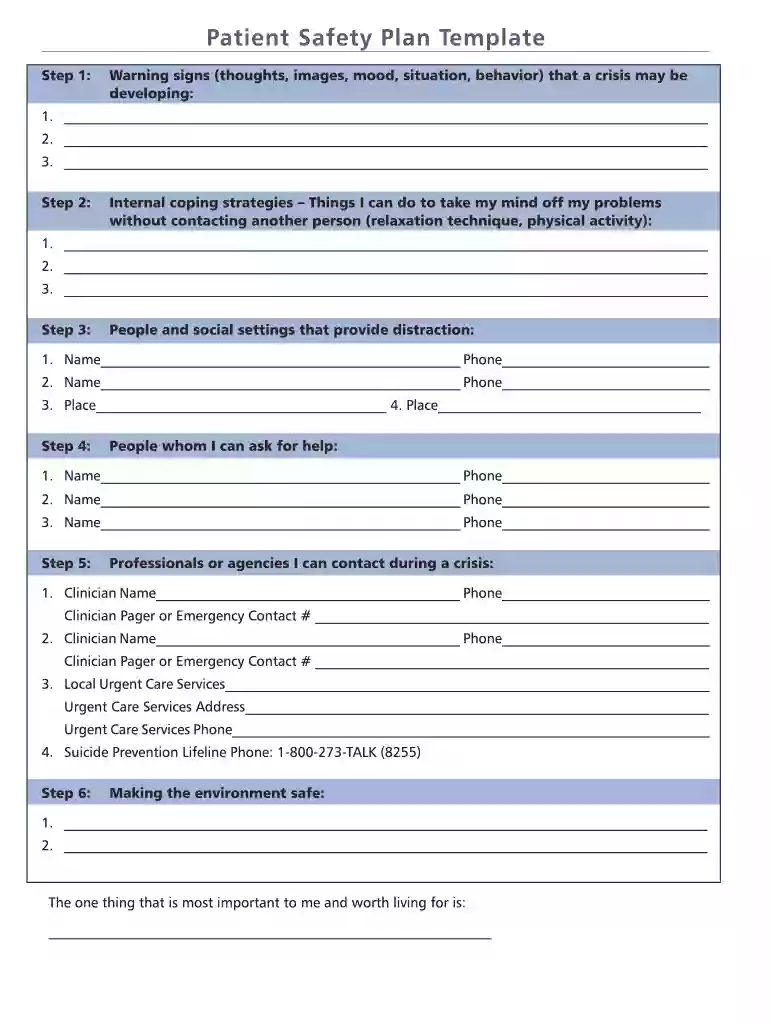
Patient safety plan template 2026

Get Form
stanley brown safety plan pdf Preview on Page 1

Here's how it works

01. Edit your stanley brown safety plan pdf online
Type text, add images, blackout confidential details, add comments, highlights and more.

02. Sign it in a few clicks
Draw your signature, type it, upload its image, or use your mobile device as a signature pad.

03. Share your form with others
Send stanley brown safety plan via email, link, or fax. You can also download it, export it or print it out.

Comprehensive Overview of a Patient Safety Plan Template

A patient safety plan template serves as a pivotal tool for healthcare organizations aiming to enhance patient care quality and safety. This structured document outlines clear guidelines and strategies to proactively prevent adverse events and ensure a secure environment for patients. It is particularly useful in hospitals and clinics, providing a roadmap for creating and maintaining systems that prioritize patient wellbeing.

Key Components of a Patient Safety Plan

A well-designed patient safety plan template should include various elements to comprehensively address patient safety concerns. Below are essential components that should be present:

  • Risk Assessment: Identify potential risks affecting patient safety within the healthcare environment. This includes evaluating processes, systems, and locations.
  • Patient Engagement: Strategies for involving patients in their own safety, such as educating them about safety measures and encouraging them to ask questions.
  • Incident Reporting Procedures: Clear instructions on how to report safety incidents, near misses, and adverse events, which can be crucial for monitoring and improving practices.
  • Roles and Responsibilities: Specify the roles of healthcare staff, including the responsibilities of nurses, doctors, and safety officers in maintaining patient safety.
  • Continuous Improvement Measures: Outline how the organization will continually assess and improve safety practices through audits, feedback mechanisms, and analysis of incident reports.

Steps to Develop a Patient Safety Plan

Developing a patient safety plan involves several systematic steps to ensure thoroughness and effectiveness:

  1. Conduct a Comprehensive Analysis:

    • Evaluate existing safety data.
    • Identify past incidents and trends in patient safety concerns.
    • Assess the current safety culture within the organization.
  2. Engage Stakeholders:

    • Involve staff from various departments, clinical leaders, and patient advocates in the development process.
    • Hold discussions or workshops to gather diverse perspectives on safety priorities.
  3. Draft the Patient Safety Plan:

    • Use the insights gathered to create a draft that includes all essential components.
    • Ensure that the language is clear and that the plan is easily accessible to all staff.
  4. Review and Revise:

    • Circulate the draft among stakeholders for feedback.
    • Make necessary revisions based on input to enhance clarity and utility.
  5. Implement and Communicate:

    • Roll out the patient safety plan across the organization, providing training sessions to ensure all staff understand their roles.
    • Regularly communicate updates and changes to the staff to maintain awareness and engagement.

Examples of Patient Safety Strategies

Implementing practical strategies can significantly enhance the effectiveness of a patient safety plan. Some examples include:

  • Use of Checklists: In surgical settings, employing checklists to verify patient identity, surgical site, and procedure can minimize errors.
  • Root Cause Analysis: After a safety event occurs, conducting a root cause analysis can help identify underlying issues and prevent future occurrences.
  • Staff Training Programs: Regularly scheduled training on safety protocols, communication skills, and emergency response procedures ensures staff are prepared to manage patient safety effectively.

Importance of a Patient Safety Culture

Creating a culture of safety is fundamental to the success of any patient safety plan. This involves:

  • Leadership Support: Leaders must visibly endorse safety practices and prioritize them in decisions and resource allocation.
  • Open Communication: Encourage a non-punitive environment where staff feel safe to report errors or near misses without fear of repercussion.
  • Regular Feedback Loops: Use feedback from staff and patients to continuously refine safety practices and enhance the overall safety culture within the organization.

Monitoring and Evaluation of Safety Plans

To ensure the patient safety plan remains effective, organizations should establish consistent monitoring and evaluation processes:

  • Metrics and KPIs: Define key performance indicators related to patient safety (e.g., frequency of reported incidents, patient satisfaction scores) for ongoing assessment.
  • Regular Audits: Schedule routine audits of safety practices and compliance with the plan to identify areas for improvement.
  • Annual Review: Conduct an annual review of the patient safety plan to incorporate new evidence-based practices and changes within the healthcare landscape.

Building a robust patient safety plan template fosters a proactive approach to healthcare quality and safety, ultimately leading to improved patient outcomes and trust in healthcare systems.

be ready to get more

Complete this form in 5 minutes or less

Get form

Security and compliance

At DocHub, your data security is our priority. We follow HIPAA, SOC2, GDPR, and other standards, so you can work on your documents with confidence.

Learn more
ccpa2
pci-dss
gdpr-compliance
hipaa
soc-compliance