
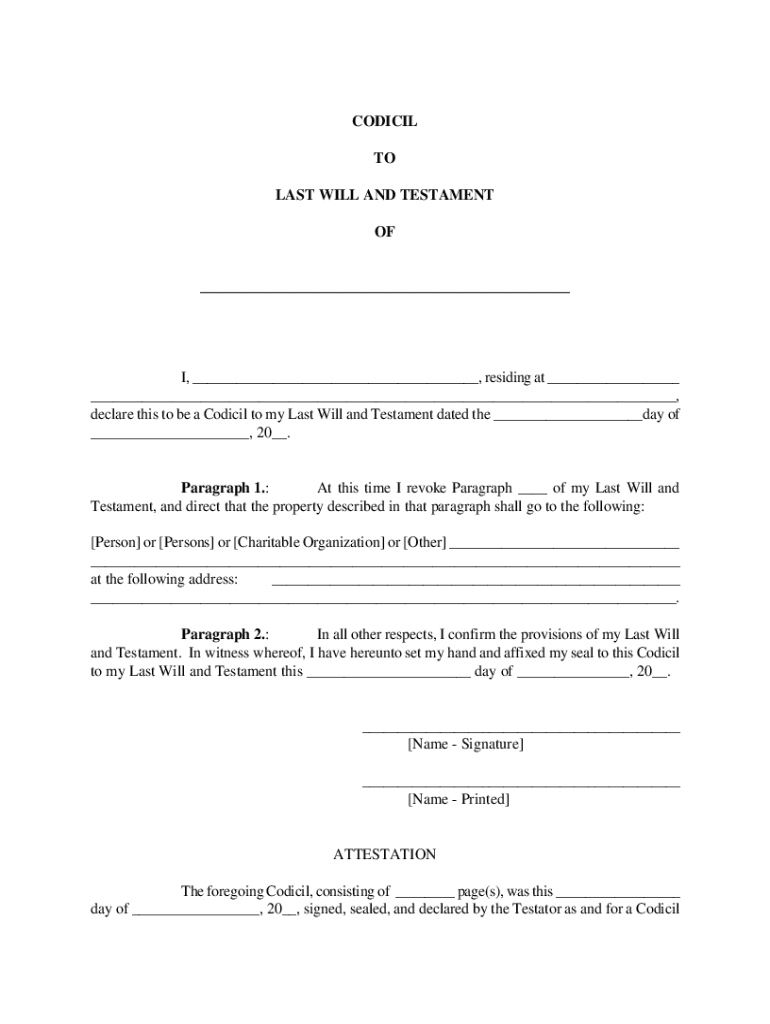







Definition and Meaning of a Codicil Template UK
A codicil is a legal document that serves to modify, revoke, or add provisions to an existing will. It is crucial for individuals who wish to make changes to their estate plan without creating an entirely new will. This is especially beneficial for straightforward updates, such as adding beneficiaries, changing addresses, or adjusting gift amounts. A codicil template UK outlines the necessary structure and wording to ensure that the document is legally binding and compliant with UK law.
- Components of a Codicil:
- Title: Indicating it is a codicil to a specific will.
- Declaration: Identifying the testator and the date of the original will.
- Changes Made: Clearly outlining the specific changes, additions, or deletions.
- Signatures: The signatures of the testator and witnesses to validate the codicil.
It is essential that the codicil adheres to any required formalities, including being dated and signed in the presence of witnesses, to ensure its legality.
How to Use the Codicil Template UK
Using a codicil template UK involves several steps to ensure compliance with legal requirements. Individuals should begin by accessing a reliable template that matches their needs and follows UK legal standards.
- Downloading the Template: Available in various formats, such as PDF and Word, these templates can be easily found online or provided by legal services.
- Filling in Details: Users should carefully enter all required information:
- Personal details such as name and address.
- Reference to the original will with its date.
- Specific changes clearly described to avoid ambiguity.
- Reviewing for Accuracy: It is advisable to verify all information is correct and complete to prevent any disputes later.
Steps to Complete the Codicil Template UK
Completing a codicil template is a straightforward process, but precision is critical. Follow these steps:
- Select the Correct Template: Identify a suitable codicil template that fits your requirements.
- Incorporate Personal Information:
- Full name, address, and details of the original will.
- Document the Changes:
- Clearly state amendments, additional clauses, or changes in beneficiaries.
- Each point should be numbered or bullet-listed for clarity.
- Date the Codicil: Always include the date to ensure clarity about when changes take effect.
- Sign the Document: The testator must sign the codicil in the presence of at least two witnesses, who should also sign.
Mistakes or omissions can render a codicil ineffective, so careful attention to detail is essential.
Legal Use of the Codicil Template UK
When a codicil is properly executed, it is legally binding and can effectively alter an existing will. Understanding the legal implications ensures that individuals can confidently make changes to their estate planning.
- Compliance with Wills Act 1837: The codicil must comply with the same legal formalities as a will, including being signed and witnessed.
- Impact on Existing Wills: A correctly executed codicil supersedes conflicting provisions in the original will without invalidating it entirely.
- Maintaining a Clear Record: It is advisable to keep the codicil with the original will to prevent confusion or misplacement.
If a codicil conflicts with a later will, the last document will typically prevail in legal contexts.
Who Typically Uses the Codicil Template UK
The codicil template UK is utilized by a variety of individuals seeking to modify their estate planning documents. Typical users include:
- Individuals with Existing Wills: Those who wish to make changes without redrafting an entire will.
- Parents Adding Beneficiaries: Specifically when life circumstances change, such as the birth of a child.
- Individuals Altering Executors: When the appointed executor can no longer fulfill their role.
- People Adjusting Asset Distribution: Changes in financial situations or relationships may require updates to beneficiary allocations.
Understanding the common uses of a codicil can help individuals recognize when it is appropriate to utilize this legal tool.


Key Elements of the Codicil Template UK
A well-structured codicil template contains essential elements that ensure its effectiveness and compliance with UK laws. Recognizing these components can ensure the document serves its intended purpose.
- Title and Declaration: A clear title, typically starts with “Codicil to the Last Will and Testament of [Name]”.
- Reference to the Original Will: Specifies the date of the original will to establish context and authority.
- Specific Changes: Detailed description of all modifications made to the will, including additions and deletions.
- Testator’s Signature: This serves to validate the document.
- Witness Signatures: A requirement under UK law, typically necessitating at least two witnesses who are not beneficiaries.
Having these key elements documented properly will help to ensure that the codicil is valid and legally enforceable.




