







Understanding the Competition Dance Score Sheet Template
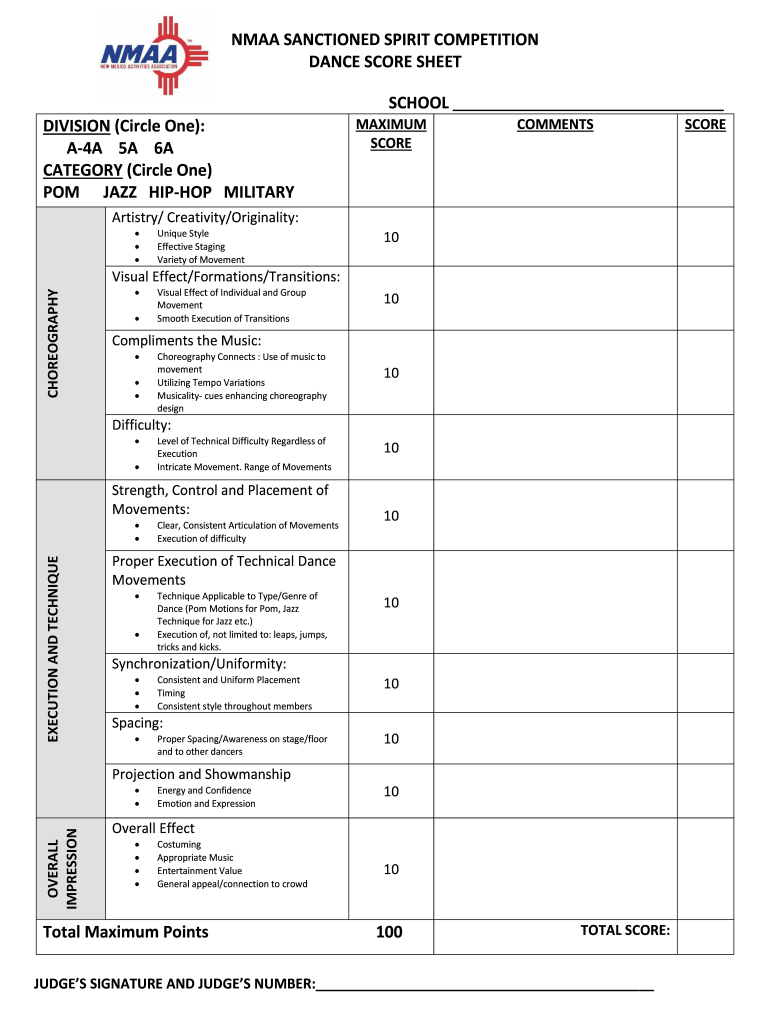
The competition dance score sheet template is an essential tool used for evaluating performances in dance competitions. It provides a standardized format for judges to assess various categories such as Pom, Jazz, Hip-Hop, and Military. The sheet typically includes specific criteria that contribute to the overall scoring, making it vital for accurate and fair judging.
Key Elements of the Dance Score Sheet
A well-structured competition dance score sheet should encompass several core components:
-
Categories of Evaluation: Each sheet usually contains sections to evaluate different styles of dance, allowing judges to focus on the specific attributes relevant to each performance style.
-
Criteria for Judging: The template usually includes criteria such as:
- Artistry: How creatively the choreography is executed.
- Choreography: The complexity and originality of the dance routine.
- Execution: The precision and control demonstrated by the dancers.
- Synchronization: The ability of the dancers to perform as a cohesive unit.
- Spacing: The effective use of stage space.
- Projection: The ability of the performers to engage with the audience.
- Overall Impression: The general impact of the performance.
-
Scoring System: A maximum point total is often designated, enabling judges to quantify their evaluations across the various categories.
How to Use the Competition Dance Score Sheet Template
When employing the competition dance score sheet template, judges follow a systematic approach to ensure accurate scoring:
-
Preparation: Familiarize yourself with the template prior to the competition. This includes understanding the criteria and scoring scale.
-
Evaluation: As performances take place, judges assess each dancer or team based on the established criteria. Notes can be taken in the corresponding sections to provide context for scores awarded.
-
Scoring: After the performance, judges assign scores for each category, summing the totals to provide an overall score. This step ensures consistent and transparent evaluations.
-
Feedback: Many competition dance score sheets allow judges to write comments. This feedback is valuable for performers to understand their strengths and areas for improvement.
Scoring Examples and Scenarios
In practice, scoring on a dance competition score sheet can vary based on several specifics:
- A Pom routine might be scored higher on synchronization and projection, as the team works to present a unified performance that captivates the audience.
- Conversely, a contemporary piece may receive more emphasis on artistry and choreography to highlight the unique movements and expressions inherent in the style.
Importance of Using a Standardized Score Sheet
Using a standardized score sheet for dance competitions holds several advantages:
-
Consistency: It ensures that all judges are assessing performances based on the same criteria, providing a level playing field for all competitors.
-
Clarity: Dancers and teams know what is expected of them, guiding their preparation and training toward meeting specific evaluative measures.
-
Transparency: A clear system for scoring helps competitors understand how their performances are graded, which can increase trust in the judging process.
Legal Considerations and Compliance
Adhering to guidelines surrounding score sheets is crucial in regulated dance competitions:
-
Confidentiality: Judges must keep their evaluations confidential until performances are complete to maintain integrity in the competition.
-
Accountability: Judges may be required to submit their score sheets for review by competition organizers to ensure fairness and to handle any disputes that arise regarding scoring.
By fully understanding the elements and proper usage of the competition dance score sheet template, judges and competitors can contribute to a more organized and fair competition environment. The detailed evaluation process not only enhances the quality of the competition but also aids performers in their artistic journey.




