
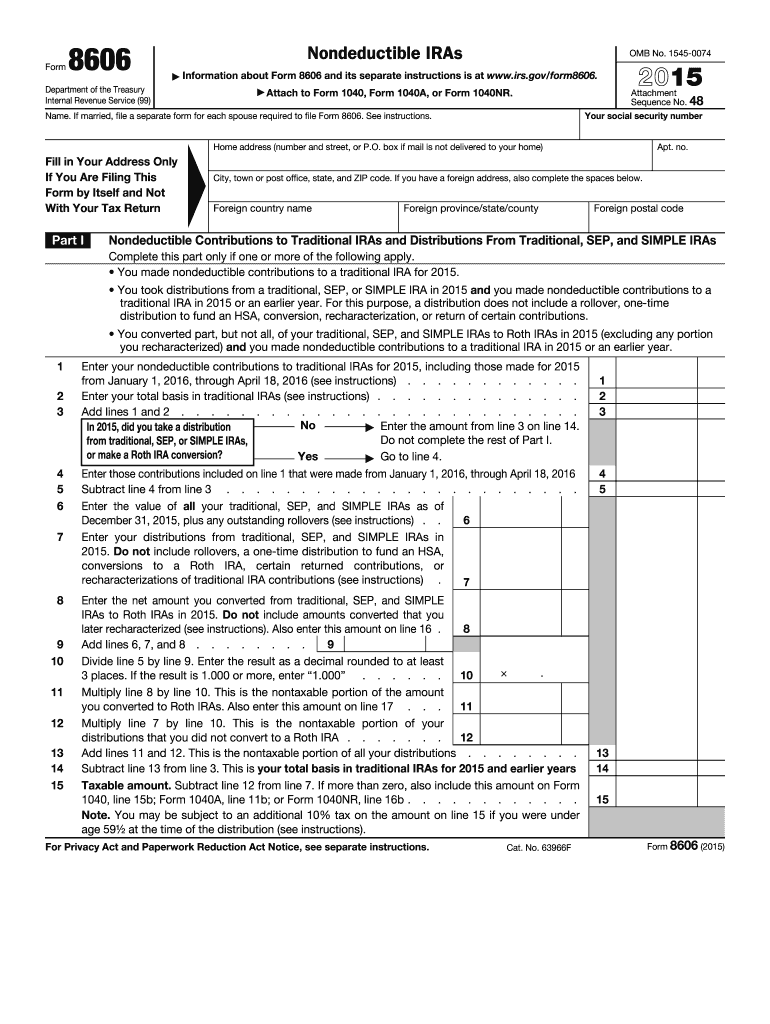







Definition and Purpose of 2015 Form 8606
Form 8606 is essential for U.S. taxpayers who made nondeductible contributions to traditional IRAs or received distributions from traditional, SEP, and SIMPLE IRAs. This form is also used for reporting conversions from traditional IRAs to Roth IRAs. By using the form, taxpayers can ensure that they accurately determine the taxable amounts of their distributions and contributions. The primary aim is to maintain precise records of nondeductible contributions, which affect the taxable status of IRA distributions. This is crucial for correctly calculating taxes owed and avoiding potential penalties from the IRS.
How to Use the 2015 Form 8606
To effectively complete Form 8606, taxpayers first need to identify all relevant financial activities related to their IRAs for the tax year 2015. This includes nondeductible contributions and distributions. The form is structured to guide users through reporting these activities accurately.
- Sections to Focus On:
- Part I concentrates on nondeductible contributions to traditional IRAs.
- Part II covers the taxable conversions from traditional IRAs to Roth IRAs.
- Part III relates to distributions from Roth IRAs.
When filling out the form, it is important to follow the IRS instructions meticulously, ensuring all calculations are correct. After completing the form, it should be attached to the taxpayer's federal income tax return when filed.
How to Obtain the 2015 Form 8606
The 2015 Form 8606 can be easily accessed through multiple channels:
- Online Download: The IRS website provides a downloadable PDF version of the form.
- Through Tax Software: Many tax preparation software, such as TurboTax, supports Form 8606 and allows users to fill out and submit the form electronically.
- Request by Mail: Taxpayers can request a physical copy from the IRS if needed.
Once obtained, the form can be filled out digitally or manually, according to the user’s preference.
Steps to Complete the 2015 Form 8606
Completing Form 8606 involves several steps that require attention to detail:
- Identify Felated Contributions and Distributions: Gather all documents showing contributions to traditional IRAs and distributions for the year.
- Part I - Report Nondeductible Contributions:
- Enter the total nondeductible contributions for the 2015 tax year.
- Part II - Detail Roth IRA Conversions:
- Indicate amounts converted from traditional to Roth IRAs.
- Part III - Report on Roth IRA Distributions:
- Highlight any distributions taken from Roth IRAs.
- Calculate Taxable Amounts: Use the form’s instructions to calculate any taxable amount from distributions or conversions.
- Attach to Tax Return: Once the form is accurately filled, attach it to your tax return.
Who Typically Uses the 2015 Form 8606
Individuals who have engaged in specific IRA-related financial activities will need to use Form 8606. These include:
- Taxpayers making nondeductible contributions to traditional IRAs.
- Those converting funds from a traditional IRA to a Roth IRA.
- People taking distributions from a Roth IRA.
Understanding the specifics of IRA transactions is essential to identify eligibility for using this form.


Key Elements of the 2015 Form 8606
Form 8606 contains several critical elements that users must understand:
- Nondeductible Contributions: The nondeductible part of contributions to traditional IRAs.
- IRA Conversions: Transfer of funds from a traditional IRA to a Roth IRA and its tax implications.
- Distributions: Any funds withdrawn from an IRA, including requirements for reporting them.
Taxpayers must account for each of these components to avoid misreporting and ensure compliance with IRS requirements.
IRS Guidelines and Compliance
When dealing with Form 8606, compliance with IRS guidelines is crucial to avoid penalties. The IRS regulations dictate how each part of the form should be filled and the mathematical procedures for determining taxable amounts. Taxpayers should regularly check for updates in IRS instructions, especially if they are handling ITAs differently from previous years.
Filing Deadlines and Important Dates
Ensure that Form 8606 is filed with the taxpayer's federal tax return by the standard IRS filing deadline, usually April 15th. Late submissions could result in penalties. For 2015, if additional time was requested, ensure compliance with IRS guidelines on extended deadlines. Keeping track of these deadlines is vital for avoiding unnecessary legal or financial repercussions.




