
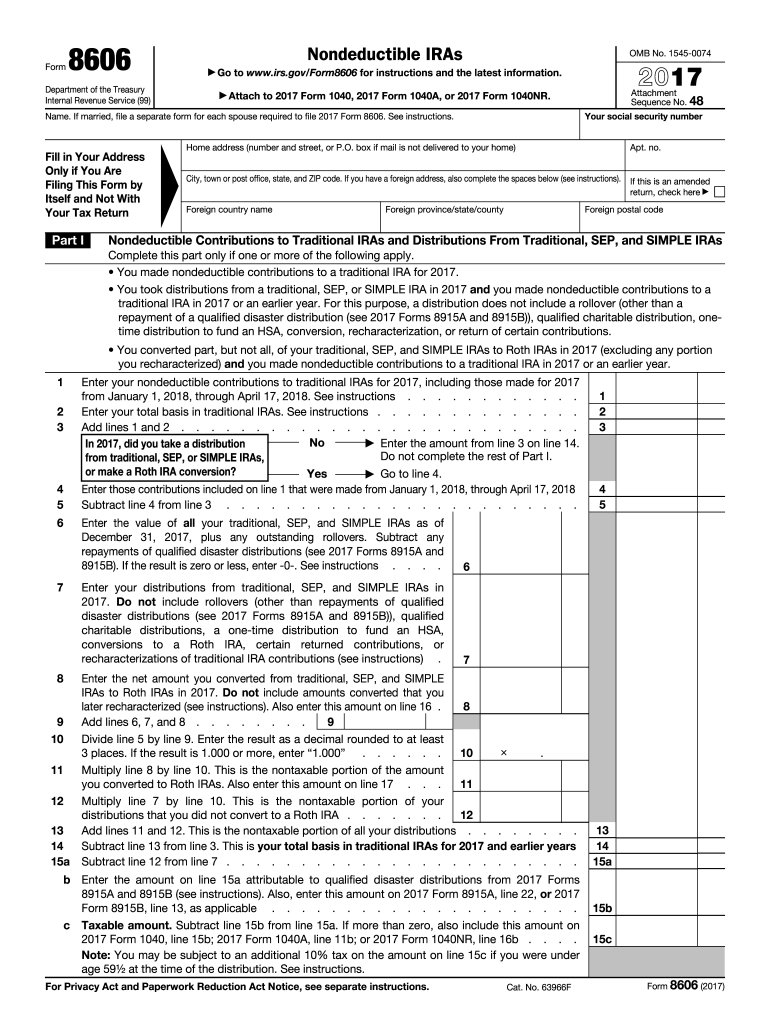







Definition and Purpose of the 8 Form
The 2017 Form 8606 is utilized by taxpayers in the United States to report nondeductible contributions to traditional IRAs and distributions from traditional, SEP, and SIMPLE IRAs. It is essential for those who have converted these accounts to Roth IRAs or have taken distributions from Roth IRAs. The purpose of the form is to establish a record of these activities, ensuring the correct determination of taxable amounts during the tax filing process with the IRS.
How to Use the 8 Form
When completing the 2017 Form 8606, users should carefully follow the instructions to ensure accurate reporting of IRA contributions and distributions. This involves:
- Gathering Information: Collect details about your traditional, SEP, and SIMPLE IRA contributions and distributions, including dates and amounts.
- Filling Out Sections: Enter personal information, including your Social Security number, and complete sections detailing IRA transactions, focusing on conversions to Roth IRAs and distributions taken.
- Ensuring Accuracy: Double-check calculations, especially when determining nontaxable distributions and contributions, to prevent errors and potential IRS penalties.
How to Obtain the 8 Form
The 2017 Form 8606 can be accessed through various methods to accommodate different preferences:
- Online: Download directly from the IRS website or reputable tax software providers like TurboTax.
- Mail: Request a physical copy by contacting the IRS or visiting local tax offices.
- Professional Services: Obtain through tax professionals or accountants who provide comprehensive tax preparation services.
Steps to Complete the 8 Form
Completing the Form 8606 requires careful attention to detail and involves several key steps:
- Enter Personal Details: Begin with your name, address, and Social Security number.
- Report Nondeductible Contributions: Clearly state the amounts contributed to traditional IRAs that were nondeductible.
- Detail Distributions and Conversions: Include information on any conversions to Roth IRAs and distributions taken, ensuring correct calculations of taxable amounts.
- Complete Additional Sections as Needed: Depending on your individual circumstances, additional sections may need to be filled.
Importance of the 8 Form
Filing the 2017 Form 8606 is crucial for several reasons:
- Tax Accuracy: Ensures the correct reporting of IRA transactions, preventing overpayment or underpayment of taxes.
- Compliance: Demonstrates compliance with IRS requirements, reducing risk of audits and penalties.
- Record Keeping: Provides a comprehensive record of nondeductible contributions and distribution activities.
Who Typically Uses the 8 Form
The form is commonly used by:
- Individuals Making Nondeductible IRA Contributions: Especially those with modified adjusted gross income (MAGI) limitations.
- Taxpayers Converting IRAs to Roth IRAs: For accurate conversion reporting and tax handling.
- Retirees with Distributions: Those taking distributions from IRAs who need to report the taxability accurately.


Key Elements of the 8 Form
The form includes several vital sections:
- Part I: For reporting nondeductible contributions to traditional IRAs.
- Part II: Details conversions from traditional, SEP, or SIMPLE IRAs to Roth IRAs.
- Part III: Covers distributions from Roth IRAs.
Each section requires precise information to avoid errors in tax reporting.
IRS Guidelines for the 8 Form
The IRS provides specific guidelines to ensure proper completion and submission of Form 8606, such as:
- Meeting Deadlines: The form typically accompanies your annual tax return and must be filed by the April deadline of the year following the reporting year.
- Accurate Reporting: Inaccurate or incomplete forms may result in penalties or audits, underlining the need for careful attention during completion.
- Penalties for Non-Compliance: Understanding potential fines emphasizes the importance of adhering to IRS deadlines and requirements.




