







Understanding the Earth’s Structure: Four Layers
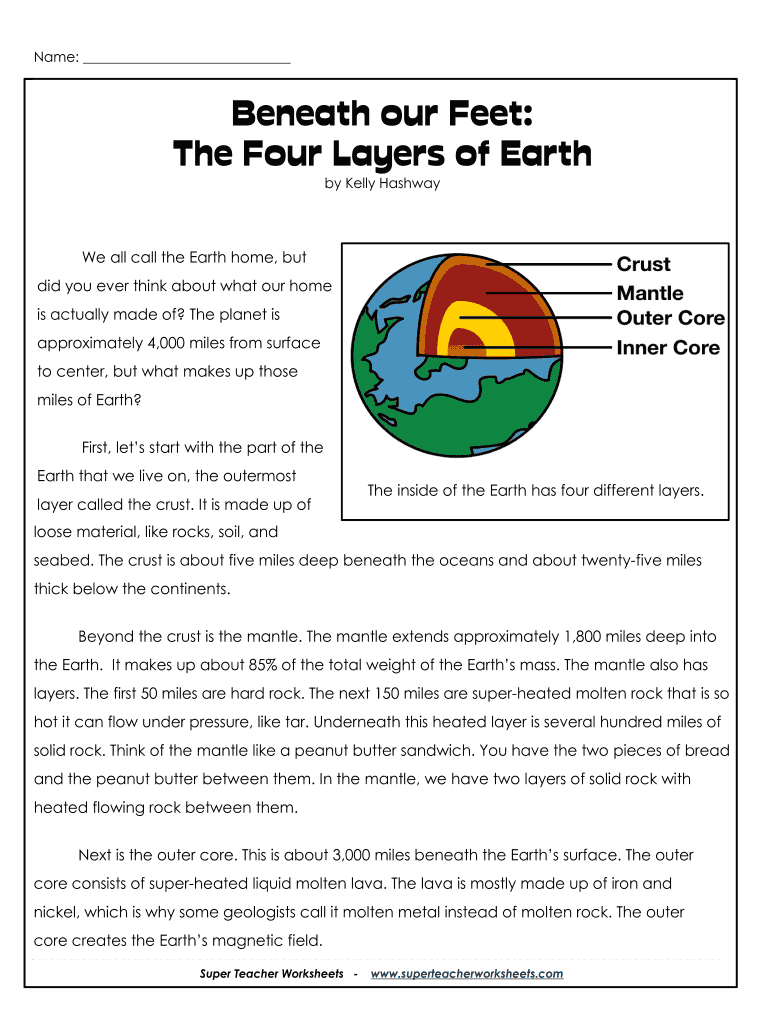
The Earth is composed of four distinct layers: the crust, mantle, outer core, and inner core. Each layer has unique properties, composition, and depth, playing a vital role in the structure of our planet. Understanding these layers is essential for grasping geological processes and the physical characteristics of the Earth.
The Crust: Our Surface Layer
The crust is the outermost layer of the Earth, where we live. This layer is composed primarily of solid rock and is relatively thin compared to the layers beneath it. It is divided into two types:
- Continental Crust: Thicker and primarily composed of granitic rocks.
- Oceanic Crust: Thinner and predominantly made of basaltic rocks.
The depth of the crust averages about five to 70 kilometers (three to 44 miles). The processes that occur in the crust, such as erosion and sedimentation, shape landscapes and determine environmental conditions on Earth's surface.
The Mantle: The Thick Layer Beneath
Beneath the crust lies the mantle, which extends to about 2,900 kilometers (1,800 miles) deep. The mantle is composed of semi-solid silicate rocks that flow slowly over geological time. Key characteristics include:
- Upper Mantle: Composed of solid rock, but capable of gradual flow.
- Lower Mantle: More viscous and can endure greater pressure, contributing to the convective currents that drive plate tectonics.
The mantle plays a crucial role in transferring heat from the Earth’s core to the surface, influencing volcanic activity and plate movements.
The Outer Core: A Liquid Metal Layer
Below the mantle is the outer core, extending from about 2,900 to 5,150 kilometers (1,800 to 3,200 miles) below the surface. This layer is made primarily of liquid iron and nickel and exhibits the following properties:
- Liquid State: Unlike the solid mantle, the outer core is in a fluid state due to extremely high temperatures exceeding 4,000 degrees Celsius (7,200 degrees Fahrenheit).
- Magnetic Field Generation: The movement of molten metal in the outer core generates the Earth’s magnetic field through the dynamo effect.
The outer core acts as a barrier between the mantle and the inner core, influencing geological phenomena such as the movement of tectonic plates.
The Inner Core: The Earth's Solid Center
The innermost layer of the Earth, the inner core, is a solid ball composed mainly of iron and nickel. Its temperate conditions are extreme, with temperatures reaching up to 5,700 degrees Celsius (10,300 degrees Fahrenheit). Notable features include:
- Solid State: Despite the high temperature, the inner core remains solid due to the immense pressure surrounding it.
- Size and Density: The inner core has a radius of about 1,220 kilometers (760 miles) and is denser than all other layers.
The inner core is crucial for maintaining the thermal dynamics of the Earth, greatly affecting geological and tectonic activity.
Importance of Understanding Earth's Layers
Educating students about the layers of the Earth is essential for fostering a deeper understanding of geology and Earth's processes. Worksheets related to the structure of the Earth can include activities such as:
- Labeling Diagrams: Students can identify and label each layer, enhancing their visual and spatial understanding of geological concepts.
- Comparative Analysis: Activities comparing the layers based on properties such as temperature, depth, and composition enhance critical thinking skills.
- Real-World Applications: Discussing how each layer affects natural phenomena, from earthquakes to volcanic eruptions, provides context and relevance.
Worksheets like the "layers of the earth worksheet answer key pdf" serve as valuable educational resources, offering students structured learning paths that reinforce their knowledge. In combination with hands-on activities and discussions, these worksheets contribute to a comprehensive understanding of Earth's fundamental structure.
By integrating interactive elements and detailed explanations, students can develop a thorough comprehension of the Earth's layers, fostering an environment for inquiry and exploration in the natural sciences.




