Ny affirmation 2026

Get Form
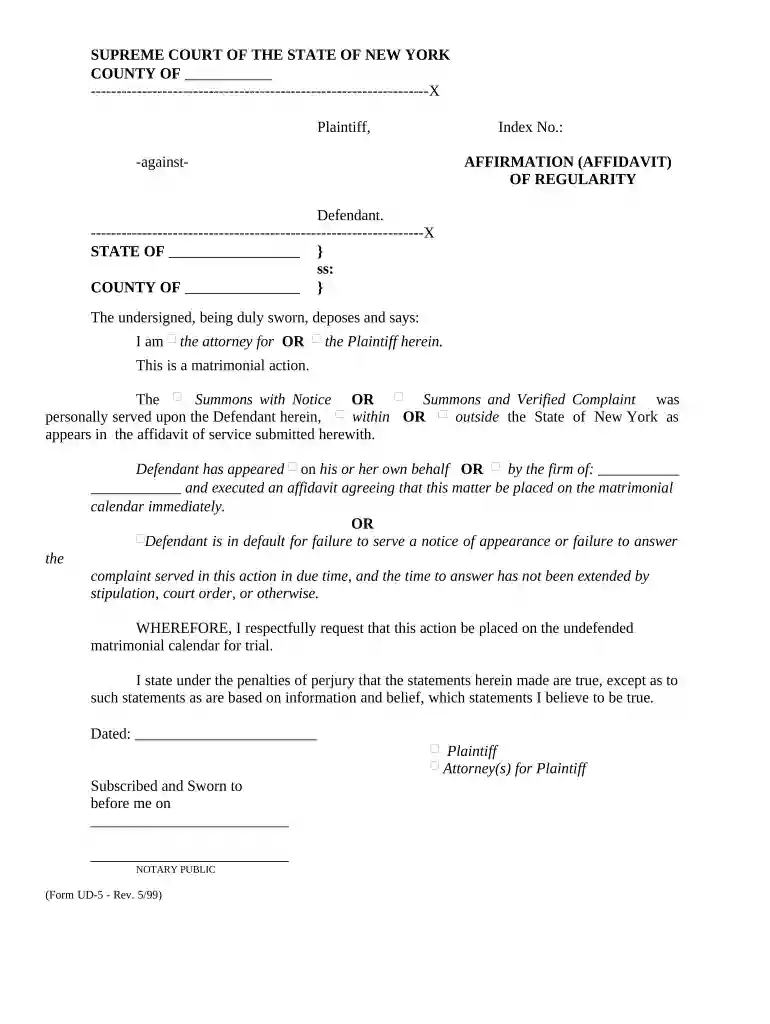
attorney affirmation sample Preview on Page 1

Here's how it works

01. Edit your attorney affirmation sample online
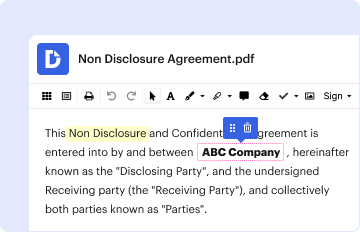
Type text, add images, blackout confidential details, add comments, highlights and more.

02. Sign it in a few clicks
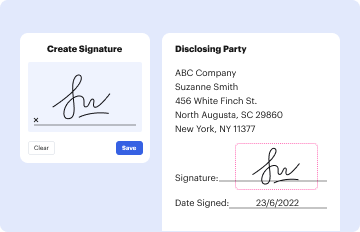
Draw your signature, type it, upload its image, or use your mobile device as a signature pad.

03. Share your form with others
Send sample attorney affirmation new york via email, link, or fax. You can also download it, export it or print it out.

Definition and Meaning of the NY Affirmation

The NY affirmation is a legal document often used in matrimonial actions within the state of New York. It serves to affirm the regularity of the proceeding and demonstrates compliance with procedural requirements outlined by the New York State Supreme Court. The document generally confirms that a summons has been properly served to the defendant and details their appearance or default status in the case.

The affirmation functions as a formal statement made under penalty of perjury, which emphasizes the significance of honesty and accuracy in its assertions. Legal professionals use this type of affirmation to ensure that all procedural necessities have been met prior to advancing to trial, particularly in undefended matrimonial cases where a default judgment may be sought against the absent party.

Integration into the legal process also ensures that the document adheres to state-specific regulations, which can vary, making an understanding of its definitions and implications critical for those involved in family law.

Key Elements of the NY Affirmation

Understanding the key elements of an NY affirmation is essential for effective usage. Below are the primary components typically included in the document:

  • Parties Identified: The full names of both parties involved in the matrimonial action, including their relationship to one another.
  • Details of Service: A clear statement detailing how and when the summons was served to the defendant, including the date, method of service (personal delivery, mail, etc.), and confirmation that the defendant is aware of the proceedings.
  • Status of the Defendant: Information regarding whether the defendant has appeared in court or has defaulted. This is crucial for the next steps in the legal process.
  • Request for Relief: A statement requesting specific legal relief, such as placement of the case on the undefended matrimonial calendar for trial.
  • Affirmant’s Signature: The document must be signed by a qualified individual, usually an attorney, who affirms the accuracy of the information presented.

These elements collectively affirm the legitimacy of a matrimonial action and facilitate the progression of legal proceedings under New York law.

How to Use the NY Affirmation

To effectively use the NY affirmation, one must follow a systematic approach:

  1. Gather All Necessary Information: Collect details about the parties involved, including names, addresses, and any relevant court document numbers.
  2. Complete the Document: Fill out the affirmation accurately, detailing service information and including the names of all signatories. It's essential to ensure no information is omitted.
  3. Sign the Document: The affirmation must be signed by the attorney or the party making the affirmations. This signature signifies the truthfulness of the statements made.
  4. File the Affirmation: Submit the completed affirmation to the appropriate court or as directed by the judge handling the case. Observing any filing deadlines is critical.
  5. Follow Up: Ensure that the document has been filed correctly by checking with the court and maintaining copies for your own records.

Proper utilization of the NY affirmation not only meets legal requirements but also aids in the efficient processing of matrimonial cases.

Steps to Complete the NY Affirmation

Completing the NY affirmation requires careful adherence to procedural steps, as outlined below:

  1. Identify the Court: Determine which Supreme Court department is handling your matrimonial action, as this will guide the submission process.
  2. Draft the Affirmation: Use a standard template or format, ensuring all required sections are included. Include the case number if available.
  3. Affirm the Details: Under penalty of perjury, affirm that the information included in the document is accurate. Falsification may lead to legal consequences.
  4. Review the Document: Before submission, make sure to check for any inconsistencies or errors. This is vital for avoiding delays in court proceedings.
  5. Submit: File the affirmation with the court clerk and pay any associated fees. Retain a stamped copy for record-keeping.
  6. Monitor Case Progress: Track the status of your matrimonial action and be prepared for any court appearances that may follow.

By meticulously following these steps, you ensure that your NY affirmation not only adheres to legal formats but also supports the timely movement of your case through the judicial system.

Legal Use of the NY Affirmation

The NY affirmation holds substantial legal significance within the context of matrimonial actions. Here are some key legal uses:

  • Entry into Default Judgment: If the defendant does not respond to the summons as mandated, the affirmation can serve as a crucial component in seeking a default judgment.
  • Facilitation of Hearings: The affirmation certifies that the necessary procedural steps have been taken, such as proper notification of the defendant, which allows for cases to be considered for hearings without delays.
  • Documenting Evidence: It acts as a formal legal statement under oath regarding compliance with court rules, thereby serving as evidence in any future proceedings.
  • Legal Compliance: The affirmation assures the court that all parties have been served correctly, which is vital for maintaining the integrity of the legal process.

These legal applications underscore the importance of accurately completing and properly utilizing the NY affirmation within any matrimonial case associated with New York law.

be ready to get more

Complete this form in 5 minutes or less

Get form

Got questions?

We have answers to the most popular questions from our customers. If you can't find an answer to your question, please contact us.
Contact us
Rule 2106. Affirmation of truth of statement. The statement of any person wherever made, subscribed and affirmed by that person to be true under the penalties of perjury, may be used in an action in New York in lieu of and with the same force and effect as an affidavit.
An affidavit is a document that must be signed by a notary to be valid for use in court, whereas an affirmation is signed by you, the litigant, together with a statement that promises the information youve provided is accurate under penalty of perjury.
The affirmation in opposition is your statement that explains why you want the motion to be denied. Include everything you want to say about the facts of the case and all documents you want considered by the Judge.
A law signed by Governor Hochul in October 2023, with an effective date of January 1, 2024, amended the CPLR to allow affirmations from any person. This brings New York civil practice more in line with federal court practice, where un-docHubd declarations have been in use for decades under 28 U.S.C. 1746.
a) Unless otherwise permitted by the court: (i) affidavits, affirmations, briefs and memoranda of law shall be limited to 7,000 words each; (ii) reply affidavits, affirmations, and memoranda shall be no more than 4,200 words and shall not contain any arguments that do not respond or relate to those made in the

Security and compliance

At DocHub, your data security is our priority. We follow HIPAA, SOC2, GDPR, and other standards, so you can work on your documents with confidence.

Learn more
ccpa2
pci-dss
gdpr-compliance
hipaa
soc-compliance