
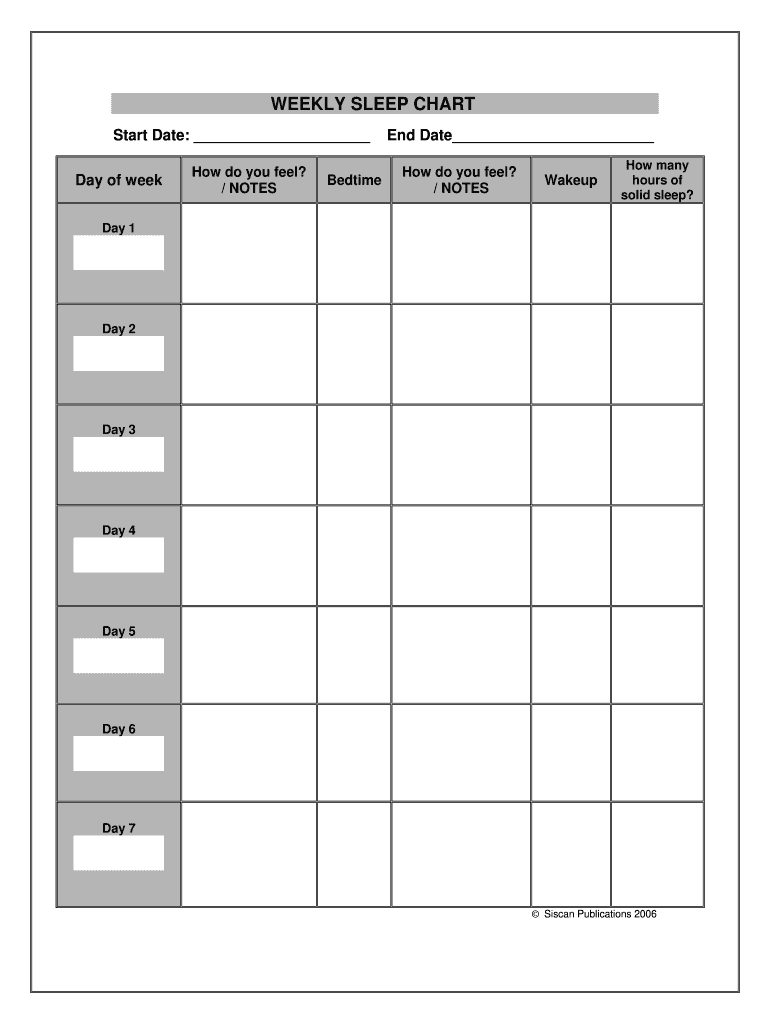







Definition and Meaning of the Weekly Sleep Chart
The Weekly Sleep Chart is a structured tool designed to help individuals monitor and analyze their sleep patterns over the course of a week. This chart typically includes fields for logging specific details such as bedtimes, wake-up times, the number of hours slept, and the quality of sleep experienced each night.
By maintaining a Weekly Sleep Chart, users can identify trends and patterns in their sleep habits, which could be beneficial for addressing sleep-related issues such as insomnia or excessive daytime sleepiness. Using this chart allows individuals to reflect on their sleep quality in relation to daily activities, stress levels, and overall health, contributing to better sleep hygiene.
Key Components of the Weekly Sleep Chart
- Bedtime and Wake-up Time: Tracks when users go to sleep and when they wake up each day.
- Total Sleep Duration: Records the total number of hours slept during the night.
- Sleep Quality Rating: Provides an opportunity for users to rate how refreshed they feel upon waking.
- Daily Comments: A space for adding notes about daily activities or concerns affecting sleep, such as stress levels or caffeine consumption.
How to Use the Weekly Sleep Chart
Using the Weekly Sleep Chart effectively requires disciplined tracking and consistent data entry. Below are detailed steps to guide users in utilizing the chart:
-
Set Up the Chart: Begin by obtaining a template either from AuthorsDen or create your own layout. You should have sections for each day of the week with designated spaces for required entries.
-
Log Sleep Data Daily: Each morning, record the previous night’s sleep details promptly. This includes your bedtime, wake-up time, and any other observations on sleep quality.
-
Analyze Trends Weekly: At the end of the week, review your entries to identify any patterns in your sleep behavior. Look for correlations between factors influencing sleep, such as evening routines and sleep quality.
-
Make Adjustments: If consistent issues arise—such as insufficient sleep or poor quality—consider adjusting your nightly routines, such as reducing screen time before bed or establishing a regular sleep schedule.
-
Consult with Professionals: If significant sleep issues persist, consider sharing your chart with a healthcare provider for professional insights and tailored advice.
Steps to Complete the Weekly Sleep Chart
Completing the Weekly Sleep Chart involves several straightforward steps that can optimize its effectiveness as a sleep tracking tool:
-
Daily Recording:
- Write down the exact time you go to bed each night.
- Note the time you wake up each morning.
- Calculate and enter the total hours of sleep.
-
Self-Assessment:
- At the end of each night or the following morning, give your sleep a quality score based on how you felt upon waking.
- Fill in any personal notes that could explain variations in your sleep schedule or quality.
-
Weekly Review:
- Once the week is complete, review your entries holistically.
- Compare the amount of sleep versus your quality ratings to find trends and determine potential areas for improvement.
Why Should You Use the Weekly Sleep Chart?
Utilizing a Weekly Sleep Chart provides many benefits that can enhance overall well-being:
- Increased Awareness: Tracking sleep patterns raises awareness about daily habits that may affect sleep quality.
- Identifying Issues: Frequent logs may reveal recurrent problems such as insomnia or inconsistent sleep patterns, prompting proactive measures.
- Improving Sleep Hygiene: Recognizing inefficiencies in the current routine can help users implement changes for a healthier sleep environment, like minimizing disturbances or creating a calming bedtime ritual.
- Supporting Health Goals: Quality sleep is a key component of physical and mental health. Understanding sleep patterns can support goals related to weight management, stress reduction, and mood stabilization.
Who Typically Uses the Weekly Sleep Chart?
The Weekly Sleep Chart is beneficial for a variety of individuals and demographics, including:
- Adults Seeking Better Sleep: Individuals who have trouble falling or staying asleep can monitor their habits to find effective solutions.
- Health Professionals: Sleep specialists and general healthcare providers can utilize this chart to gain insights into a patient's sleep behavior and make informed recommendations.
- Parents: Parents can benefit from tracking their sleep as well as their children's, particularly during transitional periods, such as changes in bedtime routines or during growth spurts.
- Individuals with Sleep Disorders: Those diagnosed with sleep-related conditions may use the chart to provide data for treatment assessments.

Important Terms Related to the Weekly Sleep Chart
Understanding the terminology associated with the Weekly Sleep Chart enhances the user's ability to utilize it fully:
- Sleep Duration: The total time spent asleep, calculated from bedtime to wake-up time.
- Sleep Latency: The amount of time it takes to fall asleep after going to bed.
- Sleep Efficiency: The percentage of time spent asleep while in bed, calculated as total sleep duration divided by the total time in bed.
- Circadian Rhythm: The physical, mental, and behavioral changes following a daily cycle, typically responding primarily to light and darkness in the environment, affecting sleep patterns.
Examples of Using the Weekly Sleep Chart
Examples can help clarify the benefits and applicability of the Weekly Sleep Chart in real-world scenarios:
-
Example One: A professional working night shifts can use the chart to adjust sleep patterns and record how changes in sleep time impact energy levels at work, helping to devise strategies for better rest during the day.
-
Example Two: A student preparing for exams may notice that late-night studying negatively impacts their sleep quality. By keeping the chart, they can make necessary adjustments to optimize study time and enhance sleep.
-
Example Three: An individual experiencing recent stress can track their sleep alongside their daily notes, identifying the impact of stress levels on sleep quality and leading to better stress management practices.




