
Monthly narrative report 2026

Get Form
narrative report with documentation example Preview on Page 1

Here's how it works

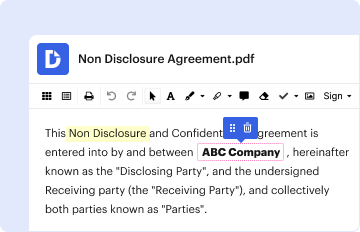
01. Edit your narrative report with documentation example online
Type text, add images, blackout confidential details, add comments, highlights and more.
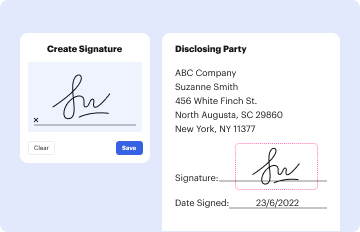
02. Sign it in a few clicks
Draw your signature, type it, upload its image, or use your mobile device as a signature pad.
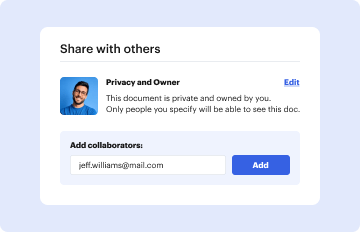
03. Share your form with others
Send documentation narrative report sample via email, link, or fax. You can also download it, export it or print it out.

How to use or fill out monthly narrative report with our platform

Form edit decoration
9.5
Ease of Setup
DocHub User Ratings on G2
9.0
Ease of Use
DocHub User Ratings on G2
  1. Click ‘Get Form’ to open the monthly narrative report in the editor.
  2. Begin by filling in the 'Local Agency' and 'Report Month' fields at the top of the form. This sets the context for your report.
  3. In the 'Accomplishments' section, list your program's nutrition and breastfeeding goals. For each objective, describe your progress clearly and concisely.
  4. Next, address 'Caseload Management' by detailing how many women, infants, and children were served. Include insights on no-show rates and any strategies implemented to improve participation.
  5. Move on to 'Special Projects' where you can describe any relevant activities like health fairs or outreach efforts that support WIC initiatives.
  6. In 'Coordination Efforts', outline collaborations with other programs such as dental services or immunizations.
  7. Document any meetings held in the designated section, noting accomplishments derived from these discussions.
  8. For training details, specify who attended, training objectives, and outcomes achieved.
  9. 'Problems' should detail any unresolved issues affecting service delivery. Use this space to communicate challenges clearly.
  10. 'Announcements' is where you can note staff changes or clinic relocations that may impact operations.
  11. 'Plans for future months' allows you to outline upcoming goals and strategies for continued improvement.

Start using our platform today to effortlessly complete your monthly narrative report online for free!

be ready to get more

Complete this form in 5 minutes or less

Get form

Got questions?

We have answers to the most popular questions from our customers. If you can't find an answer to your question, please contact us.
Contact us

Sure, it is possible with DocHub. This reliable and compliant online service has a phone-based signing option. When you log in to your DocHub account and import your narrative report example to our editor, fill out all empty fields and utilize the Sign tool on the top barf. Click on Create your signature and choose Phone from the available choices. Here, you scan a QR code with your smartphone and draw your signature on your phone screen, as you usually do when approving hard copies. If you access DocHub right from your mobile device, you can electronically sign your template by drawing your eSignature, adding its photo, or simply with a typed name.

When you edit your narrative report format pdf with DocHub, you simply will not need to look for other software or solutions to eSign it. An electronic signature is part of DocHub’s substantial editing toolset, which allows you to implement changes in your form without switching between websites. Simply complete your form, double-check the correctness of your information and place your electronic signature at the end to make it submission-ready within a few minutes.

5 steps to writing a narrative essay Step 1: Topic choice (or prompt given) The first step in writing a narrative essay is to determine the topic. Step 2: Make an outline. Step 3: Write your narrative essay. Step 4: Revise your narrative essay. Step 5: Proofread and publish your narrative essay.
Some examples include: Personal narrative reports (autobiographies, memoirs, etc.) Investigative narrative reports (legal reports, news articles, etc.) Historical narrative reports (biographies, documentaries, etc.) Process narrative reports (instruction manuals, how-to guides, etc.)
How to Start a Story: 10 Top Tips From Literary Editors Craft an unexpected story opening. Start with a compelling image. Create interest with immediate action. Begin the book with a short sentence. Pose a question for the reader. Engage a sense of curiosity. Build a convincing world and setting.

Security and compliance

At DocHub, your data security is our priority. We follow HIPAA, SOC2, GDPR, and other standards, so you can work on your documents with confidence.

Learn more
ccpa2
pci-dss
gdpr-compliance
hipaa
soc-compliance
be ready to get more

Complete this form in 5 minutes or less

Get form

People also ask

Tips for writing an effective monthly business report Know your audience: tailor the tone and detail level. Be concise: keep it to the point and avoid filler. Use data to back up claims: include only what matters. Be consistent: use the same format every month.
How to Write a Monthly Narrative Report? Begin with a Short Narrative. To begin writing your monthly narrative, the best thing to do is to write out a short narrative. State Your Objectives. Cover Period. Information, Data and Statistics. Give Updates of Previous Monthly Reports.
How to write a narrative essay Choose a topic. The first step is to decide what you want your narrative essay to discuss. Create an outline. The second step is to create an outline that determines how you tell your story. Write in first-person. Use creative language. Proofread your writing.
The narrative method can encompass an entire work (like when youre writing a novel or short story) or it can fall within other formats, like when you want to tell a brief story to make something clear or to argue a point.
Some examples include: Personal narrative reports (autobiographies, memoirs, etc.) Investigative narrative reports (legal reports, news articles, etc.) Historical narrative reports (biographies, documentaries, etc.)

weekly narrative report sample