
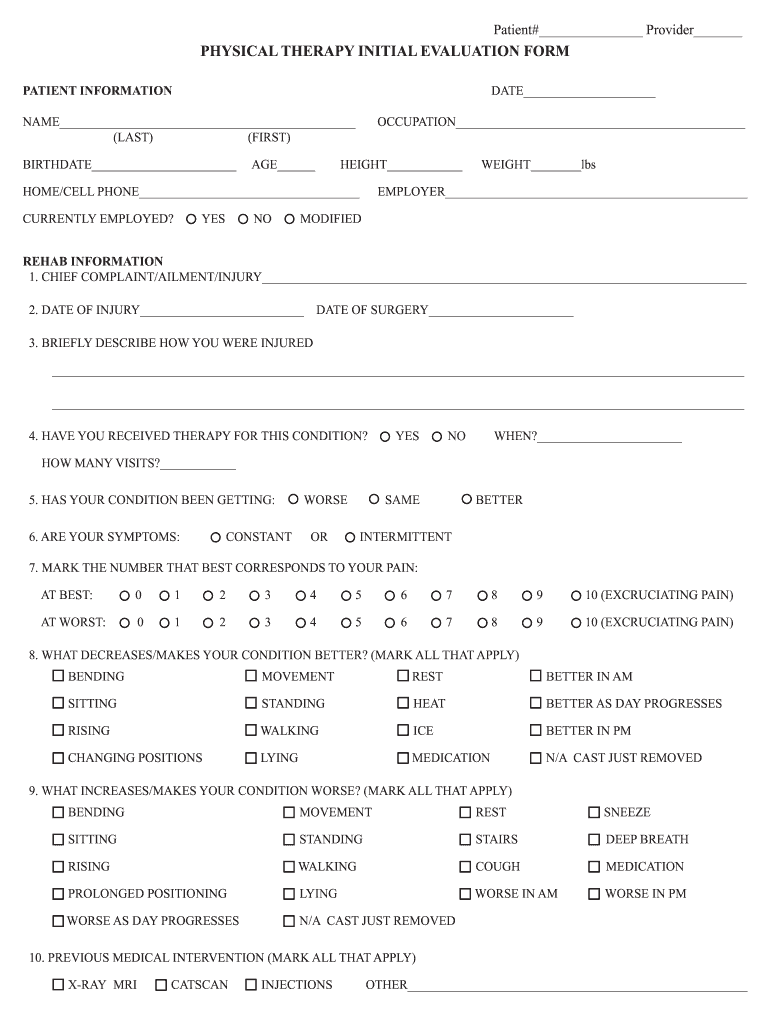







Definition and Meaning of the Physical Therapy Evaluation Form
The physical therapy evaluation form is a critical document used by healthcare professionals to gather comprehensive information about a patient's condition. This form typically serves as a foundational assessment tool that helps therapists understand the patient's medical history, current health status, and rehabilitation goals. In essence, it aids in establishing a customized treatment plan that addresses the specific needs of the patient.
The form often includes sections that collect personal details, such as the patient's name, age, and contact information; chief complaints that outline the primary reasons for seeking therapy; and injury history that provides context for the current condition. The purpose of collecting this data is multifaceted: it not only assists in crafting an effective treatment strategy but also ensures that previous medical interventions are taken into account. A well-structured evaluation can significantly impact the success of physical therapy interventions.
Key Elements of the Physical Therapy Evaluation Form
When designing or utilizing a physical therapy evaluation form, several key elements should be incorporated to ensure comprehensive coverage. These elements often include:
- Personal Information: Basic details such as the patient's name, date of birth, and emergency contact information.
- Chief Complaints: A section where patients describe their primary issues and the duration of these concerns.
- Medical History: An area for documenting previous surgeries, ongoing medical conditions, and medications, which can help the therapist understand potential contraindications or considerations in treatment.
- Physical Exam Findings: Notes on the therapist's observations, including range of motion, strength assessments, and functional mobility evaluations.
- Goals and Outcomes: A section dedicated to establishing short- and long-term goals for therapy that align with the patient's needs and expectations.
Understanding these components allows physical therapists to maintain a consistent and thorough evaluation process, enhancing the quality of care delivered.
Steps to Complete the Physical Therapy Evaluation Form
Completing a physical therapy evaluation form can be straightforward when approached methodically. Here are the general steps involved:
- Gather Patient Information: Collect the essential personal details and contact information from the patient.
- Document Chief Complaints: Encourage the patient to articulate their primary concerns regarding their condition. Emphasize the importance of details such as pain levels and functional limitations.
- Review Medical History: Have the patient disclose any relevant medical history, including previous therapies or surgeries, potential allergies, and current medications.
- Conduct a Physical Examination: The therapist conducts an evaluation, documenting findings related to strength, flexibility, balance, and endurance.
- Set Goals: Collaboratively establish therapy goals with the patient, ensuring they align with their expectations and capabilities.
- Finalize the Document: Ensure all sections are complete and clear for future reference. Sign and date the evaluation form as needed.
These steps not only promote a systematic approach but also foster clear communication between the patient and therapist, improving the overall treatment process.
Who Typically Uses the Physical Therapy Evaluation Form
The intended users of the physical therapy evaluation form primarily include licensed physical therapists and physical therapy assistants working in various healthcare settings. These practitioners utilize the form to gather essential data that guides therapy sessions. Other stakeholders that may interact with the form include:
- Patients: Individuals seeking physical therapy use the form to provide essential information about their health.
- Insurance Providers: Documentation within the form may be required for claims submission, ensuring the services rendered are covered under the patient's health plan.
- Healthcare Facilities: Hospitals, rehabilitation centers, and private clinics often have standardized forms for data collection and compliance with regulations.
The form's versatility ensures that multiple parties benefit from its completion, driving efficient healthcare processes.


Examples of Using the Physical Therapy Evaluation Form
Practical applications of the physical therapy evaluation form can vary widely based on patient needs. For instance, a patient with a recent knee surgery would fill out the form detailing the surgical history, any postoperative complications, and their mobility challenges. The therapist would analyze this data to develop a structured rehabilitation plan that may include pain management techniques, strength exercises, and flexibility routines.
In another scenario, a pediatric patient experiencing developmental delays might require a tailored approach. The evaluation form would capture growth milestones, previous assessments by medical professionals, and the specific support needed, allowing the physical therapist to design a program that addresses these unique requirements.
These examples demonstrate the form's versatility in accommodating different patient demographics and conditions while ensuring that personalized care is delivered efficiently.
Legal Use of the Physical Therapy Evaluation Form
Legal considerations surrounding the use of the physical therapy evaluation form primarily focus on patient confidentiality and compliance with healthcare regulations such as the Health Insurance Portability and Accountability Act (HIPAA). Physical therapists must ensure that the data collected is stored securely and accessed only by authorized personnel to protect patient privacy.
Furthermore, the physical therapy evaluation must be maintained as part of the patient's medical record for a specified duration, as required by state laws or institutional policies. Accurate and detailed documentation within the form can also serve as a legal safeguard in case of disputes regarding the care provided.
Maintaining compliance with these legal standards is essential not only for ethical practice but also for instilling trust in patients who share their sensitive information.
Importance of Using the Physical Therapy Evaluation Form
Utilizing a physical therapy evaluation form is crucial for several reasons:
- Standardization: The form provides a consistent framework for collecting vital patient information. This standardization enhances the quality and efficiency of therapy.
- Comprehensive Assessment: Detailed sections allow for a thorough understanding of the patient's condition, leading to more effective treatment plans.
- Goal Setting: Establishing clear goals fosters a collaborative environment between therapists and patients, driving motivation and accountability throughout the treatment process.
- Insurance Documentation: Properly completed evaluations support the reimbursement process from insurance providers, ensuring that therapists are compensated for their services.
By recognizing the importance of this form, healthcare professionals can enhance the standard of care while also facilitating smooth administrative processes.