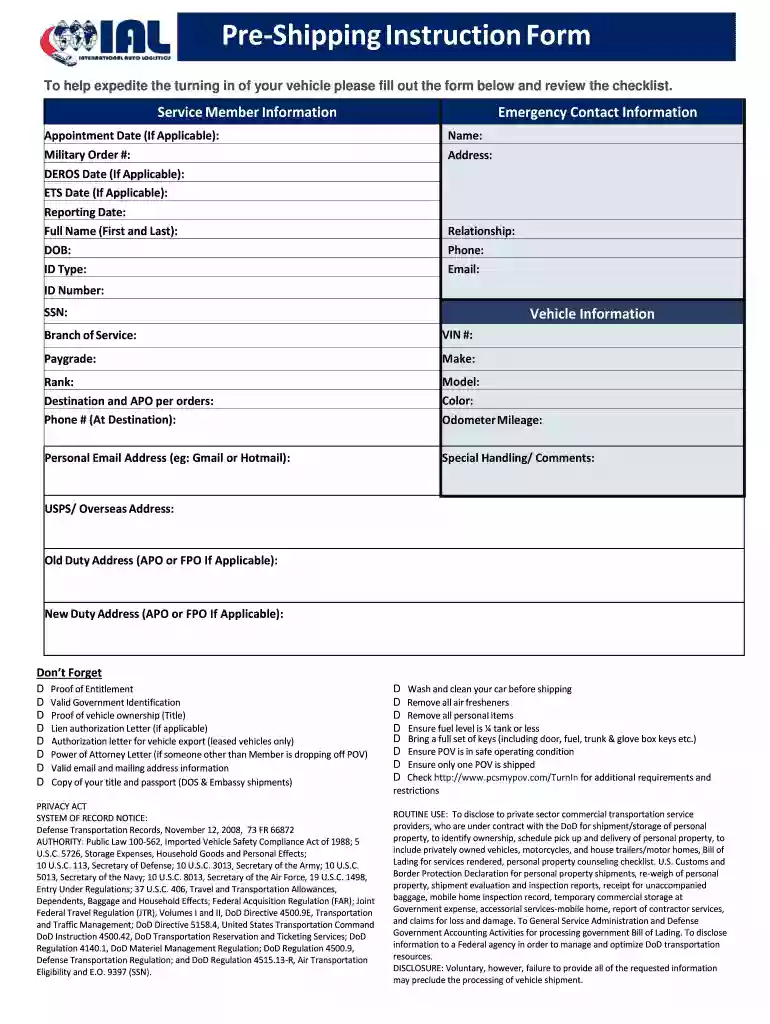
Definition and Meaning of the Shipping Instruction Form
The shipping instruction form is a critical document used primarily in logistics and transportation to provide specific guidelines on how to handle and transport goods. It details the parameters and requirements for shipping items, ensuring that all parties involved have a clear understanding of the process. This form typically includes essential information such as the sender's and recipient's details, type of goods being shipped, packaging requirements, and shipping method.
Understanding the shipping instruction form's purpose is essential for businesses and individuals engaged in commerce. It ensures compliance with legal requirements and enhances operational efficiency by minimizing errors and miscommunication related to the shipment.
Key Features of the Shipping Instruction Form
- Sender and Recipient Information: This includes the names, addresses, and contact details of both the sender and the recipient.
- Shipping Details: Specifies the shipping method (e.g., air, sea, ground), service level (e.g., express, standard), and delivery timeline.
- Item Description: Provides a detailed description of the goods being shipped, including weight, dimensions, and any special handling requirements.
- Packaging Instructions: Outlines the necessary packaging methods to ensure items arrive intact and in compliance with shipping regulations.
- Legal Compliance: Ensures that the shipment adheres to all relevant laws and regulations regarding customs, safety, and environmental standards.
Steps to Complete the Shipping Instruction Form
Completing the shipping instruction form accurately is vital to avoid delays and issues during the shipping process. Here’s a step-by-step guide on how to fill it out correctly.
- Gather Required Information: Before starting the form, collect all necessary details, including sender and recipient information, item descriptions, and shipping preferences.
- Fill in Sender and Recipient Sections: Write the full names, addresses, and contact numbers for both parties in the designated fields.
- Specify Shipping Method: Choose the preferred shipping option, noting any special requirements for temperature control or hazardous materials.
- Detail Item Information: Provide a comprehensive description of the items being shipped, including their weight and dimensions. If necessary, include any documentation that supports the shipment, such as a commercial invoice or packing list.
- Review Packaging Instructions: Clearly outline how the items should be packaged to prevent damage and ensure safety during transit.
- Check Legal Compliance: Affix any required signatures and date the form to confirm that all information provided is accurate and complete.
How to Obtain the Shipping Instruction Form
Accessing the shipping instruction form can typically be done in several ways:
- Online: Many shipping companies and logistics providers offer downloadable templates on their websites. These forms can often be customized to fit specific shipping needs.
- Through Shipping Software: Various logistics and supply chain management software solutions provide built-in tools to create and fill out shipping instruction forms efficiently.
- Request from Logistics Provider: If unsure where to find a form, it is advisable to directly contact the shipping company or service provider for assistance.
Examples of Using the Shipping Instruction Form
The shipping instruction form is used across various scenarios, enhancing clarity and efficiency in logistics. Here are some practical examples:
- E-commerce Businesses: An online retailer shipping products to customers utilizes the form to outline shipping preferences, packaging details, and insurance coverage.
- International Shipping: A business exporting goods overseas must complete the form to comply with customs requirements and ensure proper documentation accompanies the shipment.
- Event Management: When shipping equipment and materials for events, event planners can use the shipping instruction form to ensure timely deliveries and specify setup instructions.
Important Terms Related to Shipping Instruction Form
Understanding specific terminology related to the shipping instruction form is crucial for proper usage, including:
- Freight Forwarder: An agent who arranges the shipment of goods on behalf of the shipper, often managing logistics and documentation.
- Bill of Lading: A document issued by a carrier to acknowledge receipt of cargo for shipment, serving as proof of ownership.
- Customs Declaration: A form required for goods being imported or exported, detailing the nature of the items and ensuring compliance with customs regulations.
Legal Use of the Shipping Instruction Form
The shipping instruction form must be completed accurately and truthfully to ensure legal compliance. Falsifying information can lead to significant consequences, including fines and liability for damages. Businesses are advised to keep precise records and retain copies of all forms submitted for shipping operations, especially when dealing with international shipments that may be subjected to increased scrutiny by customs authorities.
State-Specific Rules for Shipping Instruction Form
Each state in the U.S. may have varying regulations that affect how the shipping instruction form should be completed and submitted. It's essential to review local laws and guidelines that pertain to:
- Liability Limitations: Certain states may have different regulations on the liability of carriers and shippers for damages or loss during transit.
- Safety Standards: Guidelines regarding packaging and transporting hazardous materials may differ based on state laws.
- Taxes and Duties: Some areas may impose specific taxes or duties on shipments, which must be considered when filling out the form.
Required Documents for Shipping
When completing a shipping instruction form, several supportive documents may be necessary to ensure compliance and smooth processing of the shipment:
- Commercial Invoice: Required for international shipments, detailing transaction particulars and value.
- Packing List: An itemized checklist of goods included in the shipment, assisting in verifying contents upon delivery.
- Export Licenses: Documentation required when shipping controlled items overseas, ensuring compliance with trade regulations.