
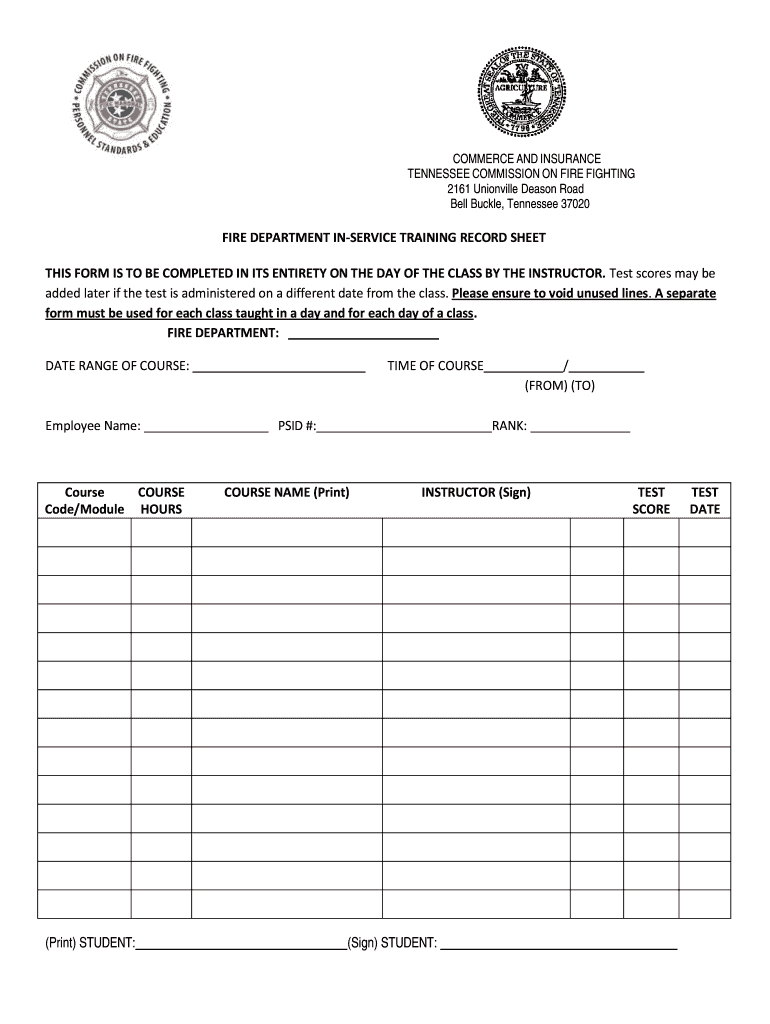







Understanding the Fire Department Training Report Template
The fire department training report template serves a critical function in capturing the details of in-service training for fire personnel. This organized format ensures that data is consistently recorded, facilitating efficient tracking of training and compliance with regulatory requirements. Various key elements enhance the effectiveness and utility of training report templates.
Key Elements of the Training Report Template
- Instructor Information: Capturing the instructor's name, qualifications, and contact details is essential for accountability.
- Employee Details: Documenting full names, badge numbers, and positions of attendees provides a clear record of personnel participating in training.
- Course Information: Clearly stating the course title, duration, and content details allows for assessment of training alignment with departmental needs.
- Test Scores: Including results from assessments or tests offers a quantifiable measure of the effectiveness of the training and participant comprehension.
- Date of Training: Recording the date of the training session aids in tracking compliance over time.
This comprehensive documentation is essential for maintaining training standards and ensuring that all personnel are adequately prepared for their roles.
Steps to Complete the Training Report
- Gather Required Information: Before starting the report, ensure you have access to the instructor and participant details, course materials, and assessment results.
- Input Instructor Information: Fill in the instructor's name and details, as accountability starts at the teaching level.
- Document Employee Participation: List all attendees with their full names and any relevant identifier like badge numbers to verify attendance.
- Detail Course Information: Describe the training, including title, topics covered, and duration, which links to the overall training strategy.
- Record Test Outcomes: If evaluations were conducted, document scores to reflect on the training's efficiency and effectiveness.
- Finalize with Comments: Offer space for instructor remarks as well as feedback from trainees regarding the training's relevance and quality.
These steps provide clarity in tracking training sessions and equip fire departments with essential information for operational improvement.
Importance of Keeping Training Records
Maintaining thorough training records has various implications for fire departments:
- Regulatory Compliance: Documentation helps ensure compliance with state and federal regulations regarding firefighter training and safety.
- Performance Evaluation: A comprehensive training report allows for a better evaluation of both training effectiveness and individual employee performance.
- Improvement Tracking: Over time, trends can be identified which indicate areas needing attention, thus assisting in future training program adjustments.
- Resource Management: Accurate records can signal when resources may be reallocated or when additional training might be necessary.
Keeping robust training records is not only prudent but required for the operational success of fire departments.
Best Practices for Using the Template
- Standardize Filling: Encourage all instructors and training officers to fill out the report in a consistent manner for uniformity across all documentation.
- Digital Templates: Utilize digital formats for easy editing, sharing, and storage. This allows for effortless updates and minimizes the risks associated with lost paperwork.
- Regular Reviews: Establish periodic checks of training records to ensure they are up to date and comprehensive, assisting in meeting training requirements.
- Feedback Integration: Include sections for trainee feedback in the report to continuously refine training offerings based on participant input.
These best practices maximize the effectiveness of the template while ensuring adherence to training protocols.
Example Scenarios for Report Usage
- Annual Compliance Checks: During end-of-year evaluations, departments can use the training reports to demonstrate compliance with ongoing education requirements.
- Performance Reviews: Individual employee training reports can be utilized in performance appraisal discussions to validate a firefighter's training history and progression.
- Accident Investigation: In cases of incidents, training records can be referenced to verify personnel training and preparedness, which can provide insight into potential gaps.
These scenarios illustrate the practical application of the training report template in enhancing department operations and personnel safety.
Variations in Training Report Formats
Different fire departments might adopt various formats based on their specific regulatory needs or operational preferences. Some common variations include:
- State-Specific Templates: Certain states may require additional information or particular formats, such as documentation for hazardous materials handling training.
- Software Compatibility: Many departments utilize software that offers integrated templates that assist in managing training records, improving accessibility and functionality.
- Sector-Specific Additions: Departments servicing specialized functions, such as urban firefighting or wildland firefighting, may need to adjust their reports to include specialized training sections.
Understanding these variations allows departments to tailor their training documentation to meet unique needs while remaining compliant.
Conclusion on Effective Record-Keeping
Implementing and utilizing the fire department training report template effectively is crucial for ensuring that personnel training is standardized, recorded, and utilized in a way that upholds safety and improves response capabilities. The structured and comprehensive nature of this documentation supports ongoing development and maintains the high standards expected in fire service training.




