
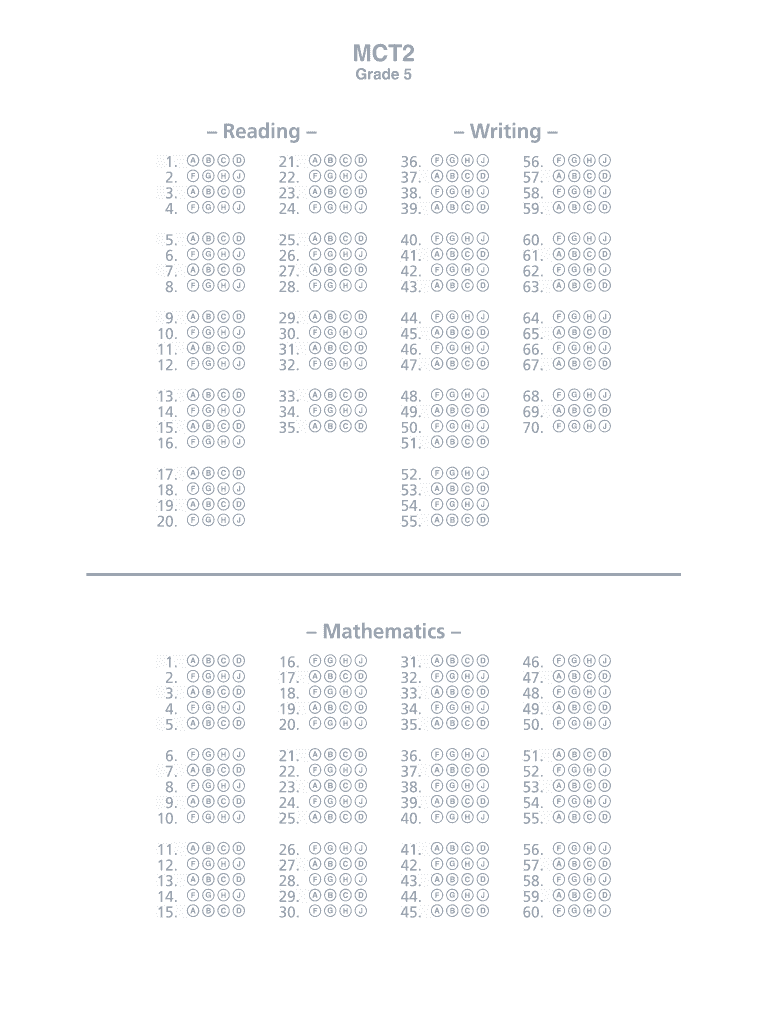







Definition and Purpose of the ABCD Answer Sheet
The ABCD answer sheet is a standardized tool designed primarily for administering assessments, quizzes, or exams with multiple-choice questions. This form accommodates a variety of testing formats and is especially useful in educational settings where clear and efficient assessment methods are essential.
- Structure: The answer sheet typically features designated bubbles for responses labeled A, B, C, and D. Each question corresponds to a specific number, facilitating easy identification during grading.
- Format: The ABCD answer sheet is usually formatted to address either forty questions or another specified limit, providing users with a clear layout to capture responses.
- Purpose: The primary purpose of the ABCD answer sheet is to simplify the grading process. When students fill in the designated bubbles, teachers or software can easily scan and tally responses, leading to more efficient assessments.
How to Use the ABCD Answer Sheet Effectively
Utilizing an ABCD answer sheet involves understanding its layout and following certain best practices to ensure accurate responses and efficient grading.
- Filling in Answers: Users should darken the corresponding bubble completely to mark their chosen answer. Incomplete markings may lead to misinterpretation during scanning, potentially affecting scores.
- Avoiding Overlaps: It is crucial to ensure that only one bubble is filled per question. Marking multiple responses can confuse the grading system, resulting in loss of points or incorrect scoring.
- Reviewing Responses: Before submitting the answer sheet, students should double-check their responses against their intended answers. This step helps catch any errors made during the answering process.
Key Elements of the ABCD Answer Sheet
Understanding the key components of an ABCD answer sheet can enhance its usability and effectiveness in assessments.
- Question Numbering: Each question typically has a corresponding number, allowing easy cross-referencing with question prompts in the examination booklet.
- Response Bubbles: Each question features four distinct bubbles labeled A through D, ensuring a straightforward way to capture responses. Clear demarcation helps prevent confusion during grading.
- Instructions Section: Many ABCD answer sheets include a brief instruction section that outlines how to complete the form properly, leading to better compliance and fewer errors.
Legal Considerations for Using ABCD Answer Sheets
When employing the ABCD answer sheet for assessments, administrators must adhere to certain legal and ethical considerations.
- Data Privacy: Institutions must ensure that any personal identifying information collected on the answer sheets adheres to data protection regulations. This encompasses safeguarding student data against unauthorized access.
- Equal Access: Assessment methods using ABCD answer sheets must accommodate all students, including those with disabilities. Institutions are encouraged to provide alternative formats as necessary.
- Adherence to Guidelines: Educational institutions should follow best practices and established guidelines for testing, ensuring the assessment process maintains fairness and consistency.
Tips for Creating a Custom ABCD Answer Sheet
Creating a personalized ABCD answer sheet can enhance the assessment experience for both students and educators.
- Design Considerations: When designing an ABCD answer sheet, ensure ample space between bubbles to minimize the risk of accidental marking. A clean layout aids readability.
- Field Options: Include fields for student names, dates, and class information. This data is vital for accurate record-keeping and tracking student performance.
- Compatibility with Scanning: If the answer sheet will be scanned, use a format and design that aligns with the scanner's specifications. This ensures that the scanner can accurately read and record responses.
Examples of ABCD Answer Sheets in Different Contexts
The ABCD answer sheet can be utilized across various contexts, enhancing its versatility for different assessment types.
- Education: In classrooms, teachers often use the ABCD answer sheet for quizzes and standardized tests. Its straightforward format helps foster a structured testing environment.
- Training Programs: Corporate training programs may employ ABCD answer sheets during assessments to evaluate employee knowledge and retention of training materials. This method streamlines performance evaluation.
- Surveys and Feedback Forms: Organizations conducting surveys might use a version of the ABCD answer sheet to capture preferences or opinions, allowing for quick analysis and data collection.
By understanding the various aspects of the ABCD answer sheet, users can effectively navigate its use in assessments, ensuring not only accuracy in responses but also a smooth grading process that benefits both students and educators alike.




