







Understanding RV Lot Rental Agreements
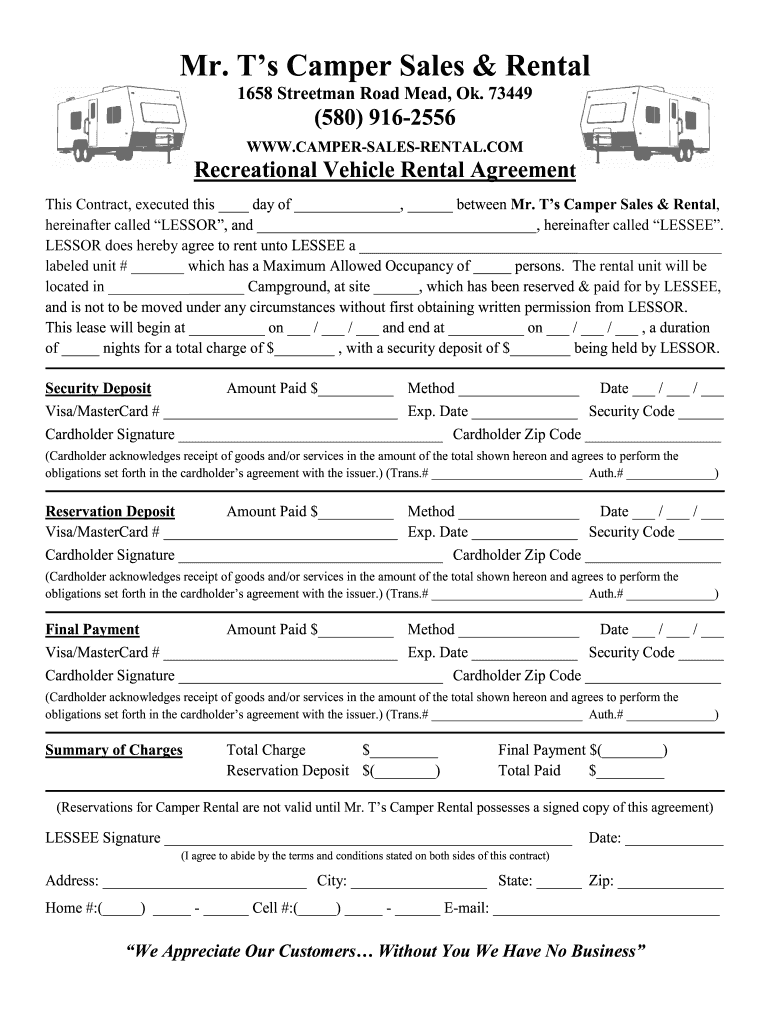
An RV lot rental agreement is a legally binding contract between a property owner and a tenant seeking to rent a space designated for recreational vehicles. This document outlines the terms and conditions under which an RV can be parked on the property, ensuring that both parties are aware of their rights and responsibilities.
Key Components of an RV Lot Rental Agreement
- Parties Involved: The agreement should clearly identify the property owner (lessor) and the tenant (lessee).
- Description of the RV Lot: Include the specific lot number or description, location, and any unique features pertinent to the rental space.
- Rental Duration: Define the length of the rental period, whether it is short-term, long-term, or seasonal. Specify renewal terms if applicable.
- Payment Details: Clearly outline the rent amount, payment due dates, and accepted payment methods. Include any late fees or penalties for late payment.
- Security Deposit: State the amount required for the security deposit, conditions for its return, and the timeframe for returning it after move-out.
Responsibilities of Tenants and Property Owners
-
Tenant Responsibilities:
- Adherence to local laws and community rules.
- Maintenance obligations, such as keeping the lot tidy and reporting any damages.
- Insurance requirements, if applicable, for the RV and its contents.
-
Owner Responsibilities:
- Providing necessary utilities, if included in the rental agreement.
- Maintaining common areas and ensuring the property is safe and secure.
- Responding in a timely manner to tenant maintenance requests.
Important Legal Considerations
- Compliance with Local Regulations: Ensure that the RV lot rental agreement complies with local zoning laws and regulations regarding recreational vehicle parking.
- Lease Termination Process: Outline conditions under which either party may terminate the agreement early, including notice periods and acceptable reasons for termination.
- Dispute Resolution Procedures: Include methods for resolving conflicts, such as mediation or arbitration, to avoid lengthy court disputes.
Types of RV Lot Rental Agreements
- Long-Term Agreements: Suitable for tenants who wish to park their RV for an extended period, usually six months or more.
- Short-Term Agreements: Often used for vacationers or seasonal campers who need a space for a few days or weeks.
- Monthly Agreements: Flexibility for tenants who require parking on a month-to-month basis.
Sample Terms and Clauses
- Use Restrictions: Specify any limitations on how the RV lot can be used, including restrictions on guest occupancy or commercial activities.
- Property Maintenance: Detail the owner's obligations regarding the maintenance of the lot and what is expected from the tenant in terms of upkeep.
- Insurance and Liability: Require tenants to maintain appropriate insurance coverage for their RV and property, outlining liability considerations for both parties.
Variations by State
Rental agreements can vary significantly by state. For instance, specific states may have additional disclosure requirements or restrictions based on local laws. Always review local statutes or consult with a legal professional when drafting an RV lot rental agreement to ensure compliance with state regulations.
Conclusion and Practical Tips
Drafting a comprehensive RV lot rental agreement is crucial for protecting both parties involved. Utilizing a standard template can provide a solid foundation, but it is advisable to customize terms based on individual circumstances and local legal requirements. Always keep a signed copy of the agreement for reference, and consider conducting periodic reviews to update terms as necessary.




