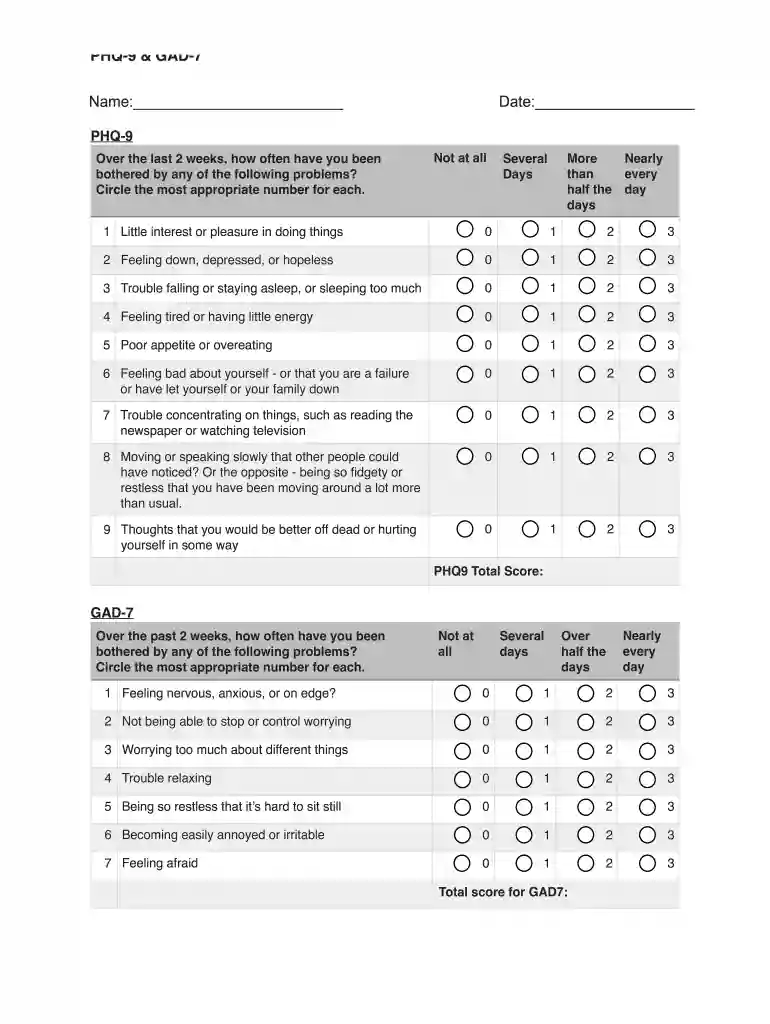
Definition and Meaning of GAD-7
The Generalized Anxiety Disorder 7-item (GAD-7) scale is a brief questionnaire used to assess the severity of generalized anxiety disorder (GAD) symptoms. Each question corresponds to specific symptoms experienced in the past two weeks, allowing individuals to rate the frequency of their experiences using a scale from zero to three, ranging from "not at all" to "nearly every day." The GAD-7 is widely utilized in clinical settings for screening purposes, enabling mental health professionals to identify individuals who may require further evaluation or treatment.
Importance of the GAD-7 Assessment Tool
- Early Detection: The GAD-7 facilitates the early identification of anxiety symptoms, which is crucial for timely intervention.
- Severity Assessment: By providing a score based on responses, the GAD-7 allows practitioners to gauge the intensity of anxiety disorders effectively.
- Monitoring Progress: The assessment can be repeated over time to monitor changes in a patient's anxiety level, providing insight into treatment efficacy.
Steps to Complete the GAD-7
Completing the GAD-7 is straightforward and does not require any specialized training.
- Obtain the GAD-7 Questionnaire: This can be accessed through healthcare providers or downloaded from reputable health organization websites.
- Answer the Questions: Respond to each item honestly, reflecting on how often you have been bothered by anxiety symptoms over the last two weeks.
- Calculate Your Total Score: Each response is scored (0 to 3 points), with the total score ranging from 0 to 21.
- Interpret the Score:
- 0-4 may indicate minimal anxiety.
- 5-9 suggests mild anxiety.
- 10-14 indicates moderate anxiety.
- 15 or higher signifies severe anxiety.
Example of GAD-7 Questions
- Feeling nervous, anxious, or on edge?
- Not being able to stop or control worrying?
- Worrying too much about different things?
Examples of Using the GAD-7
The GAD-7 can be used in various scenarios, such as:
- Routine Mental Health Check-Ups: During annual health assessments, primary care physicians may administer the GAD-7 to evaluate their patient's psychological well-being.
- Intake Assessments: Mental health clinics often use it as part of their intake process to determine the appropriate level of care.
- Follow-Up Evaluations: After initiating treatment for anxiety, the GAD-7 can help track improvement over time.
Important Terms Related to GAD-7
Familiarity with key terminology enhances understanding of the GAD-7's application:
- Generalized Anxiety Disorder (GAD): A mental health condition characterized by excessive worry and anxiety about various aspects of life.
- Screening Tool: An instrument used to identify individuals at risk for a particular condition, aiding in early detection and treatment.
- Scoring Interpretation: Understanding how to evaluate scores provides context for the severity of anxiety symptoms and guides clinical decision-making.
Digital vs. Paper Version of the GAD-7
The GAD-7 is available in both digital and paper formats, catering to different user preferences:
- Digital Version: Accessible through various mental health platforms and applications, providing instant scoring and reporting features.
- Paper Version: Often used in clinical settings where patients complete the questionnaire in person, allowing for direct interaction with healthcare providers.
Advantages of Each Format
- Digital: Allows for ease of access, immediate feedback, and streamlined data collection for healthcare providers.
- Paper: May be preferable for individuals who are less comfortable with technology or in settings without digital devices.
Legal Use of the GAD-7
The GAD-7 is legally used as a diagnostic tool by licensed mental health professionals. It is essential to administer the assessment in a confidential setting, respecting patient rights and privacy according to healthcare regulations. Proper consent must be obtained prior to using results for treatment planning or research purposes.
Guidelines for Legal Compliance
- Ensure that assessments are administered by qualified personnel.
- Maintain confidentiality and secure patient data.
- Comply with relevant laws, such as HIPAA, concerning patient information protection.
Why Should You Use the GAD-7
Integrating the GAD-7 into routine health evaluations can significantly enhance mental health care:
- Comprehensive Assessment: It complements physical health evaluations, promoting holistic patient care.
- Evidence-Based Practice: Utilizing validated screening tools aligns with best practices in mental health care.
- Improved Patient Outcomes: Early identification of anxiety disorders leads to better management and treatment approaches, ultimately improving patients' quality of life.