
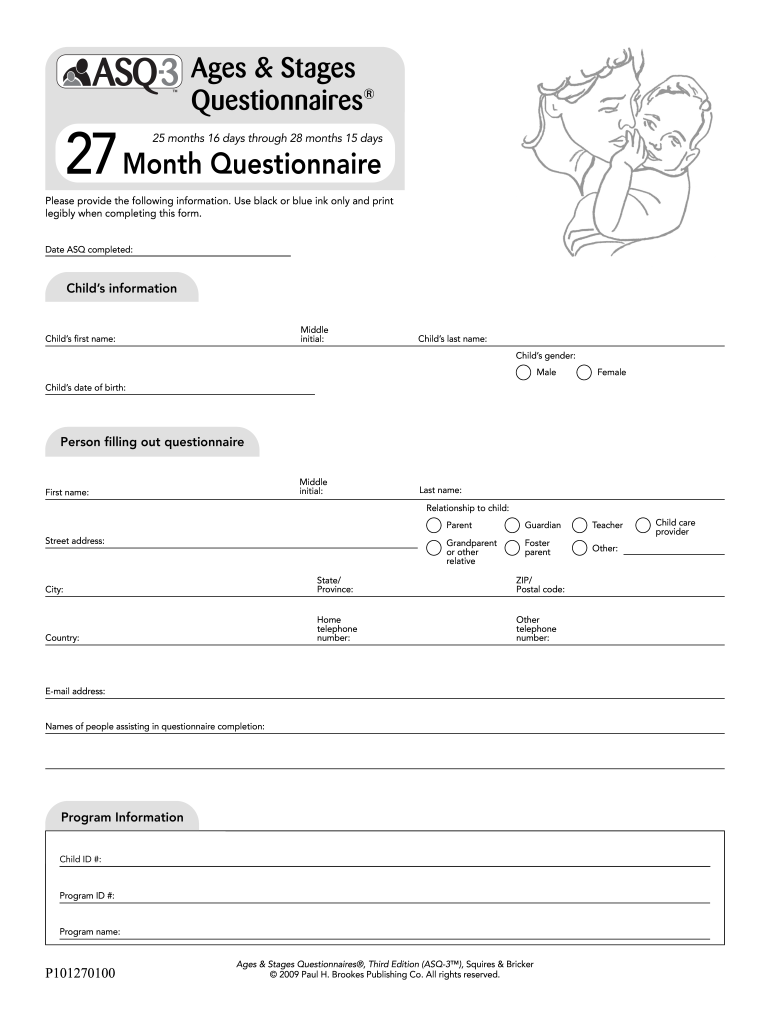







Definition and Purpose of the ASQ 27 Month Score Sheet
The ASQ 27 month score sheet, part of the Ages & Stages Questionnaires® (ASQ-3™), is designed to evaluate the developmental milestones of children aged 25 months and 16 days to 28 months and 15 days. This tool allows parents and guardians to provide invaluable insights into their child's abilities across critical developmental areas. The score sheet covers five main domains: communication, gross motor skills, fine motor skills, problem-solving abilities, and personal-social skills.
In essence, the ASQ 27 month score sheet is integral in identifying any potential developmental delays or areas where the child may require additional support. By completing the questionnaire, caregivers can help healthcare professionals understand their child's development comprehensively, leading to timely interventions when necessary.
How to Obtain the ASQ 27 Month Score Sheet
Acquiring the ASQ 27 month score sheet can be done through several efficient channels:
-
Healthcare Providers: Pediatricians, child psychologists, or early childhood specialists often provide the ASQ score sheets. When visiting for routine check-ups, request the specific age-related questionnaire from your provider.
-
Online Resources: Numerous websites offer downloadable PDFs of the ASQ 27 month score sheet. Visit early childhood education websites or organizations specializing in child development for access to these materials.
-
Educational Institutions: Many preschools and early childhood programs utilize ASQ assessments. Contact local educational institutions to see if they provide the score sheet.
Having this score sheet readily available is crucial for monitoring your child’s milestones and development systematically.
Steps to Complete the ASQ 27 Month Score Sheet
To ensure an effective assessment using the ASQ 27 month score sheet, follow these structured steps:
-
Gather Necessary Information: Before starting, collect relevant details about your child, such as their age, any observed behaviors, and recent developmental achievements.
-
Set Aside Time: Allocate a quiet time where you can focus on filling out the score sheet without interruptions. This is especially important as some sections may require thoughtful reflection.
-
Review Each Question Thoroughly: The score sheet contains multiple prompts regarding your child’s competencies in various domains. Read each question carefully, ensuring you understand what is being asked before responding.
-
Provide Honest Feedback: Answer each question as accurately as possible. Honest responses provide the best insights into your child's development, assisting healthcare professionals in identifying necessary support.
-
Discuss Concerns with a Professional: After completing the questionnaire, schedule a meeting with a pediatrician or child development specialist to discuss the results and any concerns raised through the responses.
Completing the ASQ 27 month score sheet is an opportunity for parents to reflect on their child’s growth and development actively.
Importance of the ASQ 27 Month Score Sheet
Using the ASQ 27 month score sheet offers numerous benefits:
-
Early Detection: It helps identify developmental delays or concerns promptly, ensuring that children receive necessary support and interventions as early as possible.
-
Guided Support for Parents: The score sheet provides parents with insights into their child's strengths and areas for improvement, fostering informed discussions with healthcare providers.
-
Developmental Milestone Tracking: It serves as a formal record of a child’s growth, allowing for ongoing tracking of developmental milestones over time.
-
Structured Approach to Development: The comprehensive nature of the ASQ framework encourages intervention tailored to individual child's needs, facilitating a more effective developmental strategy.
By utilizing the ASQ 27 month score sheet, families can take proactive steps toward understanding and supporting their child's developmental journey.
Key Elements of the ASQ 27 Month Score Sheet
The ASQ 27 month score sheet encompasses several essential components:
-
Developmental Domains: The score sheet is divided into five key areas: communication, gross motor, fine motor, problem-solving, and personal-social skills. Each domain provides a framework for assessing different aspects of a child's development.
-
Parent Feedback Section: Parents or guardians respond to statements about their child's abilities, ensuring the child's unique behaviors and capabilities are considered.
-
Scoring System: Each question is scored, and responses are tallied to determine whether the child is meeting, exceeding, or not meeting developmental expectations.
-
Interpretive Guidelines: After scoring, the sheet includes guidance for interpreting the results, indicating whether further evaluation or support is necessary.
-
Follow-up Recommendations: The ASQ 27 month score sheet typically suggests next steps based on the scores, which may include additional assessments for specific areas.
The structure of the ASQ 27 month score sheet is crucial for a thorough evaluation, helping caregivers provide detailed insights into their child’s development.
Examples of Using the ASQ 27 Month Score Sheet
Practical scenarios illustrate the utility of the ASQ 27 month score sheet in diverse contexts:
-
Routine Check-Ups: At a pediatric appointment, a parent completes the ASQ 27 month score sheet to assess their child’s growth since the last visit. The pediatrician can use the results to discuss areas where the child excels and where they might need further support.
-
Early Childhood Programs: A preschool integrates the ASQ 27 month score sheet into their program assessment protocol. By regularly evaluating students, teachers can tailor activities to promote skills where children show slower development.
-
Intervention Planning: A parent concerned about their child's speech delays utilizes the ASQ 27 month score sheet alongside a speech therapist's input. The results guide specific interventions targeted at improving communication skills.
These examples showcase how the ASQ 27 month score sheet can serve as a foundational tool for assessing child development across varied environments and purposes.
Legal Use of the ASQ 27 Month Score Sheet
The ASQ 27 month score sheet and its results have legal implications regarding child assessment and special education services:
-
Legal Compliance: Educational institutions must comply with regulations related to early childhood assessments, ensuring the ASQ is administered appropriately and according to established guidelines.
-
Eligibility for Services: Results from the ASQ 27 month score sheet can help determine eligibility for early intervention services under the Individuals with Disabilities Education Act (IDEA), underscoring its significance in the legal framework.
-
Documentation for Appeals: In cases where parents seek special educational services, the ASQ 27 month score sheet serves as critical documentation in justifying assessments and recommendations made by educators and healthcare providers.
Understanding the legal aspects surrounding the ASQ 27 month score sheet enhances its value, demonstrating its role in ensuring children receive necessary developmental support and intervention.




