




Here's how it works

01. Edit your prepare your application online
Type text, add images, blackout confidential details, add comments, highlights and more.

02. Sign it in a few clicks
Draw your signature, type it, upload its image, or use your mobile device as a signature pad.

03. Share your form with others
Send demoulas foundation application via email, link, or fax. You can also download it, export it or print it out.
How to use or fill out enander grant with our platform

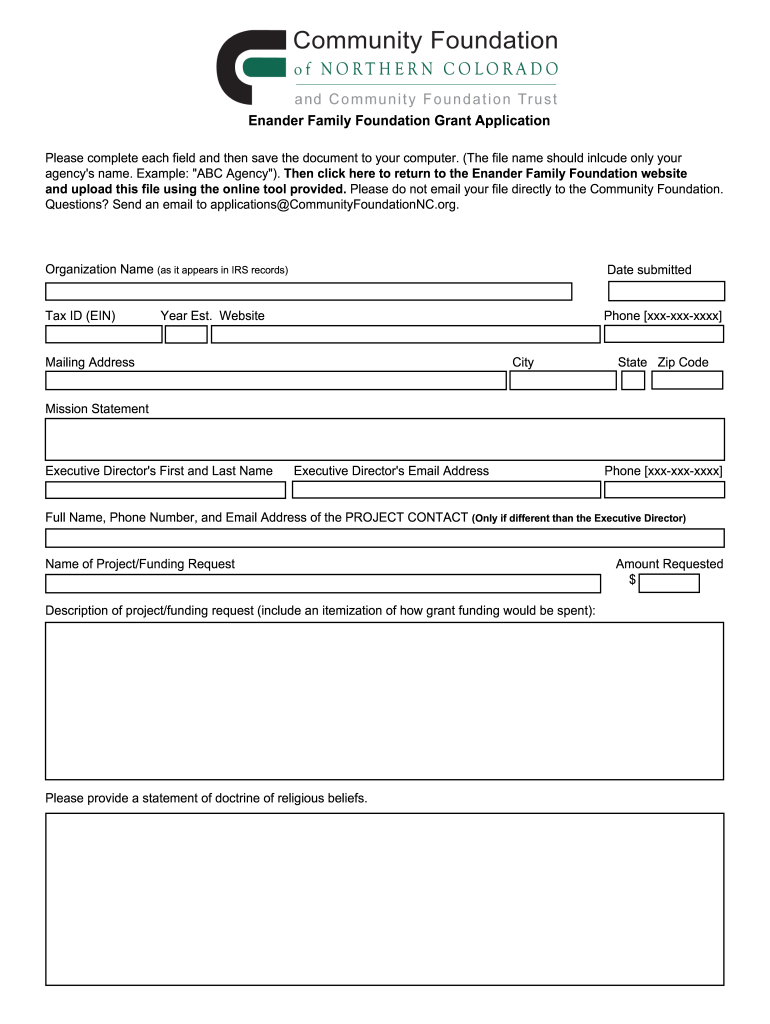
- Click ‘Get Form’ to open the Enander Family Foundation Grant Application in the editor.
- Begin by entering your Organization Name as it appears in IRS records, followed by the Date Submitted and Tax ID (EIN). Ensure that all information is accurate.
- Fill in your contact details, including Phone Number, Year Established, Website, and Mailing Address. Make sure to include City, State, and Zip Code for complete address information.
- Provide a concise Mission Statement that reflects your organization’s goals. Next, enter the Executive Director's First and Last Name along with their Email Address and Phone Number.
- If applicable, include the Full Name, Phone Number, and Email Address of the Project Contact. Specify the Name of Project/Funding Request and provide a detailed Description of how grant funding will be utilized.
- Include a statement of doctrine regarding religious beliefs if required. Enter the Amount Requested in dollars and describe anticipated deliverables/outcomes of the project/program.
- Finally, explain how your organization will demonstrate alignment with the donor's intent to ensure compliance with grant requirements.
Start filling out your Enander grant application today using our platform for free!
Fill out enander grant online
It's free
It's free
Security and compliance
At DocHub, your data security is our priority. We follow HIPAA, SOC2, GDPR, and other standards, so you can work on your documents with confidence.
Learn more




