




01. Edit your daily vehicle inspection report ontario pdf online
Type text, add images, blackout confidential details, add comments, highlights and more.

Type text, add images, blackout confidential details, add comments, highlights and more.

Draw your signature, type it, upload its image, or use your mobile device as a signature pad.

Send vehicle circle check list via email, link, or fax. You can also download it, export it or print it out.
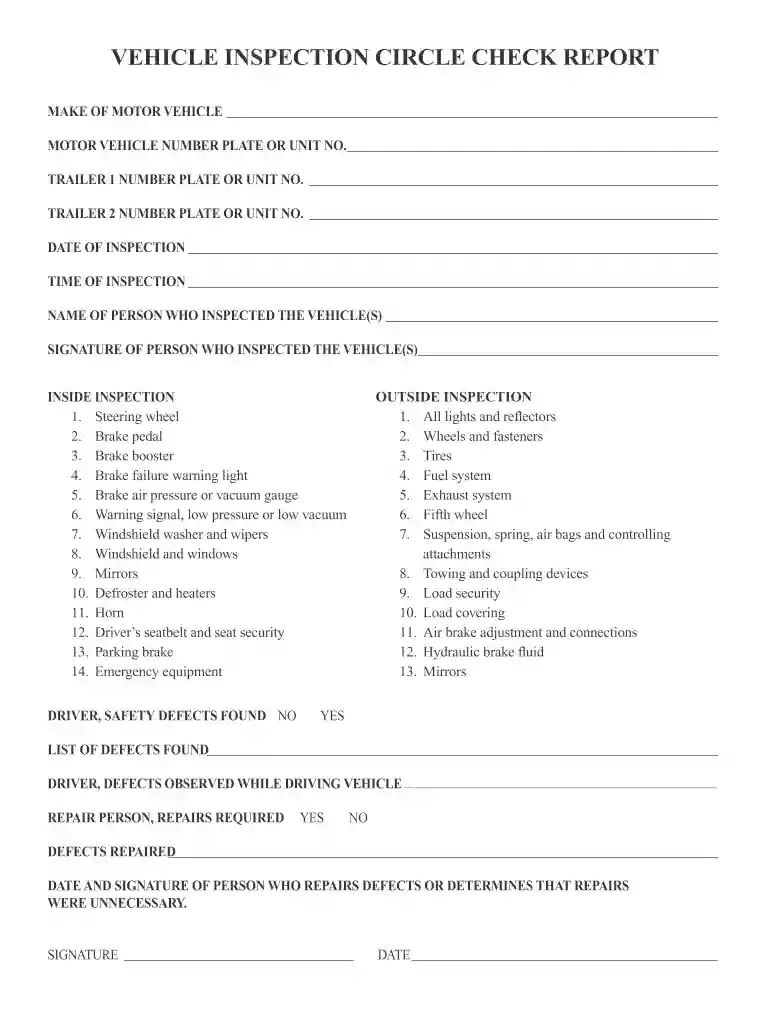
A daily inspection report template in Ontario is a structured document designed for vehicle operators to systematically evaluate the condition of their vehicles. This report ensures that vehicles comply with safety regulations and are fit for operation, reducing risks and enhancing safety on the road.
Vehicle Information: This section typically captures essential vehicle details, including:
Inspection Date and Time: Documenting the date and time of inspection is crucial for maintaining records, complying with regulations, and scheduling potential repairs.
Inspector Details: The name and signature of the person conducting the inspection highlight accountability and traceability.
Compliance Checks: This part of the report includes specific areas to inspect, such as:
Utilizing a daily inspection report template helps streamline the inspection process, ensuring consistency and thoroughness. Regulations set forth by Ontario's Ministry of Transportation mandate that commercial vehicle operators conduct daily inspections and maintain proper records, making this template an essential tool for compliance.
Employing digital forms, such as those available through document management platforms like DocHub, can enhance the inspection process. Digital templates allow for:
By embracing both the structured approach of the daily inspection report template and the efficiency of modern solutions, vehicle operators in Ontario can maintain high safety and operational standards while adhering to legal requirements.
Of course, it is possible with DocHub. This safe and compliant online solution features a phone-based signing option. When you log in to your DocHub account and import your ontario daily truck inspection sheet to our editor, fill out all blank areas and utilize the Sign tool on the top barf. Click on Create your signature and choose Phone from the available options. Here, you scan a QR code with your smartphone and draw your signature on your phone screen, as you normally do when signing physical papers. If you access DocHub right from your mobile device, you can eSign your form by drawing your electronic signature, uploading its photo, or simply with a typed name.
You can get and modify your vehicle circle check template online by using DocHub. Its straightforward yet feature-rich design enables you to begin effective work right after you register your account. Create your profile and add your document, then our interface will guide you through our stress-free form completion experience.
At DocHub, your data security is our priority. We follow HIPAA, SOC2, GDPR, and other standards, so you can work on your documents with confidence.
by HD Jeong Cited by 13 DWR data include various types of work performed, quantities of work performed, equipment usage, labor hours, materials used, inspection resultsRead more
For UL Listed applications Daily test reports are required. STEP 4 ACTIVATE THE SKYROUTE MAX WITH CONNECT 24 (See Section 7.3). Call the Voice ResponseRead more
Drivers Vehicle Inspection Report. Check ANY Defective Item and Give Details under Remarks. DATE: TRuCk/TRACTOR NO.Read more


