







Understanding the Respondent's Original Answer in Texas Divorce Cases
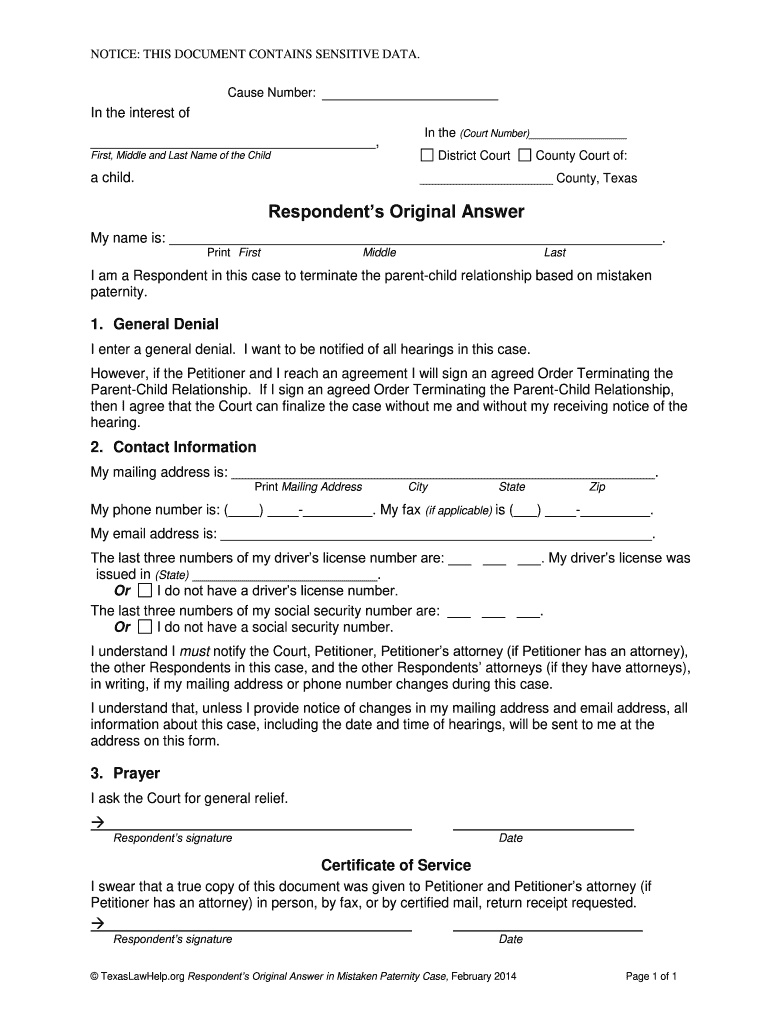
The respondent's original answer form is a crucial document in divorce proceedings in Texas. It allows the individual to respond formally to a divorce petition filed against them. Key aspects of this form include the following:
- Purpose: The primary objective of the respondent's original answer is to provide a legal response to the claims made in the divorce petition. It allows the respondent to contest the claims or submit a general denial.
- Legal Basis: The Texas Family Code governs the requirements for responses to divorce petitions, emphasizing the importance of timely submission to avoid defaults.
- Implications of Non-Response: Failure to file an original answer may result in the court granting a default judgment, potentially leading to unfavorable outcomes for the respondent.
Key Components of the Respondent's Original Answer
The respondent's original answer contains several mandatory components that ensure its validity. Understanding these elements helps respondents accurately complete the form:
- Personal Information: Respondents must provide their full name, address, and contact details. Providing accurate information is vital for court communications.
- General Denial: A section is available for respondents to state a general denial of the claims. This indicates that the respondent does not admit to any allegations presented in the divorce petition.
- Notification Request: The form includes provisions for the respondent to request notification of future hearings. This is critical for staying informed about the case's progress.
Detailed Process for Completing the Respondent's Original Answer Form
Completing the form correctly involves several steps that ensure compliance with Texas divorce laws:
- Access the Form: Obtain the respondent's original answer form from a reliable source, such as the Texas Judicial Branch website or legal aid organizations.
- Fill in Your Details: Clearly print your name, address, and any other personal details required. Ensure that contact information is current and accurate.
- Specify Your Response:
- Choose whether to submit a general denial or to contest specific allegations.
- If contesting, include a clear explanation for each dispute.
- Check Notification Preferences: Indicate your desire to receive notifications about hearings and updates related to the case.
- Sign and Date the Form: Include your signature and the date at the bottom of the document, signifying your acknowledgment of the information provided.
Respondent's Rights and Obligations in Divorce Cases
Understanding one's rights and responsibilities during divorce proceedings is essential for respondents:
- Legal Representation: Respondents have the right to seek legal counsel. An attorney can provide guidance on effectively completing the original answer and other aspects of the divorce process.
- Responding in a Timely Manner: Adhering to filing deadlines is necessary to avoid waiving rights to contest the divorce or influence settlement terms.
- Current Information Requirement: Respondents must keep the court informed of any changes in their contact information.
Legal Consequences of Incomplete or Incorrect Responses
Filing an incomplete or inaccurate original answer can lead to serious legal implications:
- Default Judgments: If a respondent fails to answer within the designated time frame, the court may proceed to issue a default judgment against them, potentially resulting in adverse decisions regarding property division, custody, and support.
- Modification Requests: Correcting mistakes in a submitted original answer may necessitate additional legal action, increasing costs and prolonging the divorce process.
Additional Resources for Respondents in Texas Divorce Cases
For those navigating the complexities of a divorce in Texas, additional resources can be invaluable:
- TexasLawHelp.org: A non-profit organization that provides assistance, forms, and guidance for individuals facing legal challenges, including divorce.
- Family Law Attorneys: Consulting with attorneys specializing in family law can provide clarity on the divorce process and ensure compliance with legal requirements.
- Court Resources: Local family courts often have resources for self-represented litigants, including informational brochures and workshops on completing legal documents.
Conclusion and Further Considerations for Respondents
Respondents in Texas divorce cases must understand the significance of the original answer form and its implications. By accurately completing and submitting this form, individuals can effectively participate in the divorce proceedings and protect their legal rights.




