
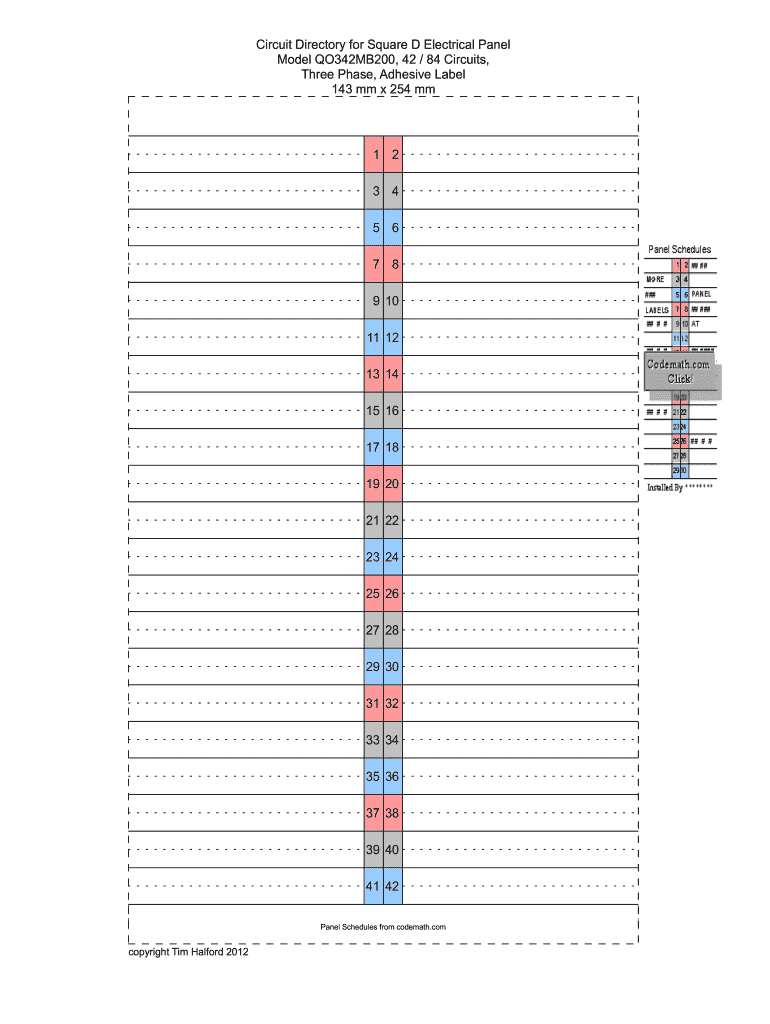







Comprehensive Overview of the Circuit Breaker Directory Template
The circuit breaker directory template is an essential tool for both residential and commercial electrical systems, designed to maintain clear organization and easy access to critical circuit information. This template supports various applications, including identifying circuit assignments, coordination with electrical panel schedules, and providing vital labeling necessary for safety and efficiency in electrical management.
Key Components of the Circuit Breaker Directory Template
The circuit breaker directory template includes several integral parts that streamline electrical management:
- Panel Information: Designate the electrical panel’s name, location, and relevant identification numbers.
- Circuit Listings: Comprehensive sections to list circuit numbers, names, and functions, typically ranging from one to forty-two circuits, allowing for easy identification and management.
- Safety Compliance: Sections dedicated to ensuring that labeling matches safety regulations, reducing the risk of electrical accidents during maintenance.
The organization of these components ensures that users can quickly locate and understand circuit functions. For instance, electricians can readily find circuit circuits that need to be shut down for maintenance, enhancing safety protocols.
How to Utilize the Circuit Breaker Directory Template Effectively
Using the circuit breaker directory template begins with gathering all necessary circuit information. Follow these steps for effective utilization:
- Download the Template: Acquire a suitable format such as a PDF or Excel version for easy modification.
- Fill in Basic Panel Info: Enter panel name and location at the top of the template.
- List Circuits: Begin numbering from one to forty-two and provide names or functions for each circuit. For example, label a circuit as "Living Room Outlets" or "HVAC System."
- Ensure Completeness: Check for gaps in information and make sure all circuits are accurately represented.
- Labeling: Consider creating physical labels based on the directory for the actual circuit breakers.
The clarity and organization imparted by the directory allow for streamlined operations, especially in emergency scenarios.
Practical Applications and Scenarios for the Directory Template
The circuit breaker directory template finds its utility across various sectors and situations:
- Residential Settings: Homeowners can maintain a clear record of circuits to facilitate DIY repairs and upgrades, ensuring they know which circuit to power down during projects.
- Commercial Installations: In workplaces with multiple circuits, this template aids in compliance with electrical safety inspections and routine check-ups, critical for avoiding costly downtime.
- Emergency Responses: In case of electrical emergencies, having a directory allows technicians to locate and address issues quickly, minimizing risks and damage.
Considerations for Customization and Variations
Customization is crucial to ensure the template meets specific requirements:
- Tailoring by Type: Depending on the electrical setup, sections might need to be adjusted—more circuits for larger facilities or additional safety fields can be included.
- Digital vs. Paper Formats: While printed templates serve well for physical reference, digital versions allow advanced features like links to diagrams or real-time updates.
Utilizing a template that fits the unique structure and requirements of the electrical system significantly enhances organizational efficiency.
Compliance and Safety Regulations Related to Circuit Breaker Directories
Adhering to local and national electrical codes is vital when using a circuit breaker directory template:
- Conformance to NEC: In the U.S., the National Electrical Code (NEC) dictates specific labeling requirements, which the directory template can incorporate.
- Regular Updates: Periodic inspections and updates to the directory ensure that any changes made to circuit loads or designations are accurately reflected.
Ensuring compliance through the use of a well-maintained directory not only promotes safety but also enhances overall operational efficiencies in electrical management.
Benefits of Using a Circuit Breaker Directory Template
The benefits of implementing a circuit breaker directory template include:
- Improved Safety: Clear identification reduces the risks of electrical hazards during maintenance work.
- Increased Efficiency: Streamlined operations when locating circuits for repairs or inspections.
- Enhanced Documentation: Detailed records facilitate communication among electricians, inspectors, and maintenance teams.
This structured approach to managing circuit information ultimately leads to better electrical system performance and safety.
Examples of Circuit Breaker Directory Layouts
A well-structured layout can provide clarity and help ensure all necessary information is captured efficiently:
- Basic Format: Panel name on top, followed by a numbered list of circuits with corresponding functions.
- Advanced Format: Includes additional fields such as date of last inspection and specific maintenance notes for each circuit.
By selecting the right format, users can tailor the directory to best serve their needs, promoting effective electrical management across all settings.
Download Options for Circuit Breaker Directory Templates
Various formats are available for downloading circuit breaker directory templates:
- PDF Versions: Ideal for printing and physical labeling.
- Excel Sheets: Allow for easy customization and digital updates.
- Printable Label Templates: Facilitate the creation of physical labels directly correlated with the directory for quick reference.
Having access to multiple formats ensures that users can choose the one that best fits their operational environment, maximizing the template's effectiveness.




