

Cmm first article inspection template 2026

Get Form
first article inspection cmm Preview on Page 1

Here's how it works

01. Edit your first article inspection cmm online
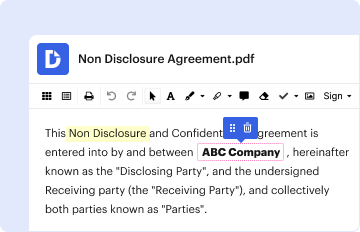
Type text, add images, blackout confidential details, add comments, highlights and more.
02. Sign it in a few clicks
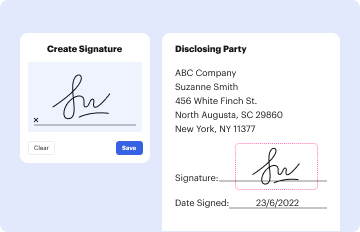
Draw your signature, type it, upload its image, or use your mobile device as a signature pad.
03. Share your form with others
Send fai inspection cmm via email, link, or fax. You can also download it, export it or print it out.

How to use or fill out cmm first article inspection template with our platform

Form edit decoration
9.5
Ease of Setup
DocHub User Ratings on G2
9.0
Ease of Use
DocHub User Ratings on G2
  1. Click ‘Get Form’ to open the cmm first article inspection template in the editor.
  2. Begin by entering the Carleton part number and revision in the designated fields at the top of the form. This information is crucial for tracking and referencing your inspection record.
  3. Fill in the Carleton P.O./Lot number and supplier details. Ensure accuracy as this identifies the source of the components being inspected.
  4. Record actual measurements of all drawing requirements in the provided section. Include dimensions, features, materials, and any relevant notes. If there are changes to drawings, remember to complete a new inspection record.
  5. Indicate acceptance of drawing notes by marking 'OK' next to each requirement. This confirms that you have reviewed and approved them.
  6. For supplier approval, select either 'Accept' or 'Reject' and provide your name and date. Repeat this process for CTI approval on the continuation sheet if necessary.

Start using our platform today to streamline your document editing and form completion for free!

be ready to get more

Complete this form in 5 minutes or less

Get form

Got questions?

We have answers to the most popular questions from our customers. If you can't find an answer to your question, please contact us.
Contact us
Unlike a full PPAP which typically requires the production of tens to hundreds of parts for run-at-rate and process capability studies, an FAI requires the inspection of only one part (in some cases three to five parts).
Timing: FAI is performed before the start of production, while PPAP is performed during production. FAI is typically done on the initial production run of a new part or product, while PPAP is done on a regular basis during production runs to ensure that the process remains stable.
SUMMARY. In manufacturing, PPAP (production part approval process) is a standardized process used by suppliers to demonstrate their ability to consistently manufacture parts components that meet customer requirements.
A First Article Inspection (FAI) is a production validation process for verifying that a new or modified production process produces conforming parts that meet the manufacturing specification detailed in technical or engineering drawings.
A First Article Inspection (FAI) is a production validation process for verifying that a new or modified production process produces conforming parts that meet the manufacturing specification detailed in technical or engineering drawings. Typically, a supplier performs the FAI and the purchaser reviews the report.

Security and compliance

At DocHub, your data security is our priority. We follow HIPAA, SOC2, GDPR, and other standards, so you can work on your documents with confidence.

Learn more
ccpa2
pci-dss
gdpr-compliance
hipaa
soc-compliance
be ready to get more

Complete this form in 5 minutes or less

Get form

People also ask

In the automotive industry, the Part Submission Warrant (PSW) plays a critical role in the Production Part Approval Process (PPAP). PPAP is a standardized process that automotive manufacturers and suppliers use to ensure that all parts and components meet specifications.
The first article of inspection procedures Create a checklist: Inspect the raw materials: Inspect the equipment: Inspect the assembly process: Inspect the final product: Documenting results and making recommendations based on findings:

cmm report sample