Create your Legal Notice Template from scratch

Start Building Now
Title decoration

Here's how it works

01. Start with a blank Legal Notice Template
Open the blank document in the editor, set the document view, and add extra pages if applicable.
02. Add and configure fillable fields
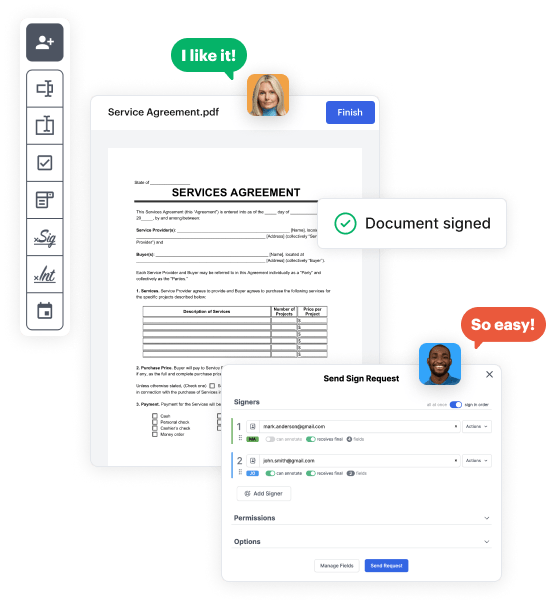
Use the top toolbar to insert fields like text and signature boxes, radio buttons, checkboxes, and more. Assign users to fields.
03. Distribute your form
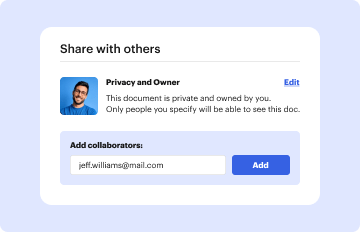
Share your Legal Notice Template in seconds via email or a link. You can also download it, export it, or print it out.

Create your Legal Notice Template in a matter of minutes
Form edit decoration

Step 1: Access DocHub to set up your Legal Notice Template.

Start by logging into your DocHub account. Explore the advanced DocHub functionality free for 30 days.

Step 2: Go to the dashboard.

Once signed in, go to the DocHub dashboard. This is where you'll create your forms and handle your document workflow.

Step 3: Design the Legal Notice Template.

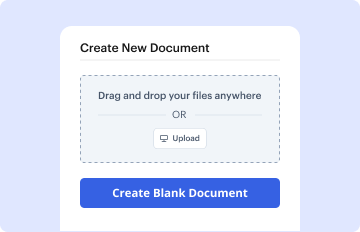
Click on New Document and select Create Blank Document to be redirected to the form builder.

Step 4: Set up the form layout.

Use the DocHub tools to add and arrange form fields like text areas, signature boxes, images, and others to your form.

Step 5: Insert text and titles.

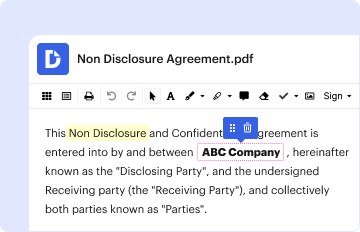
Include necessary text, such as questions or instructions, using the text tool to lead the users in your form.

Step 6: Customize field properties.

Adjust the properties of each field, such as making them compulsory or arranging them according to the data you expect to collect. Assign recipients if applicable.

Step 7: Review and save.

After you’ve managed to design the Legal Notice Template, make a final review of your form. Then, save the form within DocHub, transfer it to your selected location, or distribute it via a link or email.


be ready to get more

Build your Legal Notice Template in minutes

Start creating now

Got questions?

We have answers to the most popular questions from our customers. If you can't find an answer to your question, please contact us.
Contact us
Notices are a means of formal communication targetted at a particular person or a group of persons. It is like a news item informing such person or persons of some important event. This can be an invitation to a meeting, an announcement of any event, to issue certain instructions, make appeals etc.
In the first example, the tenant must give written notice to the landlord before moving out. In the second example, anyone who wants to buy a property is considered to have notice of a judgment lien on that property. In the third example, a notice of sale is posted in a public place to inform people about the sale.
To ensure that the document has the desired impact of communicating what actions are being taken against another party, the following best practices need to be followed: Letterhead. Include Date. Address the Defendant. Attribute the Notice. Layout the Grievance. Action to be Taken. Signature. Final Practice.
A legal notice in desh should include the name and contact information of the recipient, the cause of action, the facts of the case, and the demands for resolution. You may want to consider seeking the assistance of a lawyer to draft the notice.
A legal notice is a notification that is required by law or agreement, or given by operation of law as a result of some fact. It is a way of informing someone about their legal rights or obligations. There are different types of legal notices, such as actual notice, constructive notice, and inquiry notice.
be ready to get more

Build your Legal Notice Template in minutes

Start creating now

Related Q&A to Legal Notice Template

Written Notice means a notice or communication in writing and shall be deemed to have been duly served if delivered in persons to the individual or to a member of the contractors firm or to an office of the company for whom it is intended, or if delivered at or sent by registered mail to the last business address known
The notice should be clear about what is going to happen (event), or what has already happened (occasion). This is the crux of the message and should be written clearly. There should not be any ambiguity. Where: If the notice is about an event, then the location of such an event must be written clearly.

Additional resources on building your forms