

Create your Marital Estate Planning Form from scratch

Start Building Now
Title decoration

Here's how it works

01. Start with a blank Marital Estate Planning Form
Open the blank document in the editor, set the document view, and add extra pages if applicable.
02. Add and configure fillable fields
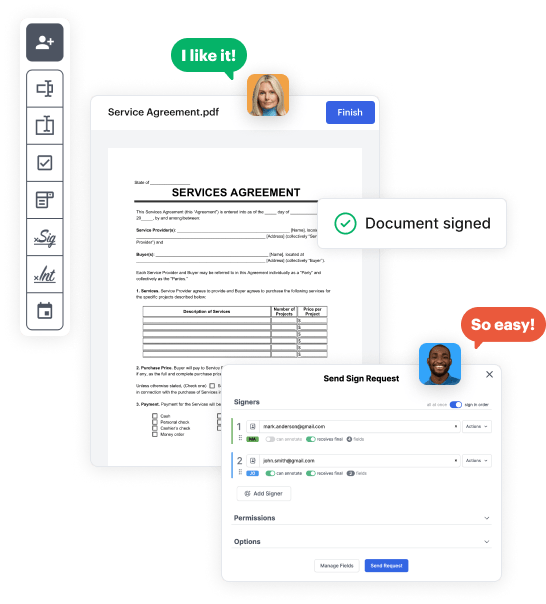
Use the top toolbar to insert fields like text and signature boxes, radio buttons, checkboxes, and more. Assign users to fields.
03. Distribute your form
Share your Marital Estate Planning Form in seconds via email or a link. You can also download it, export it, or print it out.

A simple guide on how to create a polished Marital Estate Planning Form

Form edit decoration

Step 1: Sign in to DocHub to begin creating your Marital Estate Planning Form.

First, log in to your DocHub account. If you don't have one, you can easily sign up for free.

Step 2: Go to the dashboard.

Once signed in, access your dashboard. This is your primary hub for all document-centric tasks.

Step 3: Kick off new document creation.

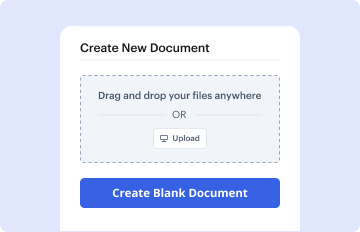
In your dashboard, hit New Document in the upper left corner. Opt for Create Blank Document to put together the Marital Estate Planning Form from scratch.

Step 4: Insert form elements.

Add various elements like text boxes, photos, signature fields, and other elements to your form and designate these fields to specific users as needed.

Step 5: Configure your form.

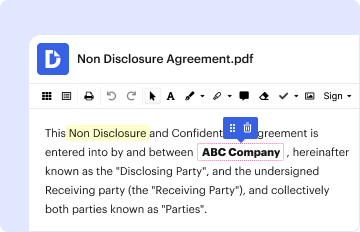
Personalize your template by including guidelines or any other required information leveraging the text option.

Step 6: Review and modify the document.

Meticulously go over your created Marital Estate Planning Form for any typos or essential adjustments. Take advantage of DocHub's editing features to perfect your form.

Step 7: Distribute or download the form.

After completing, save your copy. You may choose to retain it within DocHub, export it to various storage solutions, or forward it via a link or email.


be ready to get more

Build your Marital Estate Planning Form in minutes

Start creating now

Got questions?

We have answers to the most popular questions from our customers. If you can't find an answer to your question, please contact us.
Contact us
Key Takeaways Common estate planning documents are wills, trusts, powers of attorney, and living wills.
Get a head-start on planning and follow these 7 easy steps: Take Inventory of Your Estate. First, narrow down what belongs to you. Set a Will in Place. Form a Trust. Consider Your Healthcare Options. Opt for Life Insurance. Store All Important Documents in One Place. Hire an Attorney from Angermeier Rogers.
Estate Planning Checklist: A 10-Step Guide Assemble a team. Outline your wishes in your estate planning documents. Establish guardianship for your dependents. Consider trusts. Plan for federal and/or state estate taxes. Avoid probate. Prepare for long-term care. Consider income in respect of a decedent (IRD) taxes.
4. Go to your estate planning attorney to draft a will. Take the lists of your assets and goals with you. Let your goals guide the process of developing the will.
5 Steps to Organize Estate Documents for Your Executor 5 Steps to Organize. Step 1: Create a checklist of important documents (and their locations) Step 2: List the names and contact information of key associates. Step 3: Catalog your digital asset inventory. Step 4: Ensure all documents are organized and accessible.
be ready to get more

Build your Marital Estate Planning Form in minutes

Start creating now

Related Q&A to Marital Estate Planning Form

If youre going to create an electronic file, its key to stay organized. Make sure each file is clearly named. If you have a large number of files, it may be a good idea to sort types of files into individual folders within one main folder and have a short document that explains how to navigate your system.
Estate planning is an action plan you can use to determine what happens to your assets and obligations while youre alive and after you die. A will, on the other hand, is a legal document that outlines how assets are distributed, who takes care of children and pets, and any other wishes after you die.
Its a provision in the trust that grants a beneficiary the annual power to withdraw the greater of $5,000 or 5% of the trusts assets, while avoiding certain negative tax consequences (which are beyond the scope of this post) that might otherwise be applicable if the withdrawal right were exercised outside of those

Additional resources on building your forms


