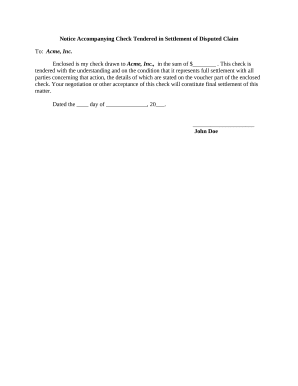
Get and manage Dispute Resolutions online

Boost your file operations with the Dispute Resolutions online library with ready-made templates that suit your requirements. Get the document template, modify it, complete it, and share it with your contributors without breaking a sweat. Begin working more efficiently with your documents.

The best way to manage our Dispute Resolutions:

  1. Open our Dispute Resolutions and find the form you need.
  2. Preview your document to ensure it’s what you want, and click on Get Form to begin working on it.
  3. Alter, include new text, or highlight important information with DocHub features.
  4. Fill out your form and preserve the changes.
  5. Download or share your form template with other recipients.

Discover all of the possibilities for your online document management using our Dispute Resolutions. Get your totally free DocHub profile right now!


Video Guide on Dispute Resolutions management

video background

Commonly Asked Questions about Dispute Resolutions

Common ADR processes include mediation, arbitration, and neutral evaluation. These processes are generally confidential, less formal, and less stressful than traditional court proceedings. ADR often saves money and speeds settlement.
The Three Pillars of Dispute Resolution These are: 1 Negotiation; 2 Mediation (or third party intervention); and 3 Adjudication/ Arbitration/ Litigation.
In a 2023 Harvard Business Review article, Catherine Cote broke down the Thomas-Kilmann Conflict Model, which highlights five conflict resolution strategies: avoiding, competing, accommodating, compromising, and collaborating.
When involved in a conflict, parties have a number of legal dispute resolution options at their disposal. Starting from the least costly in terms of resources to the lengthiest and most expensive, these options are prevention, mediation, arbitration and litigation.
Heres a review of the three basic types of dispute resolution to consider: Mediation. The goal of mediation is for a neutral third party to help disputants come to a consensus on their own. Arbitration. In arbitration, a neutral third party serves as a judge who is responsible for resolving the dispute. Litigation.
There are many types of dispute resolution processes, but arbitration; mediation; and negotiation are the three most common types of alternative dispute resolution.
Types of ADR include arbitration, mediation, negotiated rulemaking, neutral factfinding, and minitrials. With the exception of binding arbitration, the goal of ADR is to provide a forum for the parties to work toward a voluntary, consensual agreement, as opposed to having a judge or other authority decide the case.
The three common approaches to conflict resolution are: third-party intervention, unilateral decision-making, and joint decision-making. Third-party intervention involves bringing forth an unaffected party to assist in the conflict resolution process.