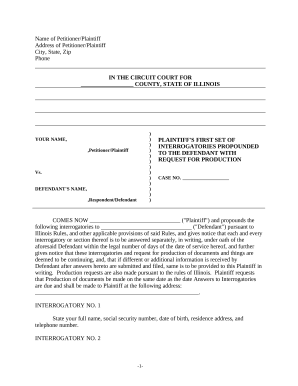
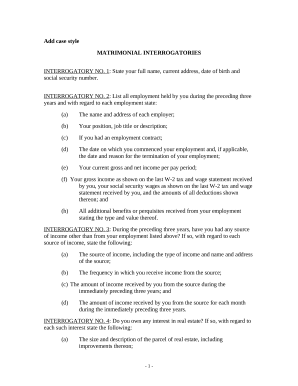
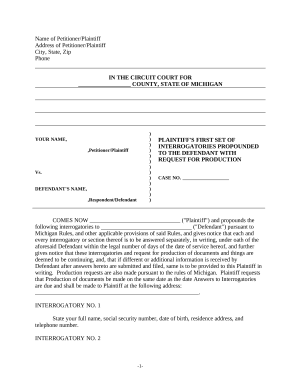
Supercharge your productiveness with Defendant Discovery Forms

Form management consumes to half of your business hours. With DocHub, it is possible to reclaim your time and effort and enhance your team's efficiency. Access Defendant Discovery Forms online library and check out all document templates related to your daily workflows.

Effortlessly use Defendant Discovery Forms:

  1. Open Defendant Discovery Forms and employ Preview to obtain the relevant form.
  2. Click Get Form to begin working on it.
  3. Wait for your form to open in the online editor and start editing it.
  4. Add new fillable fields, icons, and images, change pages order, etc.
  5. Complete your file or set it for other contributors.
  6. Download or deliver the form by link, email attachment, or invite.

Speed up your daily document management with our Defendant Discovery Forms. Get your free DocHub profile right now to discover all templates.


Video Guide on Defendant Discovery Forms management

video background

Commonly Asked Questions about Defendant Discovery Forms

It helps both the defense and prosecution docHub a reasonable decision on how to handle the case. Even more important for the defendant, discovery is critical for a criminal defense lawyer to make the decision on how to prove their side of the case in court.
Disclosure is accomplished through a methodical process called discovery. Discovery takes three basic forms: written discovery, document production, and depositions.
Discovery may be carried out by directly asking a person questions (oral depositions), by sending a person written questions (interrogatories and depositions on written questions), and by requesting that the person provide documents (motions for production, subpoenas duces tecum).
Prosecutors must also provide the defendant copies of materials and evidence that the prosecution intends to use at trial. This process is called discovery, and continues from the time the case begins to the time of trial.
Discovery is the formal process by which the parties to a case in court exchange information about the case. This includes information about the witnesses and evidence to be presented at trial. Its purpose is to make the parties aware of the evidence which may be presented at trial.
The primary goal of discovery is to prevent surprise and establish fairness by enabling both sides to access the same evidence and evaluate the strength of their cases. Specific rules and regulations that vary by jurisdiction govern this process.
Disclosure is accomplished through a methodical process called discovery. Discovery takes three basic forms: written discovery, document production, and depositions. See FindLaws Stages of a Personal Injury Case section for related articles and resources about fact-finding and the different types of discovery.
For example, a discovery demand might be for production of the names of witnesses, witness statements, information about evidence, a request for opportunity to inspect tangible evidence, and for any reports prepared by expert witnesses who will testify at trial. Discovery (law) - Wikipedia wikipedia.org wiki Discovery(law) wikipedia.org wiki Discovery(law)
Formal Written Discovery is written questions and requests for documents. Its a time-consuming process, but necessary to gather the evidence we need for a final trial. This is where we ask questions and request documents from the other party, who must answer them under oath and with detail.