




01. Edit your injured spouse tax form online
Type text, add images, blackout confidential details, add comments, highlights and more.

Type text, add images, blackout confidential details, add comments, highlights and more.

Draw your signature, type it, upload its image, or use your mobile device as a signature pad.

Send irs injured spouse form via email, link, or fax. You can also download it, export it or print it out.
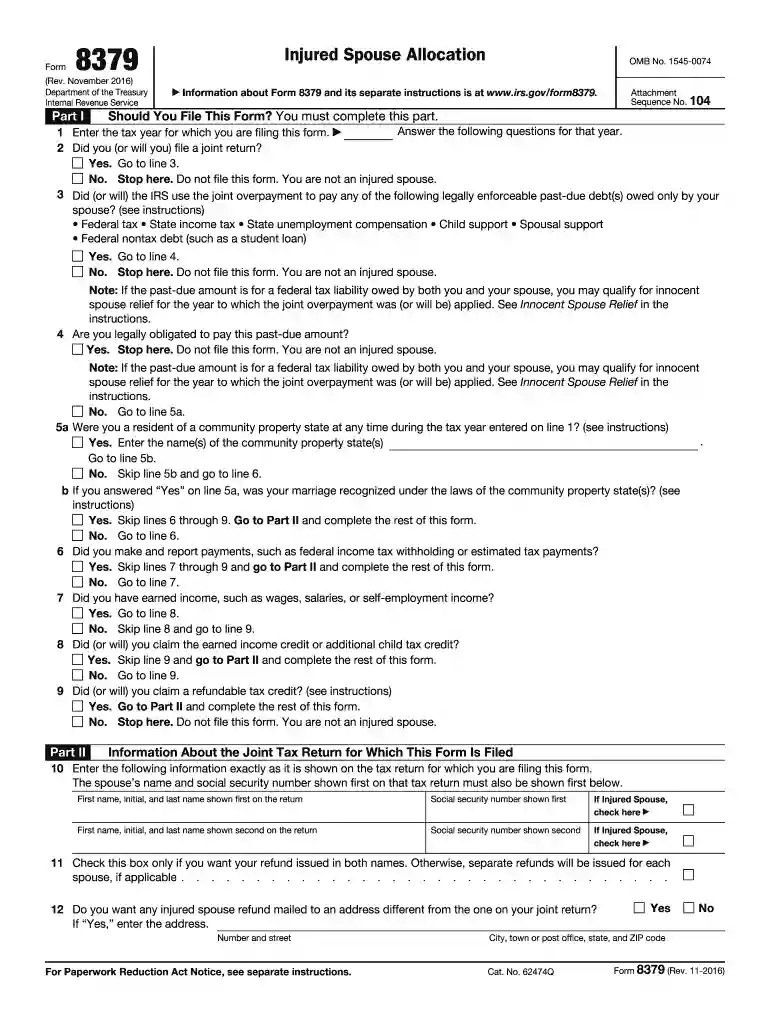
The injured spouse form, officially known as Form 8379, enables individuals who filed a joint tax return to seek protection when a spouse's outstanding federal debts could affect their tax refund. By filing this form, the injured spouse can claim their share of the refund free from their partner's financial liabilities, such as past due child support, federal student loans, or other federal obligations. The IRS evaluates the entries in Form 8379 to allocate the refund appropriately, ensuring that the injured spouse receives the portion attributable to their income and withholdings.
Using Form 8379 involves a few clear steps. Start by downloading the form from the IRS website or obtain it through tax preparation software compatible with IRS forms. Once you have the form, gather all necessary documents, such as your joint tax return and W-2 statements, as precise information will be required in the submission. Complete each section carefully, focusing on your personal and income details as the injured spouse. Submit the completed form alongside your joint tax return, or separately if you've already filed, to ensure proper processing by the IRS.
Identify Personal Information: Begin by entering your identification details, including name, address, and Social Security numbers.
Determine Eligibility: Use Part I to affirm conditions such as shared residency and filing status on the joint return.
Allocate Income and Expenses: In Part II, allocate income, exemptions, and credits accurately between spouses.
Detail Past-Due Obligations: Part III requires acknowledgment of any debts that could offset the joint refund.
Sign and Date: Do not forget to sign and date the form before submission, as an unsigned form can lead to delays or rejection.
Filing Form 8379 is crucial for individuals whose partner has existing federal debt obligations. Using this form safeguards the portion of the tax refund attributable to the injured spouse’s personal income. It is particularly beneficial when one spouse has student loans, child support, or federal taxes in arrears. The form protects financial interests, ensuring that the earnings and contributions of the non-liable spouse are recognized and appropriately refunded.
To file Form 8379, both spouses must have a legitimate claim to the joint refund, living together or filing jointly. Further, the debts in question must pertain to one spouse alone. The injured spouse must have independent income contributing to the refund and be subject to an unjust refund offset due to their partner’s liabilities. Meeting these criteria ensures the form is processed efficiently for fair refund distribution.


The IRS provides explicit guidance for Form 8379, advising taxpayers to attach the form to their joint tax return or submit it separately if the return has already been filed. Detailed instructions accompany the form, explaining each line's requirements meticulously, ensuring that taxpayers can navigate the complexities effectively. It’s important to follow the IRS timelines and filing rules to secure prompt processing and refund adjustment.
Typically, Form 8379 should be submitted alongside or shortly after the filing of your joint tax return. If submitted with your return, expect an additional eleven-week processing period beyond standard timeframes. If filed separately, the processing time extends to approximately fourteen weeks. The earlier you file, the sooner any adjustments will be reflected in your refund distributions. Adhere to the IRS established filing season to avoid complications or delays in processing.
We've got more versions of the injured spouse tax form form. Select the right injured spouse tax form version from the list and start editing it straight away!
At DocHub, your data security is our priority. We follow HIPAA, SOC2, GDPR, and other standards, so you can work on your documents with confidence.




How Do I File Form 8379? ○ If you have already filed the joint tax return, mail Form 8379 by itself to the Internal Revenue Service Center for the place.Read more
The injured spouse on a jointly filed tax return files Form 8379 to get back their share of the joint refund when the joint overpayment is applied to a past-Read more
This publication is for people interested in assisting victims of disasters or those in emergency hardship situations through tax-exempt charities.Read more


