




01. Edit your injured spouse form online
Type text, add images, blackout confidential details, add comments, highlights and more.

Type text, add images, blackout confidential details, add comments, highlights and more.

Draw your signature, type it, upload its image, or use your mobile device as a signature pad.

Send irs form 8379 via email, link, or fax. You can also download it, export it or print it out.
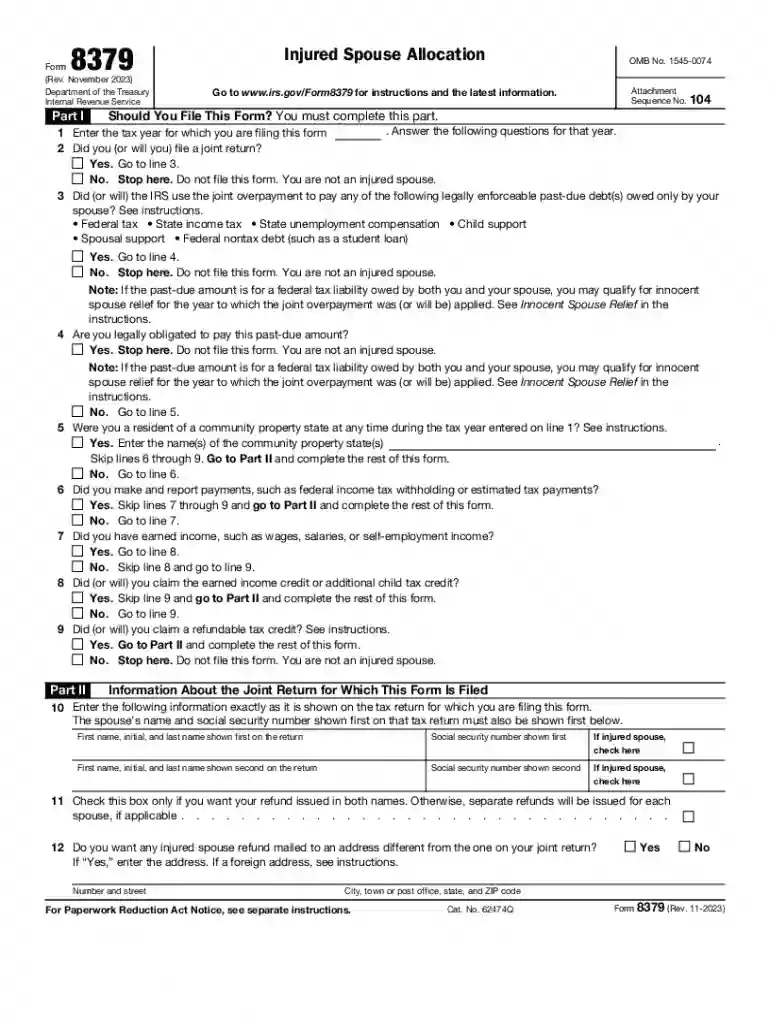
Tax relief for spouses by the Internal Revenue Service (IRS) primarily refers to specific provisions that allow individuals filing jointly to address past-due debts attributed to one spouse. The form most associated with this relief is the Injured Spouse Allocation, also known as Form 8379. It helps ensure that one spouse can claim their portion of a tax refund, shielding it from being automatically applied to obligations such as child support, student loans, or other federal debts owed by the other spouse. This form of tax relief is essential for promoting fairness when one partner's financial obligations do not impact the other's tax standing.
Form 8379 is straightforward to use, provided the instructions are followed meticulously. It is typically filed together with a joint tax return if it is suspected that a refund might be seized to cover the past-due debts of one spouse. The form can be submitted separately if a later need arises. Importantly, you should complete sections detailing income earned and deductions attributed to each spouse, as these are crucial for determining the allocation of a refund. Once filled, the form should be sent to the IRS, either electronically or through the post, depending on the submission of the original tax return.
To qualify for the injured spouse relief, the non-debtor spouse must have earned income reported on a joint tax return and contributed to tax entries such as federal income tax withholding. This relief is applicable only when a joint refund compensation might be used to settle debts solely attributable to the other spouse. It is crucial to recognize that those seeking relief must file the form proactively for each tax year affected by potential refund offsets.


The IRS sets guidelines to ensure Form 8379 is aptly processed. Filing a joint return by the due date automatically extends the eligibility to apply for injured spouse allocation. When completing the form, be sure to abide by the IRS instructions, ensuring all boxes are checked and signatures are included where required. The IRS will communicate regarding processing times and any additional information required after submission.
Individuals married to partners with significant school loans or unpaid child support often use Form 8379. This is particularly seen when one spouse enters the marriage with existing federal liabilities that do not pertain to the joint financial responsibilities of the couple. Understanding these scenarios helps determine when filing for relief is warranted.
There are no strict legal penalties for failing to file Form 8379. However, not filing means forfeiting the protection of your tax refunds from being used to offset the other spouse's debts. To avoid permanent loss of tax refunds that one is entitled to, ensure timeliness in the filing of Form 8379 if applicable.
While Form 8379 is a federal tax provision, state-level variations may exist regarding how states handle joint tax returns and related liabilities. Taxpayers should consult guidance specific to their state or a tax professional familiar with state tax laws to ensure compliance and full relief potential.
Form 8379 can be filed both electronically and in paper format. Many taxpayers find electronic filing through IRS-approved software or services more efficient, with faster processing times. For those who prefer traditional methods or are unable to file electronically, paper submission remains a viable option, albeit with longer processing periods.
We've got more versions of the injured spouse form form. Select the right injured spouse form version from the list and start editing it straight away!
At DocHub, your data security is our priority. We follow HIPAA, SOC2, GDPR, and other standards, so you can work on your documents with confidence.
If the spouse responsible for the incorrect reporting cannot pay, the IRS may demand payment from the other spouse instead.
Nov 8, 2025 There are two types of tax relief for spouses: Injured spouse relief lets you reclaim money taken from your tax refund to cover your spouses debts.Read more
Sep 16, 2013 In Revenue Rul- ing 5866, the Service stated that a couple would be treated as married for purposes of Federal income tax filing status and


