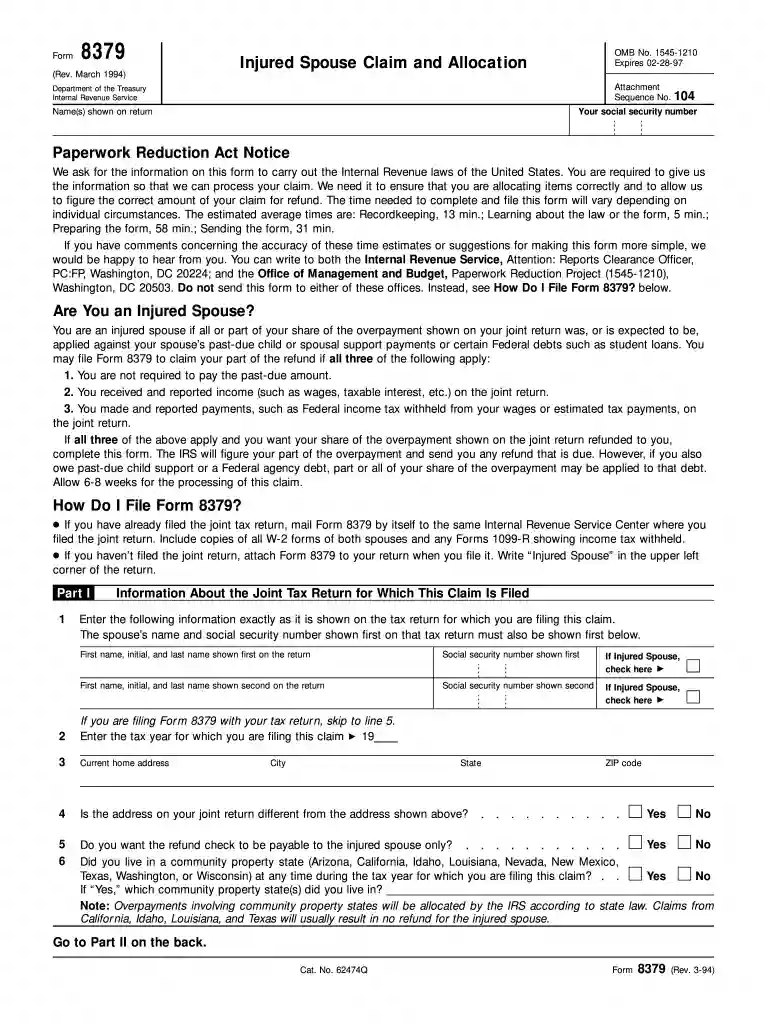
Definition and Purpose of Form 8379
Form 8379 is officially known as the Injured Spouse Allocation form. This form is used within the U.S. tax system by a spouse who is not liable for a partner's past-due obligations, such as child support or federal debts, yet whose tax refund is being withheld. The injured spouse seeks to claim their share of the refund by providing details of the income, deductions, and credits that pertain specifically to them. The form aims to ensure that one spouse's financial liabilities do not unfairly disadvantage the other in a joint tax situation.
Steps to Complete Form 8379
- Gather Necessary Information: Before filling out the form, collect all relevant financial information, including income details, deductions, and credits from the joint tax return.
- Download Form: You can obtain the form from the IRS website (in PDF format) or through tax software platforms like TurboTax, ensuring you have the latest version.
- Fill Out Personal Information: Enter basic details such as names, Social Security numbers, and address.
- Allocate Income and Deductions: Clearly separate and allocate income, deductions, and credits between each spouse.
- Attach to Tax Return: If filing jointly, attach Form 8379 to your tax return, or send it separately if the return was already filed, using the 'Examine Attaching Instructions' section for guidance.
- Submit: Send to the designated IRS address detailed in the form instructions.
- Await Processing: The IRS typically takes up to 14 weeks for processing, depending on the time of year and submission method.
Benefits and Use Cases of Form 8379
- Equal Tax Refund Distribution: Allows for the fair distribution of tax refunds even when one spouse's debts might otherwise lead to a total refund seizure.
- Protection from Debt Liability: Offers a safeguard for spouses who are not legally responsible for their partner’s debts.
- Variety of Taxpayer Scenarios: Beneficial for different taxpayer scenarios, including households where only one partner incurs such debt obligations.
- Eligibility for Tax Credits: Helps in reclaiming legitimate tax credits owed to the injured spouse.
IRS Guidelines and Compliance
Form 8379 follows specific IRS guidelines to ensure the appropriate distribution of tax refunds. The submission must adhere to the following principles:
- Complete Information: Full and correct allocation of income and deductions are crucial.
- Accurate Attachments: Attach all supporting documentation with Form 8379, following IRS directives.
- Compliance with Deadlines: Adhere to IRS deadlines for submission to ensure claims are processed promptly.
Form Submission Methods
- Mail Submission: Attach Form 8379 to the paper tax return and mail it to the IRS, using the proper postage.
- Electronic Filing: Certain tax software allows the submission of Form 8379 electronically if attached to an e-filed tax return, speeding up processing time.
- Separate Submission: If needed, submit the form independently if the tax return has already been processed, by sending it to the IRS processing center.
Processing Time and Follow-up
Upon submission, processing times can vary:

- Standard Processing: Typically between 11 to 14 weeks when submitted with the return.
- Faster Timelines: E-filed submissions tend to process more quickly.
- IRS Contact: If 14 weeks have passed without notification, contact the IRS for a status update using the phone number listed in the IRS instructions.
Eligibility Criteria
- Filing Joint Tax Returns: Applicable primarily to couples who file joint tax returns and have adequate documentation to support individual income allocation.
- Past-Due Debt: The form is necessary when past-due debts are litigated entirely to one spouse, necessitating protection for the other's financial interests.
Form Variants and Non-Compliance Penalties
- Form Variants: Past versions of Form 8379 exist, but using the most current form is advised for compliance.
- Penalties: Failure to file Form 8379 when applicable might result in unfair seizure of tax refunds. Non-compliance could lead to more complex issues regarding tax refund eligibility and distribution.