






Definition & Purpose of Form 1040-NR
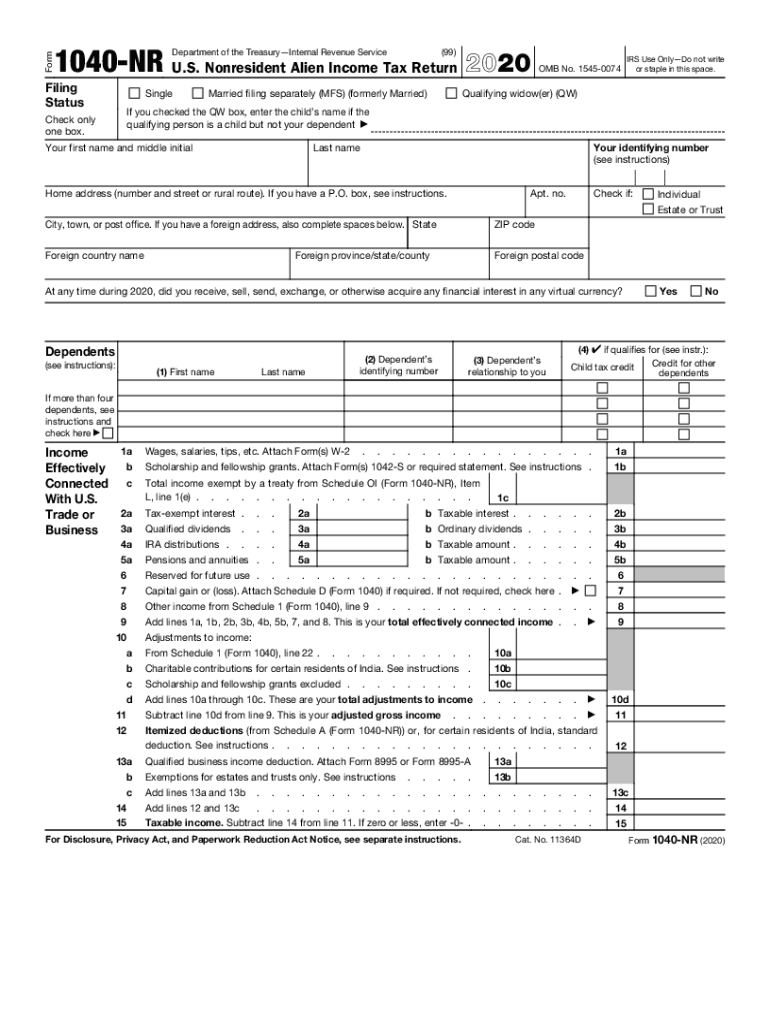
Form 1040-NR is officially known as the U.S. Nonresident Alien Income Tax Return. This form is critical for nonresident aliens to report income earned in the U.S., claim deductions, and compute their federal tax responsibilities. Unlike resident aliens and U.S. citizens who use Form 1040, nonresident aliens must utilize this form to ensure proper tax compliance under IRS regulations.
Key Components of Form 1040-NR
- Personal Information: Includes taxpayer name, address, and taxpayer identification number (TIN).
- Income Sources: Detailed sections for interest, dividends, capital gains, and other U.S.-sourced income.
- Deductions and Adjustments: Allows the subtraction of certain expenses such as education costs from gross income.
- Tax Calculation: Space to determine tax owed after deductions and credits are applied.
Practical Examples
A foreign individual working temporarily in the U.S. who earns income from multiple sources will use Form 1040-NR to declare all U.S.-sourced income and calculate applicable taxes. This form provides a structured way to ensure compliance with federal tax laws.
Steps to Complete Form 1040-NR
Completing Form 1040-NR involves several steps, each crucial for accuracy and compliance with IRS standards.
-
Gather Required Information:
- Obtain a taxpayer identification number (TIN) if one is not already assigned.
- Compile income statements, such as W-2s or 1099s, detailing U.S.-sourced earnings.
-
Complete Identification Details:
- Fill in personal information at the top of the form, including name, address, and TIN.
-
Report Income:
- Enter detailed information about various income types in the provided sections.
-
Claim Deductions:
- Deduct pertinent expenses and adjustments using the applicable sections.
-
Calculate Tax and Credits:
- Finalize calculations to determine the total tax liability, considering any tax credits.
-
Sign and Submit Form:
- Sign the completed form and submit it electronically or via mail to the IRS.
Eligibility Criteria for Using Form 1040-NR
Not every foreign national is required to file Form 1040-NR, making understanding eligibility essential.
- Who Must File: Nonresident aliens with income sourced from the U.S. and specific types of foreign passive income.
- Residency Considerations: Taxpayers must determine their residency status under IRS guidelines.
- Exceptions: Individuals present in the U.S. on a student visa, under certain conditions, may have different reporting requirements.


IRS Guidelines for Form 1040-NR
The IRS provides extensive regulations concerning the completion and submission of Form 1040-NR to maintain compliance.
Important IRS Regulations
- Correct Form Usage: Ensure the right form version is used corresponding to the tax year to prevent filing errors.
- Filing Deadlines: Typically April 15th for most filers, though this may change with extensions or extenuating circumstances.
Common Errors and Exceptions
Errors commonly arise in reporting income or calculating deductions, which can lead to audits or penalties. Understanding special provisions regarding dual-status taxpayers can prevent issues in filing.
Required Documents for Filing
Gathering all necessary documentation is crucial for completing Form 1040-NR accurately and timely.
Essential Documents
- Income Documentation: W-2, 1099, and similar forms.
- Visa Information: Copies of the current visa, which may impact residency determination.
- Proof of Deductions: Receipts for allowable expenses like tuition or medical costs.
Organizing Your Documentation
Organizing these documents before starting the filing process helps streamline completion and reduces errors, saving time and ensuring completeness.
Examples of Using Form 1040-NR
Various scenarios highlight the diverse applications and importance of Form 1040-NR.
Tax Scenarios
- Temporary Workers: Non-U.S. citizens working in the U.S. on a short-term basis must accurately report their earnings and pay applicable taxes.
- Investors: Foreign nationals with U.S. real estate investments requiring deduction and result documentation use this form for proper reporting.
Real-World Cases
An academic researcher from abroad who earns a fellowship and works on a project within the U.S. must file Form 1040-NR, reporting their financial gains and calculating the necessary tax contributions.
Penalties for Non-Compliance
Failing to file Form 1040-NR when required can result in significant financial penalties from the IRS, alongside increased scrutiny in future tax dealings.
Types of Penalties
- Late Filing Fees: Significant charges if forms are not submitted by the annual deadline.
- Accuracy Penalties: Additional fees if incorrect information leads to underreporting of tax owed.
Avoiding Penalties
Timely filing, thorough documentation, and professional advice if needed are critical in preventing costly penalties from non-compliance. Understanding the nuances of U.S. tax law pertinent to nonresidents is beneficial for all involved parties.