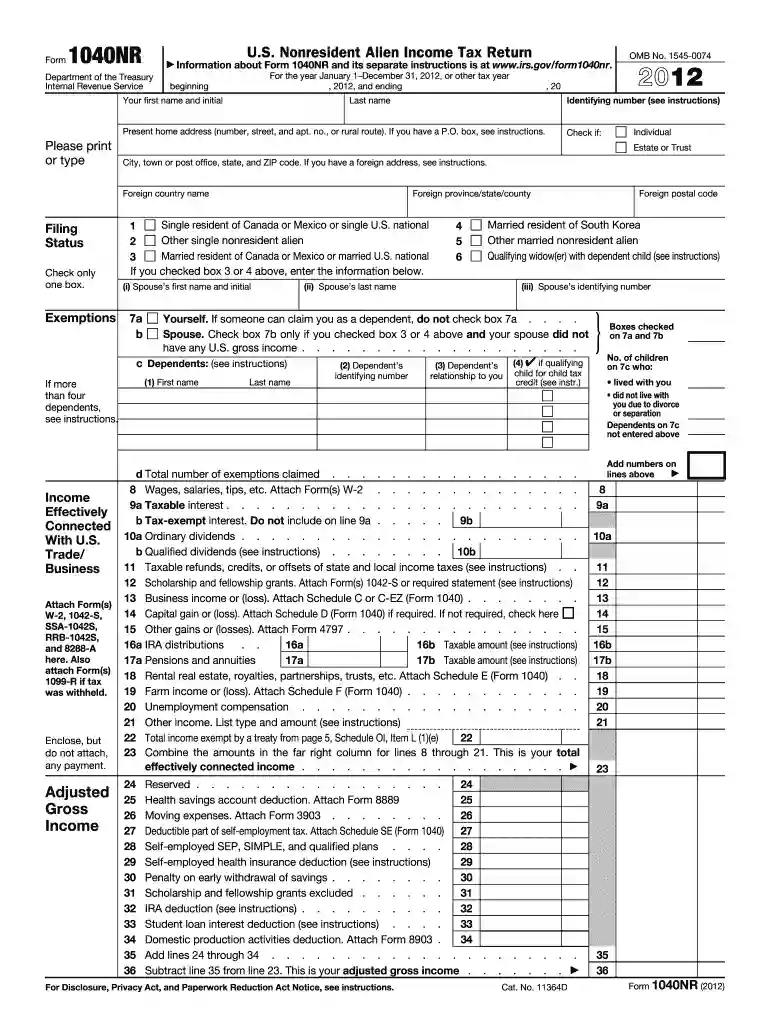
Definition & Meaning
The NJ 1040NR form is specifically designed for nonresident aliens to file their income tax return with the state of New Jersey. It plays a crucial role in the state's tax system, allowing nonresident aliens to report their earnings, calculate the taxes they owe, and claim any applicable deductions or credits. The form ensures compliance with New Jersey's tax regulations for individuals who reside outside the state but have income sources within it. It includes sections detailing income reporting, exemptions, and tax computation specific to nonresidents.
How to Use the NJ 1040NR
- Gather Necessary Information: Ensure you have all required details about your income, deductions, and credits. This includes federal tax information as New Jersey calculations often reference federal figures.
- Review Income Sources: Identify all taxable income received within New Jersey during the tax year. This might include income from employment, investments, or rental properties located within the state.
- Fill Out the Form: Complete each section of the form methodically. Begin with personal information and continue through the sections related to income, deductions, credits, and computation of tax due.
- Double-Check Entries: Verify that all information entered is accurate to avoid delays or rejections. Ensure all required fields are completed and amounts are calculated correctly.
- Submit the Form: Choose your preferred method of submission, either online or through mailing a paper version, to ensure timely filing.
Steps to Complete the NJ 1040NR
Completing the NJ 1040NR involves several key steps to ensure accurate filing:
- Personal Information: Fill in your name, address, and taxpayer identification number. Make sure this information matches federal tax documents.
- Income Reporting: Enter detailed information about your New Jersey-sourced income. Use your federal income details to guide accurate entries in the NJ-specific form sections.
- Deductions and Exemptions: Calculate and enter any exemptions or deductions applicable under New Jersey tax laws for nonresidents. This can include standard deductions or specific exclusion items.
- Tax Calculation: Calculate the total tax owed based on the income reported and applicable deductions. Utilize the provided tax tables specific to nonresident tax rates in New Jersey.
- Sign and Date: Ensure that you and any required parties, such as spouses for joint filings, sign and date the form.
- Attach Documentation: Include copies of relevant documents, such as W-2s or 1099s, to support the income and deductions reported.
Important Terms Related to NJ 1040NR
Understanding essential terms can simplify the NJ 1040NR filing process:
- Nonresident Alien: An individual who resides outside New Jersey but earns income within the state.
- New Jersey Sourced Income: Earnings or revenue generated from within the state, which may include wages or rental income.
- Deductions: Specific expenses that reduce your taxable income, potentially lowering tax liability.
- Exemptions: Amounts you can subtract for yourself, your spouse, and dependents, potentially reducing taxable income.
- Taxable Year: The calendar year for which income is being reported and taxes calculated.
Required Documents
Before completing the NJ 1040NR, gather these crucial documents:
- Federal Tax Return Copies: Necessary for cross-referencing income figures.
- W-2 Forms: Records of wages earned and taxes withheld from employers.
- 1099 Forms: Detailing other income types such as interest, dividends, or independent contracting.
- Tax Deduction Receipts: Proof of deductible expenses, like educational costs or healthcare payments.
Form Submission Methods
Filing the NJ 1040NR can be done through several pathways:
- Online Submission: Use the state's e-filing system to submit your form electronically, which is often faster and offers immediate confirmation of receipt.
- Mailing: For those preferring paper forms, print, complete, and mail the NJ 1040NR to the designated New Jersey Division of Taxation address.
- In-Person Submission: Hand deliver completed forms to a state tax office if available, providing additional assurance through direct submission.
Filing Deadlines / Important Dates
Adhering to the deadlines is vital to avoid penalties:
- April 15: Typically the due date for NJ 1040NR and payment of any owed taxes, aligning with federal tax deadlines. Filing extensions may be requested if additional time is necessary.
Penalties for Non-Compliance
Failing to file the NJ 1040NR on time or accurately can result in:
- Late Filing Penalties: Imposed for forms filed past the deadline without an approved extension.
- Underpayment Penalties: Charged interest on taxes not paid by the due date.
- Accuracy Penalties: Fees resulting from intentional errors or omitting income.
These guidelines ensure you follow New Jersey’s tax laws accurately and minimize the risk of penalties.