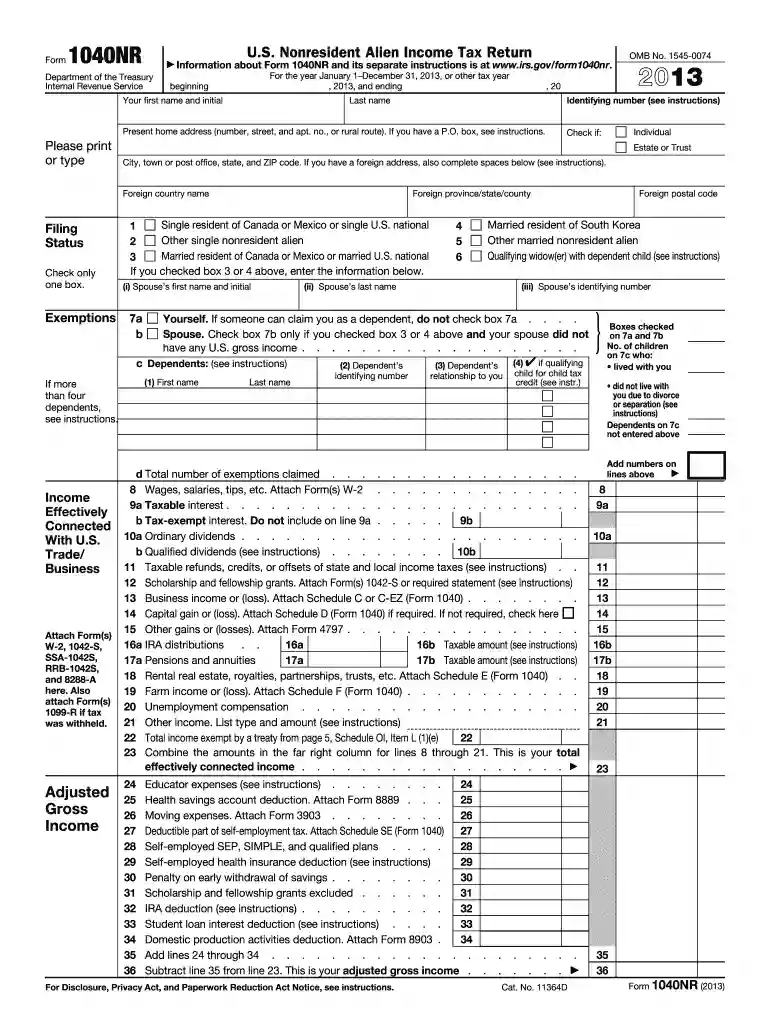
Definition & Purpose of Form 1040NR
Form 1040NR, known as the U.S. Nonresident Alien Income Tax Return, is utilized for reporting taxable income earned in the United States by nonresident aliens. In the context of 2013, the form was instrumental for these individuals to comply with their U.S. federal tax obligations, even if they resided outside the U.S. or held temporary visas. It allowed filers to disclose their income, claim any applicable exemptions, and determine any taxes owed or potential refunds.
Key Features
- Income Reporting: Report U.S. source income such as wages, salaries, and business income.
- Exemptions: Claim available exemptions based on relationships and income sources.
- Tax Calculation: Determine the amount of tax owed or refund due.
Steps to Complete Form 1040NR
Completing the 1040NR form entails a structured process to ensure accuracy and compliance. Here’s a breakdown of the necessary steps:
- Personal Information: Fill in your name, address, and identification number.
- Income Details: Include all types of income earned in the U.S. and any applicable foreign income exclusions.
- Deductions and Credits: Identify eligible deductions and tax credits to reduce taxable income.
- Tax Computation and Payments: Calculate total tax liability and account for any payments made during the year.
- Sign and Submit: Ensure the form is signed before submission.
Practical Tips
- Double-check Entries: Ensure all numbers are correct and match your supporting documents.
- Consult IRS Instructions: Reference official IRS instructions for Form 1040NR for detailed guidance.
How to Obtain Form 1040NR
Securing a copy of the 1040NR form is straightforward. Here are the common methods:
- IRS Website: Download directly from the official IRS website.
- Tax Software: Use tax preparation software that supports Form 1040NR.
- Physical Locations: Obtain from local IRS offices or select public libraries.
Supplemental Methods
- Financial Advisors: Request assistance from a financial advisor or tax preparer.
- Mail Request: Request a mailed copy directly from the IRS, though this may take time.
Notable Exemptions
- Resident Aliens: If you've met the substantial presence test, you would file a Form 1040 instead.
- Specific Visa Types: Some visa holders may be exempt unless they have significant U.S. income.
Important Terms Related to Form 1040NR
Understanding specific terminology is crucial for correctly completing Form 1040NR:
- Nonresident Alien: An individual who has not passed the green card test or the substantial presence test.
- Dependents: Relatives or other individuals for whom you provide financial support and may claim exemptions.
- Withholding Tax: Taxes withheld from income sources such as wages and reportable on Form 1040NR.
Legal Use of Form 1040NR
The legal usage of Form 1040NR ensures compliance with U.S. tax regulations:
- Reporting Requirements: Accurately disclose any income earned from U.S. sources as required by federal law.
- Exemption Claims: Use the form to legally claim deductions for dependents and personal exemptions.
Legal Considerations
- Accurate Representation: Present truthful data to avoid legal consequences like audits or fines.
- Record Keeping: Keep copies of filed returns for at least three years in case of an IRS review.
IRS Guidelines for Form 1040NR
Following the IRS guidelines is imperative for correct filing:
- Filing Instructions: Detailed guidance on each section of the form to ensure completeness.
- Deadline Adherence: Typically, the deadline follows the general tax deadline but check for specific rules affecting nonresident aliens.
Additional Resources
- IRS Publications: Use IRS Publication 519 for more detailed info on filing as a nonresident alien.
- Online Tools: Utilize the IRS’s online assistance programs for additional help.
Filing Deadlines & Important Dates
Adhering to filing deadlines ensures compliance and avoids penalties:
- Annual Filing Deadline: Generally due by June 15 for nonresident aliens who earn income in the U.S.
- Extension Requests: Submit Form 4868 for an automatic extension if more time is needed.
Considerations for Late Filers
- Penalties: Understand the potential late filing penalties and interest on taxes owed.
- Documentation: Ensure any claims for extensions are documented and submitted on time.
Required Documents for Form 1040NR
When filing Form 1040NR, it's crucial to gather and organize all necessary documents:
- Income Statements: Collect W-2s, 1099s, and any other income documentation.
- Deductions Records: Gather receipts or statements for deductions, such as charitable contributions.
- Previous Returns: Reference prior year’s filings for consistency and accuracy.
Additional Documentation
- Forms from Employers or Payers: Ensure all documentation aligns with employer filings.
- Proof of Payments: Ensure any pre-paid taxes are documented and claimed appropriately.