






Definition & Purpose of Form W-10
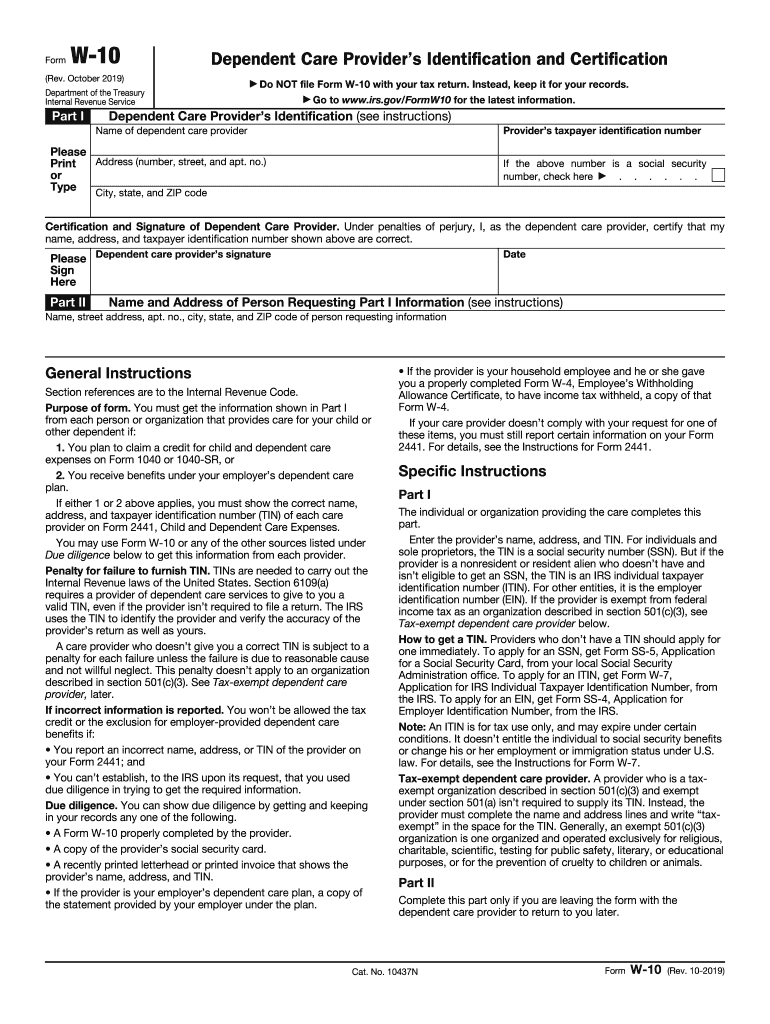
Form W-10, officially known as the "Dependent Care Provider's Identification and Certification," is a document used by taxpayers to collect essential information from individuals or organizations that provide dependent care services. The form is not submitted to the IRS but is kept for personal records to assist taxpayers in claiming the Child and Dependent Care Credit on their tax returns. It serves to certify the accuracy of the provider's taxpayer identification number, name, and address under penalty of perjury.
Key Elements of Form W-10
When filling out Form W-10, it is important to gather several key pieces of information from the dependent care provider. These include:
- Taxpayer Identification Number (TIN): This is usually the provider's Social Security Number (SSN) or Employer Identification Number (EIN).
- Provider's Name and Address: Accurate details ensure proper identification and communication.
- Certification Statement: The provider must certify the accuracy of this information, acknowledging the potential for legal consequences in case of false information.
How to Obtain Form W-10
Acquiring Form W-10 is straightforward. It can typically be downloaded from the IRS website or collected from various tax-related services or software packages. Taxpayers may also directly request it from their dependent care providers as part of the information exchange needed for tax credit claims.
Steps to Complete Form W-10
Successfully filling out Form W-10 involves a sequence of simple steps:
- Download the Form: Obtain a copy from the IRS website or tax preparation software.
- Gather Necessary Details: This involves collecting the care provider’s name, address, and TIN.
- Complete the Form: Fill in all fields accurately, ensuring that information matches official records.
- Certification by the Provider: The provider must sign the form, certifying the correctness of the information.
- Retain the Form for Records: Since the form is not filed with tax returns, it should be stored securely for future reference.
Legal Use and Compliance for Form W-10
Form W-10 does not need to be submitted with your tax return but must be accurately completed and retained for records. It serves to verify the provider's details and protect the taxpayer's claim for the Child and Dependent Care Credit. Providers and taxpayers should be aware of possible penalties for supplying incorrect information, including fines or civil penalties assessed by the IRS.
Penalties for Non-Compliance
Not maintaining accurate records with Form W-10 can result in the denial of the tax credit, and inaccurate submissions could potentially lead to fines. Be sure to verify all information with the provider and adhere strictly to form guidelines to avoid compliance issues.
Who Typically Uses Form W-10
Form W-10 is predominantly used by individuals planning to claim the Child and Dependent Care Credit on their U.S. federal tax returns. This often includes working parents or guardians who pay for daycare services, ensuring the information is accurately documented for tax relief eligibility.
Business Entity Types and Form W-10
While primarily used by individuals, businesses that provide or facilitate dependent care services, such as employer-operated daycare centers, may also utilize W-10s to maintain proper records of the service providers they engage with.
IRS Guidelines for Form W-10
The IRS provides specific guidelines on the correct preparation and retention of Form W-10 for tax credit eligibility. Taxpayers must ensure compliance to claim dependent care credits confidently. This includes keeping the form in the taxpayer’s records and ensuring its availability in the event of an IRS audit.
Filing Deadlines & Important Dates
While there is no specific submission deadline for Form W-10 since it is not filed with a tax return, it should be completed and retained prior to filing taxes to substantiate any credit claims.
Examples of Using Form W-10
To illuminate the practical application of Form W-10, consider the following scenarios:
- Working Parent Scenario: A single parent employs a digital tax service to calculate deductions. Form W-10 is filled out using the daycare's information as part of the claim for Child and Dependent Care Credit.
- Business Utilization: A mid-sized company offers an in-house childcare benefit, requiring service providers to complete a W-10 to maintain necessary documentation for their tax-related records.
These examples demonstrate the versatility and necessity of Form W-10 in both individual and corporate settings.