






Definition and Purpose of the W-10 Form
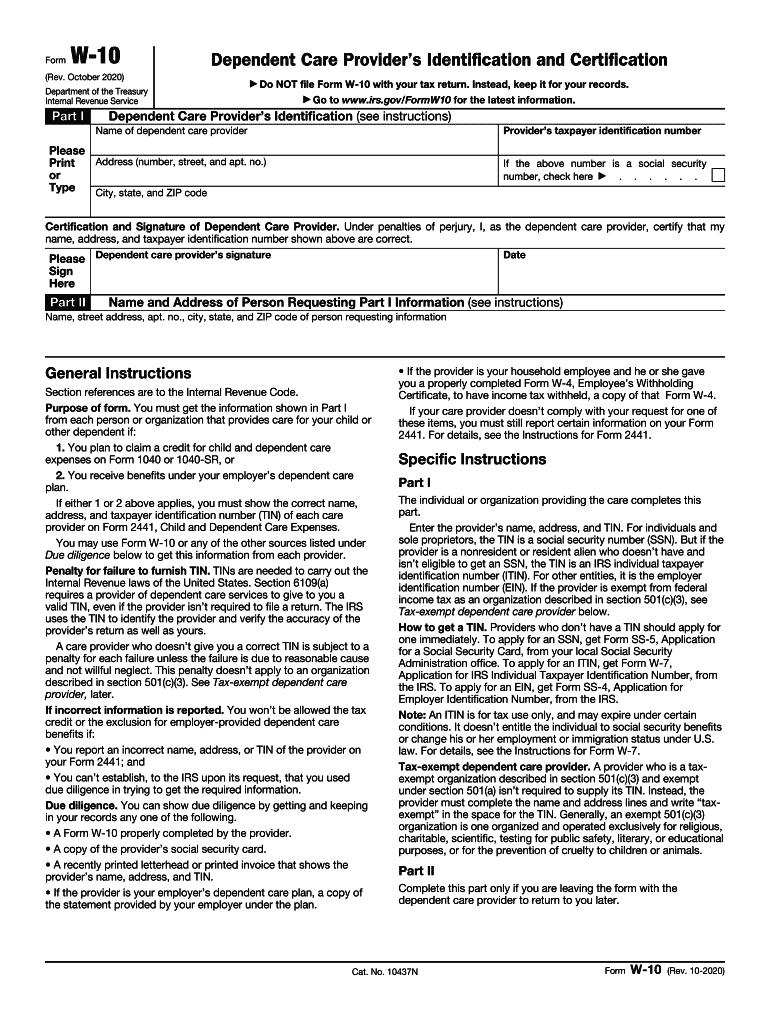
The W-10 form, known officially as the "Dependent Care Provider's Identification and Certification," is used by taxpayers in the United States to collect necessary identification and certification details from their dependent care providers. This form aids in ensuring that taxpayers can accurately report this information to claim child and dependent care credits on their tax returns, emphasizing the importance of correct data submission.
Significance in Tax Reporting
- Claim Credits: The W-10 form is integral for taxpayers who wish to claim credits for child and dependent care expenses. Providing accurate information allows for the correct calculation and identification of eligible credits.
- Record Keeping: While it is not submitted with the tax return, maintaining an accurate W-10 form is essential for personal financial records and potential audits.
How to Use the W-10 Form
The practical use of the W-10 form involves gathering specific information from your dependent care providers. This information is crucial for filing tax returns properly.
Step-by-Step Gathering Process
- Identify Providers: Determine all individuals or organizations that have provided dependent care services within the tax year.
- Collect Information: Request the provider's taxpayer identification number, full name, and address.
- Verification: Ensure all information matches provider records and documentation.
- Retention: Safeguard the completed form for future reference and in case of an IRS audit inquiry.
Ensuring Accurate Data Collection
- Provider Compliance: Engage with providers to ensure they understand the importance of accurate reporting.
- Regular Updates: Regularly update or verify the provider's information as changes occur, such as address modifications.
Steps to Complete the W-10 Form
Completing the W-10 form involves a straightforward process, but attention to detail is crucial.
Detailed Instructions
- Section Completion: Fill out all sections requiring input, focusing on accurate entries for the provider’s taxpayer identification number, name, and address.
- Double-Check Accuracy: Revisit each entry to confirm the information aligns with provider records to prevent discrepancies during tax filing.
- File Maintenance: Securely store the form with your tax documentation for future reference.
Troubleshooting Common Issues
- Provider Discussion: If a provider hesitates to provide information, explain its necessity for tax credits.
- Error Correction: When errors are identified, promptly correct and re-confirm the information with providers.
Legal Use of the W-10 Form
The legal application of the W-10 form supports compliance with IRS regulations, enabling the correct claiming of tax credits.
Comprehending Compliance Requirements
- IRS Regulations: Familiarize yourself with the IRS guidelines on dependent care credits to ensure adherence.
- Penalties Awareness: Understanding potential penalties for misreporting helps underscore the necessity of accurate reporting.
Addressing Legal Concerns
- Provider Requests: Encourage providers to cooperate, emphasizing the IRS requirement for information.
- Documentation Retention: Maintain records beyond the immediate tax year to safeguard against audits.
Key Elements of the W-10 Form
Several primary elements are critical when completing the W-10 form, ensuring that the document fulfills its intended purpose.
Core Components
- Taxpayer Identification: A crucial piece that ensures provider accountability.
- Provider Details: Comprehensive provider data is necessary for accurate IRS records.
- Information Integrity: Ensure all entries are truthful and accurately reported to avoid complications.
Required Documents for the W-10 Form
Fulfilling the completion of a W-10 form often requires accompanying documents that validate the entered information.
Additional Necessary Documentation
- Provider Tax Identification: It can be a social security number if the provider is an individual or an employer identification number for organizations.
- Service Receipt Copies: Retain proof of transactions with the dependent care provider.
- Correspondences: Any communications evidencing service details may be useful for validation.
IRS Guidelines and Regulations
Understanding the IRS's direction on the W-10 form is essential for compliance and effective tax filing.
Relevant Regulations
- Claim Qualifications: The IRS outlines specific qualifications for claiming dependent care credits that hinge on the accurate completion of the W-10 form.
- Instructions Adherence: Following the official IRS instructions for form completion ensures adherence to legal standards and correct credit claims.
Impact on Tax Filings
Understanding the W-10's role assists taxpayers in optimizing their required submissions and ensuring filings are conducted correctly.
Penalties for Non-Compliance
Failure to accurately complete or retain the W-10 form with accurate information can lead to several penalties.
Consequences of Incorrect Reporting
- Loss of Credits: Incorrect information can result in the denial of dependent care credits, affecting tax liability.
- Regulatory Fines: Deliberate or negligent misinformation may attract penalties, highlighting the importance of proper completion and storage.
- Audit Risks: Increased chances of an IRS audit should errors or missing forms be noticed in submitted tax returns.