
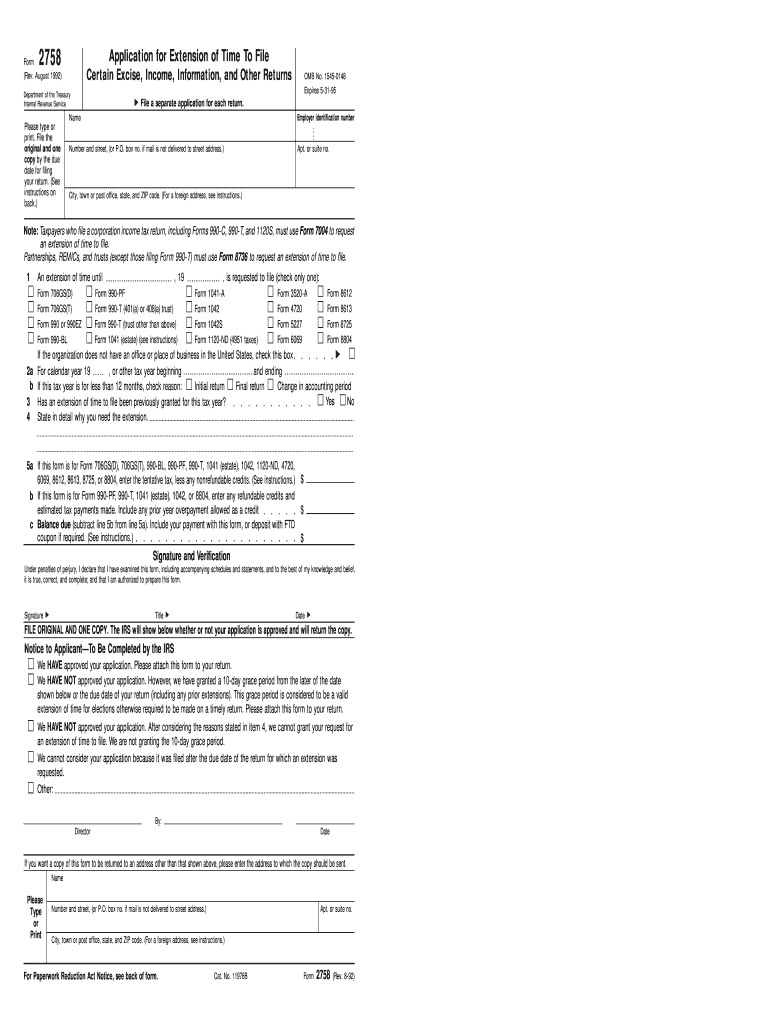







Definition & Purpose of IRS Form 2758
IRS Form 2758, issued in 1992, serves as an application for taxpayers seeking an extension of time to file certain excise, income, information, and other specific tax returns with the IRS. The form is essential for businesses and individuals who require additional time to gather necessary documentation and ensure accuracy in their tax filings. Understanding its purpose is crucial to avoid penalties associated with late filing and to comply with tax obligations.
Key Features of Form 2758
- Designed for both individuals and organizations.
- Applicable to a wide range of tax return types, including excise and information returns.
- Requires a clear rationale for the extension request.
- Does not extend the time for tax payment, only filing.
How to Obtain IRS Form 2758
To successfully apply for an extension, taxpayers need to obtain the IRS Form 2758. It can be accessed through various channels:
- Online Download: The form is available for download in PDF format from the IRS official website, ensuring easy access for all taxpayers.
- Physical Copies: Those who prefer paper can visit a local IRS office or request a mailed copy.
- Tax Software: Many tax preparation platforms, like TurboTax, often include access to this form as part of their service offerings.
Steps to Complete IRS Form 2758
Completing IRS Form 2758 involves several straightforward steps to ensure the application is processed without issues. Here is a detailed breakdown:
- Identify Tax Type: Start by specifying the type of return for which you are requesting an extension.
- Provide Identification: Enter the taxpayer's identification information, such as name, address, and TIN (Tax Identification Number).
- State the Reason: Clearly outline the reason for the extension request—common reasons include awaiting additional financial documentation.
- Signature: Ensure the form is signed and dated by an authorized person to validate the application.
Common Mistakes to Avoid
- Failing to provide a detailed explanation for the extension.
- Omitting required identification numbers.
- Submitting the form after the deadline.
Why Use IRS Form 2758
Using Form 2758 is strategic for taxpayers facing extenuating circumstances that impede their ability to meet the original tax filing deadline:
- Avoiding Penalties: Late filing penalties can be substantial. This form provides a formal mechanism to prevent these penalties.
- Managing Financials: Provides businesses with additional time to manage cash flows and organize financial statements.
- Ensuring Accuracy: Additional time helps in verifying data accuracy, which is crucial for complex tax situations.
Eligibility Criteria for IRS Form 2758
Not all taxpayers are eligible to use IRS Form 2758. Eligibility depends on several factors:
- Type of Taxpayer: Suitable for both individuals and different business entities, including partnerships and corporations.
- Tax Return Type: Only specific tax returns listed by the IRS qualify for an extension.
- Submission Timeliness: Must be filed before the original due date of the tax return.


Penalties for Non-Compliance
Failure to properly file Form 2758 or to meet the original or extended filing deadlines can result in significant penalties:
- Monetary Fines: Penalties are often calculated based on the amount due and the duration of the delay.
- Interest Charges: Accrues from the original payment due date if any balance is owed.
- Legal Repercussions: Persistent non-compliance may result in increased scrutiny and potential legal actions.
IRS Guidelines and Compliance
Adhering to IRS guidelines while using Form 2758 ensures smooth processing and compliance:
- Instructions: Follow guidance provided in the IRS instructions accompanying the form.
- Timely Submission: File by the original return due date to benefit from the extension.
- Documentation: Maintain copies of all submitted forms and correspondence for records.
Form Submission Methods
Taxpayers can choose from several methods to submit IRS Form 2758, depending on their preferences and availability of resources:
- Mail: Traditional method suitable for those who prefer physical documentation.
- Online: Many tax software solutions offer electronic submission options for convenience.
- In-Person: Visit an IRS office for direct submission and potential assistance.
Business Types Benefiting from Form 2758
Certain business entities can particularly benefit from the extension provided by IRS Form 2758:
- Complex Corporations: Businesses with intricate financials needing time for thorough audits.
- Small Businesses: Owners may require additional time due to resource constraints.
- Non-Profit Organizations: Can use the extended time to align their financial records accurately.
Key Takeaways
- Plan Early: Anticipate the need for extra time and file Form 2758 timely.
- Seek Professional Help: Consider consulting a tax professional to ensure correct filing and compliance.
- Stay Informed: Keep abreast of IRS updates and potential changes to extension policies for informed decision-making.




